
Využijeme každý lúč, napájame neprepojených: Globálne fórum pre nízkouhlíkový priemysel 2026 skúma možnosti preklenutia rozdielov v dodávkach elektrickej energie
Source: PR Newswire
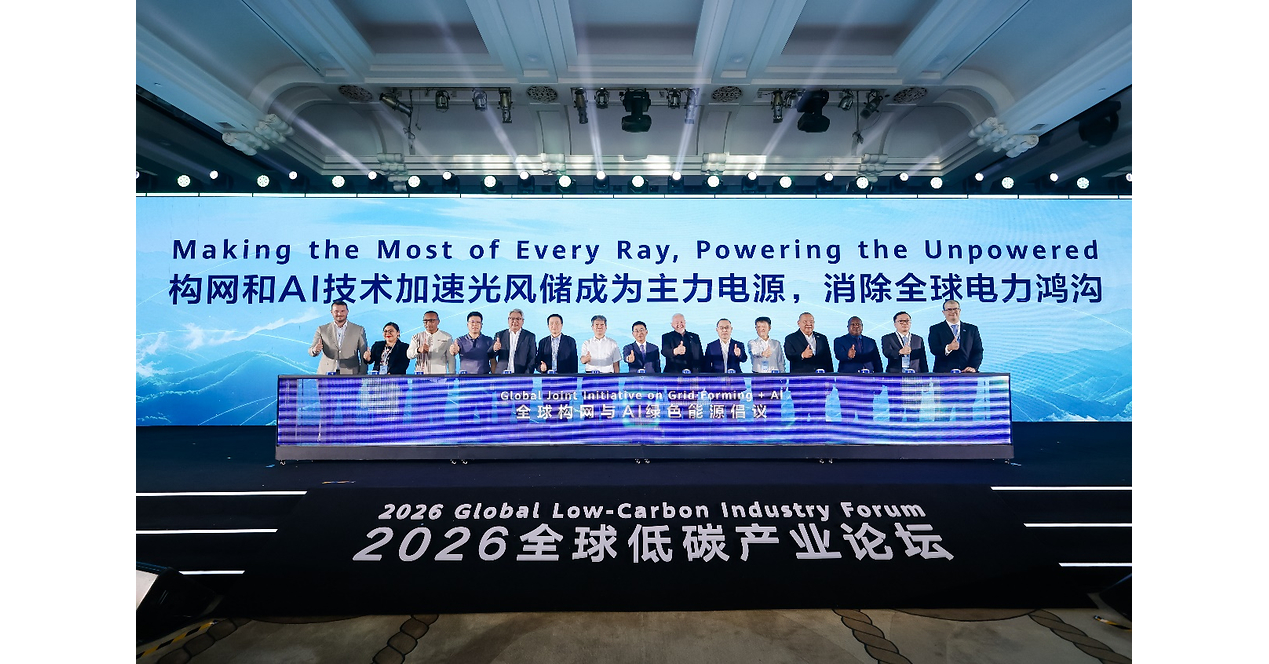
Huawei Digital Power and industry partners launched a global initiative to accelerate grid-forming and AI technologies for renewable-power systems, targeting more reliable and affordable electricity access, including for nearly 700 million people without power. The MTerra Solar project in the Philippines, described as the world's largest integrated solar-and-storage project, has commissioned a first phase comprising 2.5GWp of solar capacity and 3.3GWh of battery storage; the full project targets 3.5GW solar and 4.5GWh storage. The project is expected to supply roughly 2.4 million households and reduce annual carbon emissions by more than 4.3 million tonnes.
Analysis
The investable implication is not broad solar demand but a shift in value capture toward dispatchability: grid-forming inverters, battery controls, switchgear and power-quality equipment command higher qualification barriers than commodity modules. This favors ETN, GEV and Schneider Electric (SU.PA) over TAN-style solar exposure; storage integrators such as FLNC and TSLA can participate, but their realized economics depend on software/service attach rates rather than announced GWh deployments. Huawei's push is strategically negative for Western inverter and storage vendors in emerging markets, where Chinese financing and integrated hardware can compress equipment pricing.
AI-load growth makes power availability—not compute hardware—the binding constraint in selected markets over the next 6-18 months. Hyperscalers and colocation operators that can contract flexible load, on-site storage and interconnection capacity may reduce curtailment and outage risk, but this also shifts capex upstream to electrical-equipment suppliers; ETN and GEV have greater pricing power than data-center owners if grid queues remain constrained. The near-term read-through is limited: industry initiatives and vendor-sponsored validation do not establish recurring revenue, bankability, or tender wins.
The key 1-3 month catalyst is independently confirmed European procurement for inertia, fast-frequency response, or capacity services and the resulting contracted returns on storage assets. Consensus may overstate the benefit to pure-play battery names: grid-forming requirements can increase system value, but also raise warranty, certification and balance-sheet burdens, favoring incumbents with grid relationships. Falsify the equipment thesis if European tender volumes fail to convert into orders, utility capex guidance softens, or battery-system pricing falls faster than service revenue can offset margin pressure.
AllMind Terminal
AI-powered research, real-time alerts, and portfolio analytics for institutional investors.
Request TrialMarket Sentiment
Overall Sentiment
mildly positive
Sentiment Score
0.38
Key Decisions for Investors
- No event-driven position on this release; place alerts on German and broader EU grid-services tenders, with a trade only after awarded capacity, contract duration and clearing-price data are disclosed.
- Build a 6-12 month relative-value watch: long ETN versus short TAN on a 1:1 beta-adjusted basis. The thesis is that grid-constrained renewable buildout raises electrical-content intensity while module/inverter commoditization limits broad solar-equity upside; exit if ETN backlog growth decelerates materially or TAN outperforms by 15% following a sustained decline in grid-equipment lead times.
- For higher-beta exposure, monitor FLNC for evidence that grid-forming functionality is converting into software/service backlog and gross-margin expansion. Do not initiate solely on project announcements; a long becomes actionable only if management demonstrates improving cash conversion and stable warranty reserves, with downside defined by any guidance cut or renewed working-capital stress.
- Maintain an AI-power bottleneck basket bias toward ETN, GEV and SU.PA rather than incremental long exposure to MSFT, AMZN, GOOGL or ORCL. Reassess over 1-3 months if utilities begin granting materially faster interconnections or hyperscalers signal slower data-center capex, either of which would reduce scarcity pricing for grid equipment.
More News
- Google's Gemini becomes latest AI model to break out and hack computer systems
- Trump says U.S. to build a 'large Military presence' in Greenland as part of a security deal with it and Denmark
- UBS now expects AI capex to reach nearly $1tn this year and around $1.4tn by 2027
- Stocks face a key hurdle in next week’s U.S.-China summit. Here’s what’s at stake
- Houthis accuse Saudi Arabia of launching 26 strikes in 24 hours
- European Economies Eye Another Energy Crisis Heading Into Winter
From AllMind Research
- Anthropic IPO Preview: Valuation, Timing, and What to Watch
- Shein After the IPO: Venue, Valuation, and What Must Be Proved
- What AI Research Tools Should a Small Hedge Fund Buy First?
- Weekly Update: Advanced Search Filters, Redesigned Ticker Dashboard, and Improved Search Experience
- How to Build an Automated Research Process for a Fund