
Biggest US Grid Suspends Plan for New Data Center Power Auction
Source: Bloomberg
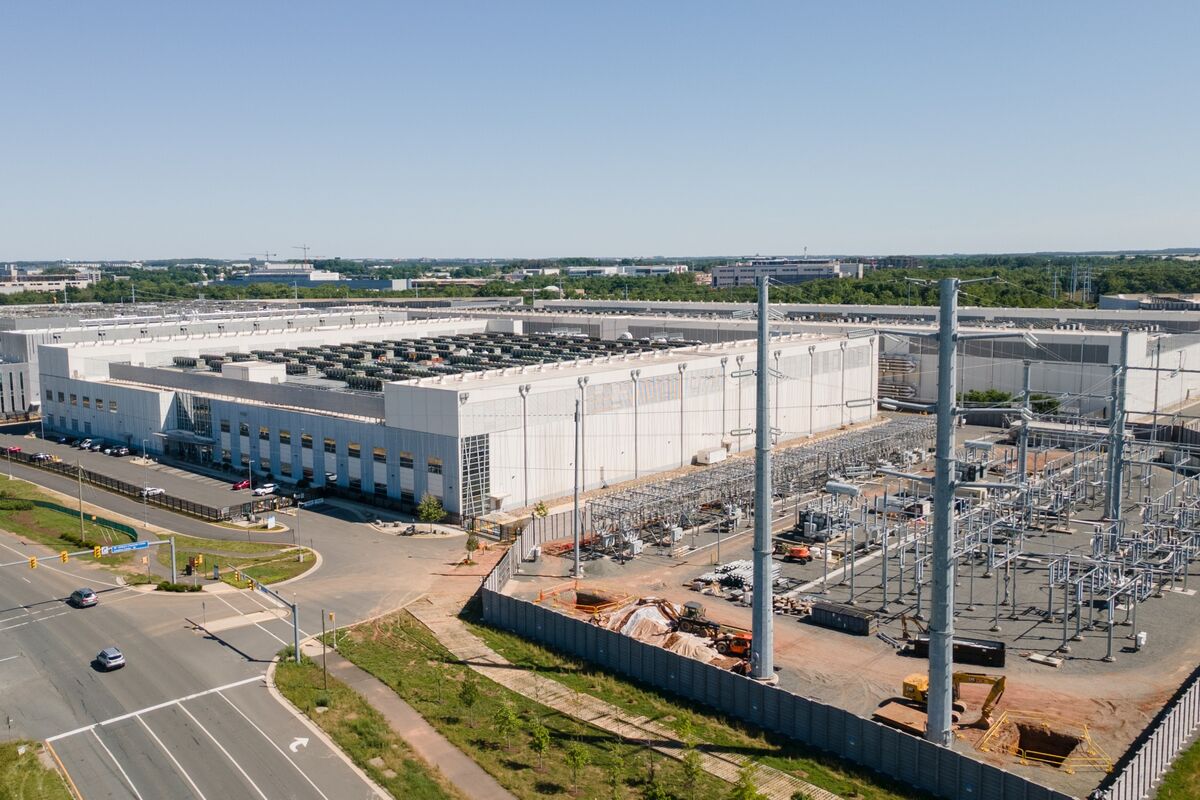
PJM Interconnection, operator of the largest US electric grid, suspended a planned auction intended to secure power for rapidly growing data-center demand. The move came less than a day after a federal energy regulator ordered PJM to overhaul its proposal, creating uncertainty around how new large-load capacity will be procured and potentially delaying power-supply solutions for data-center development.
Analysis
The near-term issue is not power scarcity but the loss of a transparent mechanism for allocating and pricing incremental firm capacity. That raises execution risk for hyperscaler-backed data-center projects in the PJM footprint, where a project without a contracted path to deliverable power can shift from a construction schedule issue to a financing issue. The most exposed equities are not diversified AI beneficiaries, but regional transmission/distribution utilities and merchant generators whose valuation cases embed accelerated load growth or capacity-price upside.
CEG, VST and NRG retain favorable 6-18 month scarcity economics because delayed policy resolution does not create new dispatchable supply; it may instead increase the value of existing nuclear and gas capacity once a replacement framework is adopted. However, the next 1-3 months could see multiple compression if investors had expected a near-term capacity-price signal, particularly for CEG and VST after their AI-power reratings. PPL, EXC and PSEG face a different risk: demand-growth narratives may remain intact, but regulated returns depend on approved transmission/capex recovery rather than merely higher regional load.
Contrarian view: this is more negative for the timing of data-center energization than for aggregate AI capex. Large customers can procure behind-the-meter generation, relocate workloads toward ERCOT/MISO/regulated Southeast markets, or sign bilateral contracts; that substitution favors distributed-power suppliers such as CMI and ETN over pure PJM grid-exposure trades. The thesis is falsified by a replacement mechanism that restores a credible capacity procurement timeline, or by disclosed hyperscaler project delays/cancellations in PJM that demonstrate load is not simply being deferred.
AllMind Terminal
AI-powered research, real-time alerts, and portfolio analytics for institutional investors.
Request TrialMarket Sentiment
Overall Sentiment
mildly negative
Sentiment Score
-0.25
Key Decisions for Investors
- Reduce tactical overweight in CEG and VST for the next 1-3 months; retain core 6-18 month exposure only. Re-enter on a regulatory timetable that restores capacity-price visibility or on a 10-15% pullback without deterioration in contracted load or nuclear availability guidance.
- Pair trade: long CMI and ETN / short a basket of PJM load-growth-sensitive utilities (PPL, EXC, PSEG) over 3-6 months. Distributed generation and electrical equipment benefit if customers bypass delayed centralized procurement; exit if PJM establishes an implementable replacement process with firm project energization dates.
- Do not short EQIX or DLR solely on this development. Instead, set an alert for earnings disclosures of delayed power delivery, reduced development starts, or rising reserved-power deposits in the Mid-Atlantic; those would justify a tactical short or put spread because utilization assumptions can reset quickly once construction pipelines slip.
- Monitor PJM capacity-price guidance, interconnection queue milestones, and announced bilateral power contracts. A rapid policy resolution is a catalyst to cover utility shorts and add back merchant generation exposure; evidence of project migration toward Texas or the Southeast strengthens the CMI/ETN relative-value thesis.
More News
- Russia warns NATO of possible nuclear response if Kaliningrad is cut off
- Stocks Jump on inflation Surprise, Apple's Smart-Home Push
- Bloomberg Tech: OpenAI Seeks $30B as Trump Backs Safety Audits
- Saudi Arabia not to compromise on security as Houthis choose ‘chaos’: MBS
- Boeing beats Northrop to build the US Navy’s $20bn F/A-XX fighter
- Trump set to announce $200bn in energy investments from South Korea
From AllMind Research
- Anthropic IPO Preview: Valuation, Timing, and What to Watch
- Shein After the IPO: Venue, Valuation, and What Must Be Proved
- What AI Research Tools Should a Small Hedge Fund Buy First?
- Augmented Intelligence: AllMind, Elevate Human Judgement With an Accessible, Powerful, Data-Driven Financial AI Toolkit
- AI Research Systems for Hedge Funds: A Pilot Design