
"Taiwan Weeks 2026" Opens as Taiwan Strengthens Global Capital Market Connectivity
Source: PR Newswire
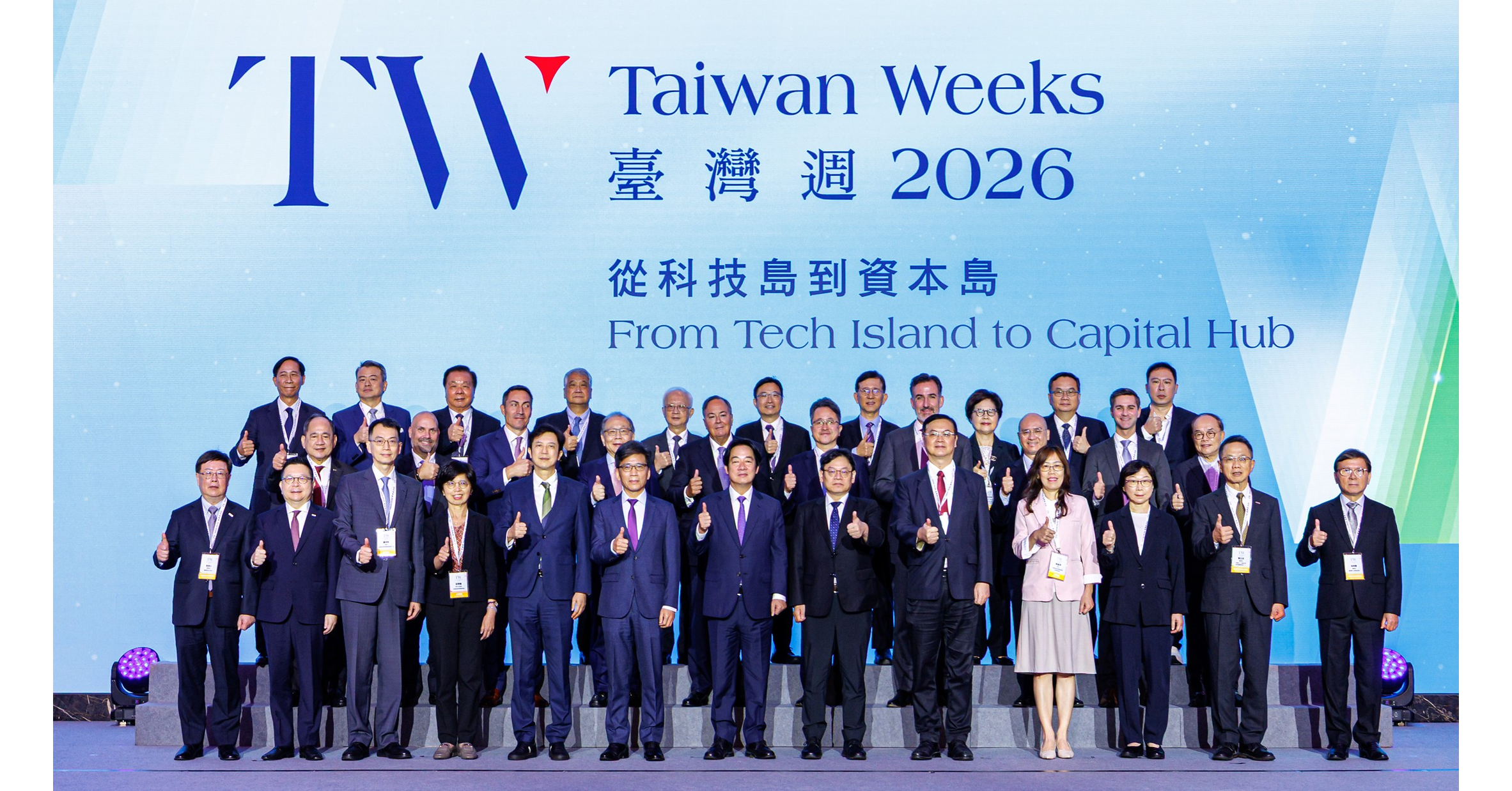
Taiwan opened its second annual Taiwan Weeks, drawing more than 400 participants and featuring over 45 events through November 13 to promote global capital-market connections and its Asian Asset Management Center initiative. FSC Chairman Peng Jin-lung said the TAIEX rose from 28,000 to 45,000 points over the past year, while Taiwan’s total market capitalization reached NT$158 trillion (US$5.03 trillion) and ETF assets reached NT$11.6 trillion (US$370 billion), third in Asia-Pacific. The program also covers market reforms, sustainability disclosures, AI opportunities and connections between AI startups and international investors.
Analysis
This is a policy-intent signal, not yet an earnings catalyst. The investable test is whether Taiwan converts its asset-center ambitions into durable foreign allocations, new fund domiciles, and lower friction for cross-border distribution. If implemented, local exchanges, custodians, brokers, and asset managers could capture recurring fee pools; the competitive pressure would fall more on Singapore, Hong Kong, and Tokyo than on technology suppliers. A second-order benefit for listed Taiwanese companies would be a broader domestic investor base and potentially lower equity-capital costs—but only if governance and disclosure reforms improve credibility rather than add compliance overhead.
Near term (days), the event itself is unlikely to justify chasing Taiwan equities after a substantial run; celebration and already-strong AI-linked sentiment risk obscuring concentration and valuation exposure. Over 1–3 months, monitor concrete FSC rule changes, foreign net flows, fund launches, and ETF creations/redemptions. Over 6–18 months, the structural thesis depends on international investors allocating to Taiwan beyond semiconductor/AI exposure. Key reversal risks are stalled implementation, geopolitical risk repricing, a reversal in AI capex, or domestic ETF demand proving cyclical rather than institutional. The contrarian point: headline ETF AUM and index gains do not establish Taiwan as a regional asset-management hub; market depth, international distribution, and persistent non-domestic flows are the harder proof points.
AllMind Terminal
AI-powered research, real-time alerts, and portfolio analytics for institutional investors.
Request TrialMarket Sentiment
Overall Sentiment
mildly positive
Sentiment Score
0.25
Key Decisions for Investors
- No event-driven broad Taiwan long on this announcement alone. Treat the initiative as an alert; consider adding exposure only after verifiable rule changes and sustained foreign net buying, rather than local ETF AUM growth by itself.
- Watch Taiwan financial intermediaries and exchange-linked businesses as conditional beneficiaries, but verify which listed firms have meaningful custody, fund administration, or distribution revenue before selecting names; the article provides no company-level economics.
- For a relative-value expression, compare Taiwan equities with Singapore/Hong Kong/Tokyo financial-market exposure only after evidence of fund domiciliation or cross-border distribution shifts. Define the catalyst as realized asset inflows, not additional conferences or announcements.
- Falsify the structural thesis if reforms stall, international fund launches fail to materialize, or foreign flows remain weak while Taiwan’s index performance continues to rely narrowly on AI/semiconductor demand. Also reassess on a material deterioration in AI-capex expectations or a renewed geopolitical risk premium.
More News
- What Wall Street billionaires are saying about Democrats' midterm sweep
- NextDC shares surge 43% after Goodman, Digital Realty stake purchases
- A blue wave sends futures into the green
- Asian chip stocks slide as disappointing Qualcomm, Arm earnings weigh
- Oil and data centre stocks sink after US midterms
- China Blocks SoftBank Acquisition of ABB Robot Unit, FT Says