
New HFSA Scientific Statement Calls for Right Heart Failure to Be Recognized as a Distinct Clinical Syndrome
Source: PR Newswire
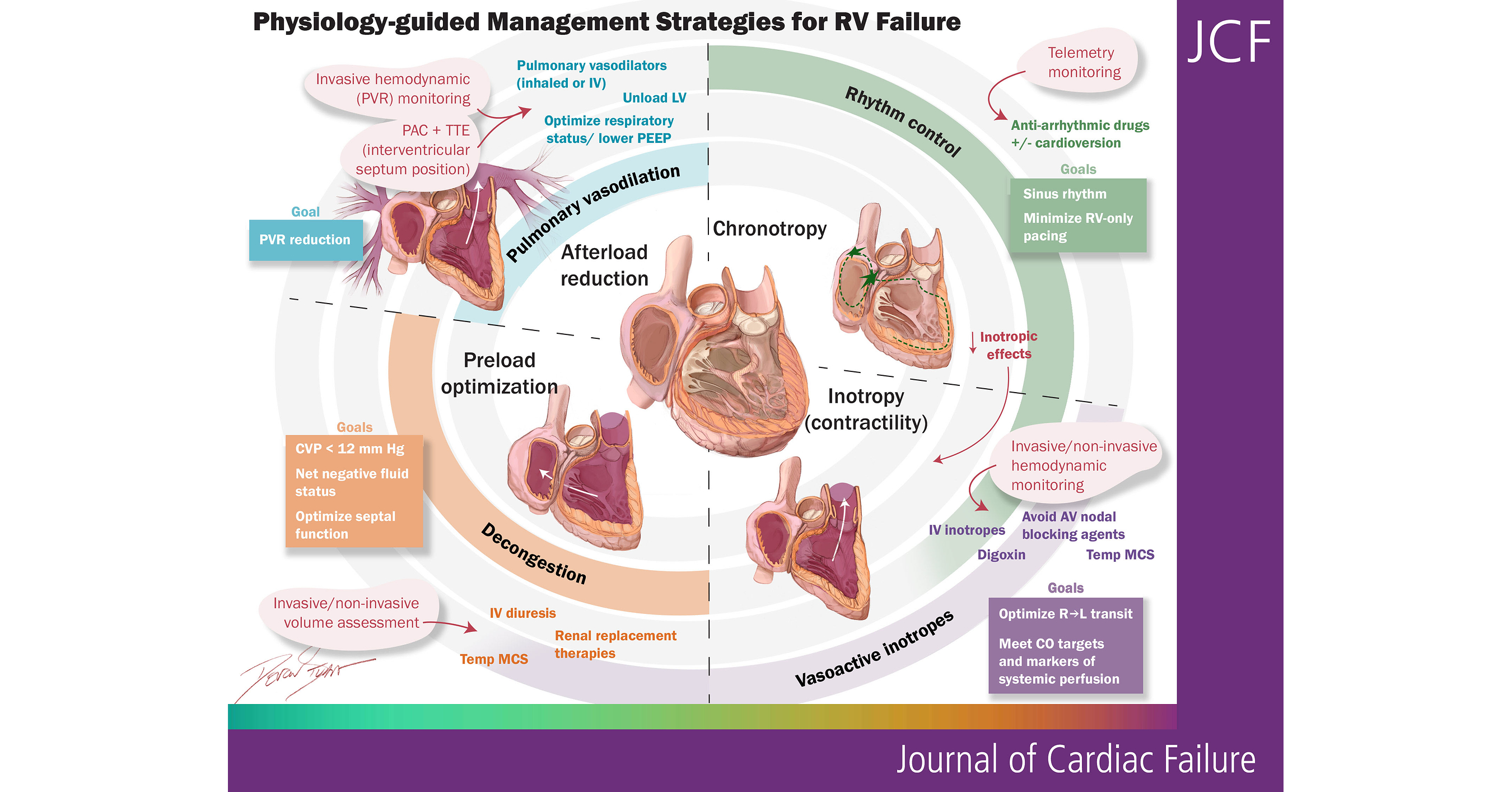
The Heart Failure Society of America published a scientific statement urging clinicians to recognize right heart failure as a distinct syndrome, not merely a complication of left-sided heart disease. It provides a structured approach to evaluation and acute management, including guidance on PAH therapies, mechanical support, and tricuspid interventions; the statement notes that survival benefits from transcatheter tricuspid interventions remain uncertain.
Analysis
The statement is a clinical-practice signal, not a near-term revenue catalyst: it neither establishes reimbursement nor demonstrates that earlier RHF recognition improves hard outcomes. The more investable implication is potential redistribution of care toward hemodynamic workups, ICU management, and selected right-sided devices—not a broad expansion of heart-failure drug demand. If adoption raises use of right-heart catheterization and echocardiography, diagnostic providers and hospitals could see incremental activity, but the statement itself flags the economic burden and coding gap as unresolved.
Device optionality is concentrated in selected patients: Abbott and Johnson & Johnson (Abiomed) could be relevant to temporary RV support, while Abbott and Edwards Lifesciences have tricuspid-intervention exposure. That is a watchlist, not a buy signal; selection criteria, procedure volumes, and survival benefit remain uncertain. Conversely, clearer warnings against PAH-targeted drugs in pulmonary hypertension associated with left-heart disease may constrain inappropriate use and temper any thesis of broad PAH-drug market expansion.
Near term (days): likely negligible fundamental impact. Over 1–3 months, monitor clinician adoption, coding/reimbursement commentary, and company procedure-volume disclosures. Over 6–18 months, standardized RHF definitions and trials could create a more durable market—but could also reveal a smaller eligible population. Contrarian angle: framing RHF as distinct may improve recognition, yet more diagnosis does not automatically produce reimbursed treatment or better outcomes. The thesis weakens if utilization fails to rise, coverage remains absent, or trial data do not show clinically meaningful benefit.
AllMind Terminal
AI-powered research, real-time alerts, and portfolio analytics for institutional investors.
Request TrialMarket Sentiment
Overall Sentiment
mildly positive
Sentiment Score
0.20
Key Decisions for Investors
- No immediate sector trade: treat the statement as a low-impact practice-setting signal, not evidence of an addressable-market step-up.
- Keep Abbott, Johnson & Johnson (Abiomed), and Edwards Lifesciences on a conditional device watchlist; require disclosed procedure growth, broader eligibility, or supportive outcomes evidence before taking exposure.
- Monitor PAH-therapy guidance and utilization separately: stricter classification could limit use in left-heart-associated PH, offsetting any demand uplift from improved RHF diagnosis.
- Set an adoption alert for the next 1–3 months: look for reimbursement/coding changes, hospital pathway implementation, and disclosed catheterization or tricuspid-procedure volumes. Lack of these would falsify the near-term commercialization case.
More News
- Artiva halts AlloNK development, cuts 94% of workforce
- Universal Health Services falls 3% on legal settlement concerns
- Midterm elections: How affordability and the economy could impact voters
- Why is Artiva Biotherapeutics stock collapsing today?
- adar1 capital management buys $53,691 of NextCure stock
- Zura Bio shares jump on Wedbush buy call ahead of trial data
From AllMind Research
- AllMind Platform Feature Updates - Fall 2026
- AI Credit Covenant Monitoring: From Clause to Review
- AI-Led Expert Interviews vs. Transcript Libraries
- Run Cost-Controlled Financial Research in AllMind Agent Studio
- AllMind Discusses Ontario's AI Economy with Minister Stephen Crawford and Supply Ontario CEO James Wallace