
Hormel Foods: A Protein Powerhouse With A Secure 5.5% Yield And Long-Term Value
Source: seekingalpha.com
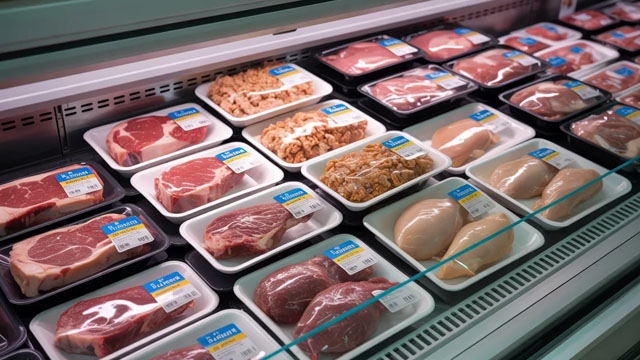
Hormel Foods (HRL) shares fell after its latest quarterly results, signaling investor concern around sector headwinds. The article argues HRL’s protein-led portfolio remains relatively resilient, with turkey and other poultry representing a meaningful portion of sales. It also points to consumer demand shifting toward poultry, which may help cushion the broader food-sector pressure despite the initial post-earnings selloff.
Analysis
The market is likely punishing HRL for a near-term credibility reset, but the bigger question is whether this is a company-specific miss or a signal that the whole defensive-food complex is getting repriced. If the selloff is mostly multiple compression, the stock can rebound quickly once the tape realizes that protein exposure still has better volume durability than shelf-stable branded groceries; if it is a demand problem, the downside can persist across the entire aisle. The key second-order effect is relative share: consumers under pressure tend to buy cheaper protein at home before they abandon it entirely, which should favor the best-positioned protein processors and private-label-adjacent suppliers over center-store brands.
The contrarian read is that consensus may be too focused on the quarter and not enough on mix. Protein-heavy portfolios can look messy in any one print, but they often have more pricing flexibility and better inventory turns than packaged-food peers when consumers trade down. That said, the trade is fragile if feed costs, bird health issues, or promotional intensity move against margins; those are the variables that can turn a “defensive” story into an earnings trap.
Time horizon matters: the immediate move is about sentiment and positioning, while the 1-3 month setup depends on scanner data, management commentary, and whether commodity inputs normalize enough to preserve spread. Over 6-18 months, the stock either compounds as a relatively resilient food asset or keeps de-rating if volume is being bought at the expense of profitability. The falsifier is simple: if the next update shows sustained volume erosion or another guide cut, the market is telling you the resilience premium is not deserved.
AllMind Terminal
AI-powered research, real-time alerts, and portfolio analytics for institutional investors.
Request TrialMarket Sentiment
Overall Sentiment
mildly negative
Sentiment Score
-0.25
Ticker Sentiment
Key Decisions for Investors
- Wait for 2-3 sessions of post-earnings stabilization, then consider a starter long in HRL for a 1-3 month mean-reversion trade; take profit on a retrace of roughly half the post-print gap, and cut if the next commentary confirms continued margin pressure.
- Relative-value trade: long HRL / short KHC or GIS in equal dollars for 1-3 months to express protein-mix resilience versus more center-store-heavy packaged food; thesis fails if HRL’s gross margin underperforms peers on the next print.
- Set a watchlist alert on retail scanner data and input-cost spreads for poultry/feed over the next 4-8 weeks; if volumes stabilize and input costs ease, add to HRL, but if either deteriorates, avoid bottom-fishing.
- Do not chase downside puts after the selloff unless implied volatility stays elevated into the next session; the better risk/reward is likely in a post-event stabilization entry rather than buying panic.
- If broader staples weakness continues, use XLP only as a hedge, not a directional short, until there is evidence that consumer trade-down is hitting protein demand rather than just branded pantry items.
More News
- Take Five: Bangkok blues
- ‘If nothing is done, it’s almost inevitable’: Ukraine’s Yuriy Ryzhenkov on why steelmaking is on the brink of collapse as Russian bombing intensifies
- Why is LG Innotek stock plunging today?
- TotalEnergies, KKR expand U.S. solar venture with 700 MW addition
- TSMC expected to report sixth straight quarter of record profit thanks to AI boom
- Vår Energi cuts 2026 output forecast; Q3 production at 369,000 boepd
From AllMind Research
- Anthropic IPO Preview: Valuation, Timing, and What to Watch
- Shein After the IPO: Venue, Valuation, and What Must Be Proved
- What AI Research Tools Should a Small Hedge Fund Buy First?
- AllMind's Data Standardization Methodology: Our Approach to Fundamentals
- What Makes Financial Data Ready for AI Research?