
CATL prezentuje TECTRANS II na targach IAA Transportation 2026, przyspieszając elektryfikację pojazdów użytkowych na świecie
Source: PR Newswire
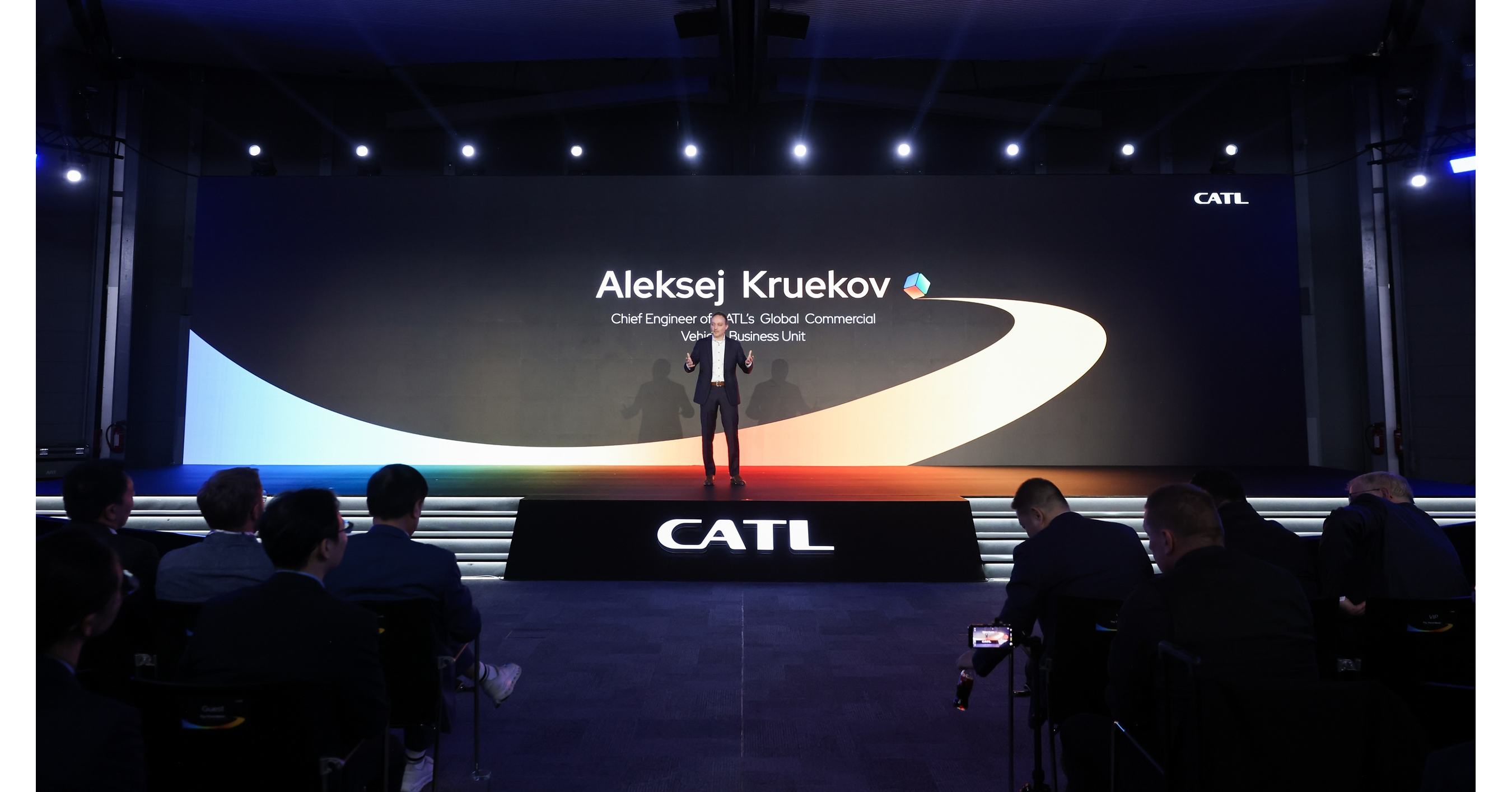
CATL unveiled its TECTRANS II modular commercial-vehicle battery platform, offering up to 1,000 km range, 170 Wh/kg energy density and 80% charging in 25 minutes using megawatt-scale charging. The company says the standardized platform can cut OEM vehicle development cycles by 50% and R&D costs by 60-70%, while enabling 0.6 tonnes of additional payload versus average-industry battery density. CATL also signed an MoU with DHL Group to develop green freight corridors across Europe, including bespoke EV development and pilot projects.
Analysis
The investable implication is less about near-term fleet orders and more about who captures the commercial-vehicle battery architecture. A standardized pack ecosystem can shift OEM differentiation away from battery integration toward vehicle software, service networks and financing, strengthening CATL's bargaining position versus European cell challengers and pressuring truck OEMs that have invested in proprietary platforms. CATL (3750 HK) gains most if standardization reduces customer switching costs only after it has secured interface and service-network lock-in; that outcome is not established by a product launch.
For DHL Group (DHL.DE), the economic upside depends on route-level total cost of ownership rather than fleet electrification headlines. Long-haul utilization, electricity demand charges, residual-value guarantees and charger uptime determine whether lower energy and maintenance costs offset higher vehicle and depot capex; initial pilots are therefore more likely to raise capital intensity than near-term EBIT. The more immediate second-order beneficiaries are megawatt-charging and depot-grid suppliers such as ABB (ABBN SW) and Siemens Energy (ENR GR), provided European grid interconnection queues do not become the binding constraint.
Consensus may overread the partnership as committed volume. There is no disclosed purchase commitment, pricing, exclusivity, financing structure or independently verified field-performance data, making this insufficient on its own to revise DHL estimates. Over the next 1-3 months, monitor named OEM pilots, depot locations and charger awards; over 6-18 months, the decisive catalyst is recurring fleet deployment accompanied by measurable utilization and residual-value data. The thesis is falsified if deployments remain demonstrators, European local-content rules restrict Chinese battery sourcing, or charging economics fail to meet diesel parity on high-mileage routes.
AllMind Terminal
AI-powered research, real-time alerts, and portfolio analytics for institutional investors.
Request TrialMarket Sentiment
Overall Sentiment
moderately positive
Sentiment Score
0.58
Ticker Sentiment
Key Decisions for Investors
- No standalone DHL.DE trade on this announcement. Set an event-driven alert for disclosed vehicle volumes, multi-year capex commitments or quantified operating-cost savings; initiate only if management identifies deployment large enough to affect group capex or EBIT guidance within 12 months.
- Build a 6-12 month watchlist long 3750 HK / short a diversified European battery-materials proxy such as UMICORE BB only after confirmed European commercial-vehicle awards. The setup expresses architecture and scale advantage, but use a tight stop if EU sourcing or tariff rules favor localized cells; the missing inputs are contract pricing and local manufacturing content.
- For a lower-beta infrastructure expression, accumulate ABBN SW on confirmed European megawatt-charger/depot electrification tenders rather than the product launch. Target a 6-18 month holding period; invalidate if grid-connection lead times extend materially or charger utilization remains below economic thresholds.
- Avoid shorting Daimler Truck (DTG GR), Volvo (VOLV-B SS) or TRATON (8TRA GR) solely on battery commoditization. Their service revenue, financing arms and installed fleet relationships can absorb integration-margin pressure; reassess only if they disclose material platform redesign costs or worsening electric-truck gross-margin guidance.
More News
- China's AI leaders keep quiet despite U.S. 'publicity' on tech risks
- Exclusive-Malaysia talks to rival airlines as it monitors AirAsia’s financial health, sources say
- Karin Rådström is steering Daimler Truck in a new direction as the world’s biggest truckmaker faces a growing challenge from China
- MBS and Saudi Arabia Face Crisis With Key Oil Pipeline Shut for Weeks
- AWS says it can't restore service to Bahrain, UAE facilities 6 months after Iran strikes
- Oil’s next test: Saudi Arabia races to restore a key safety valve for prices
From AllMind Research
- Anthropic IPO Preview: Valuation, Timing, and What to Watch
- Shein After the IPO: Venue, Valuation, and What Must Be Proved
- What AI Research Tools Should a Small Hedge Fund Buy First?
- Reading Conviction in the Tape: What Level 3 Order Book Data Really Tells Discretionary PMs
- AI Tools for CFA Charterholders: An Evidence Standard