
DUVA présente DUVA ONE à l'IFA 2026 : des écouteurs personnalisés dédiés au sommeil qui réagissent en temps réel
Source: PR Newswire
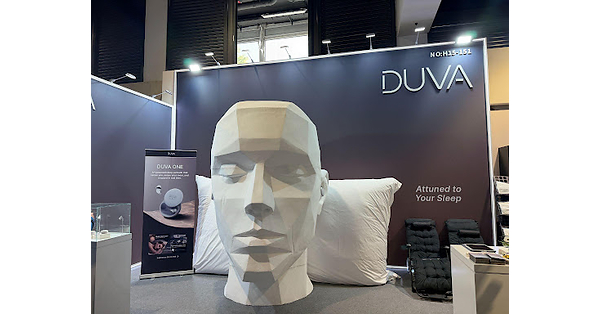
Fitnexa's DUVA unveiled DUVA ONE at IFA Berlin 2026, a $349.99 AI-enabled sleep-earbud system scheduled for release in October 2026 across the U.S., Canada, UK, EU and Australia. The device combines in-ear PPG and motion sensors with an environmental-sensing charging case to adapt audio, active noise cancellation and sleep interventions in real time. DUVA cites up to 42dB noise reduction, up to 16 hours of battery life in its most efficient setting, and privacy features that avoid recording conversations or storing ambient audio.
Analysis
This is not yet an investable revenue event: a privately held entrant’s launch claims lack evidence on channel access, return rates, clinical validation, customer-acquisition cost, or unit economics. The relevant public read-through is modestly negative for single-purpose sleep-device vendors such as Sleep Number (SNBR), whose premium positioning depends on turning sleep data into a differentiated experience, while modestly positive for broad consumer-electronics ecosystems that can replicate adaptive audio features at scale.
The more important competitive implication is category convergence. Ear-worn PPG plus noise cancellation combines functions presently fragmented across wearables, sleep trackers, white-noise products, and headphones; Apple (AAPL), Samsung Electronics (005930 KS), Sony (6758 JP), Garmin (GRMN), and Alphabet (GOOGL/Fitbit) have distribution, silicon, health-data, and recurring-service advantages if demand validates the use case. Conversely, sustained adoption would raise expectations for passive, overnight biometric data quality and pressure smaller hardware brands whose datasets lack clinical credibility or ecosystem lock-in.
Near-term, there is no reason to trade listed consumer-electronics names on an unpriced product from an unlisted company. Over 6-18 months, watch whether sleep-focused earbuds become a durable premium subcategory rather than a high-return niche: retail sell-through, review-driven comfort/battery complaints, and any evidence that users pay for software services are the key gating data. Privacy positioning may reduce regulatory friction, but it also limits data monetization; the economic value therefore depends on hardware gross margin and repeat accessory sales, not an assumed AI multiple.
AllMind Terminal
AI-powered research, real-time alerts, and portfolio analytics for institutional investors.
Request TrialMarket Sentiment
Overall Sentiment
moderately positive
Sentiment Score
0.42
Key Decisions for Investors
- No immediate position: treat the launch as a category-validation alert, not a catalyst for AAPL, GRMN, SNBR, Sony (6758 JP), or Samsung (005930 KS). Reassess after 60-90 days of launch sell-through, return-rate and review data.
- Maintain a structural preference for AAPL over standalone sleep-hardware exposure over 6-18 months: any proof that consumers value overnight ear-worn sensing expands Apple’s addressable wearable use cases, while its installed base and services ecosystem should capture more value than a new device vendor.
- Use SNBR as a watch-list short only if management cites improving sleep-tech engagement without matching subscription, replacement-cycle, or gross-margin improvement; a credible clinical partnership or material recurring-revenue acceleration would falsify the thesis.
- Monitor Sony (6758 JP) and 005930 KS product roadmaps for overnight biometrics integrated into premium ANC earbuds. A major incumbent launch with health-regulatory validation would be a stronger catalyst than this announcement and could justify a long versus smaller wearable peers.
More News
- OpenAI Trims Target Value & Volvo Cars Cuts 2,500 Jobs
- PG&E’s CEO says AI is ‘the best thing that could’ve ever happened to the grid’
- The mobile ambitions of SpaceX see telecom stocks get hit again. What the latest developments mean.
- Wake up! The long bond’s up two points!
- US tech stocks tumble as investors fret over AI spending
- Mark Zuckerberg owns 13% of Meta but controls 61% of its votes. California’s wealth tax would bill him on the 13%