
MEXC Adds Another 1,000 BTC to Guardian Fund, Strengthening User Protection
Source: PR Newswire
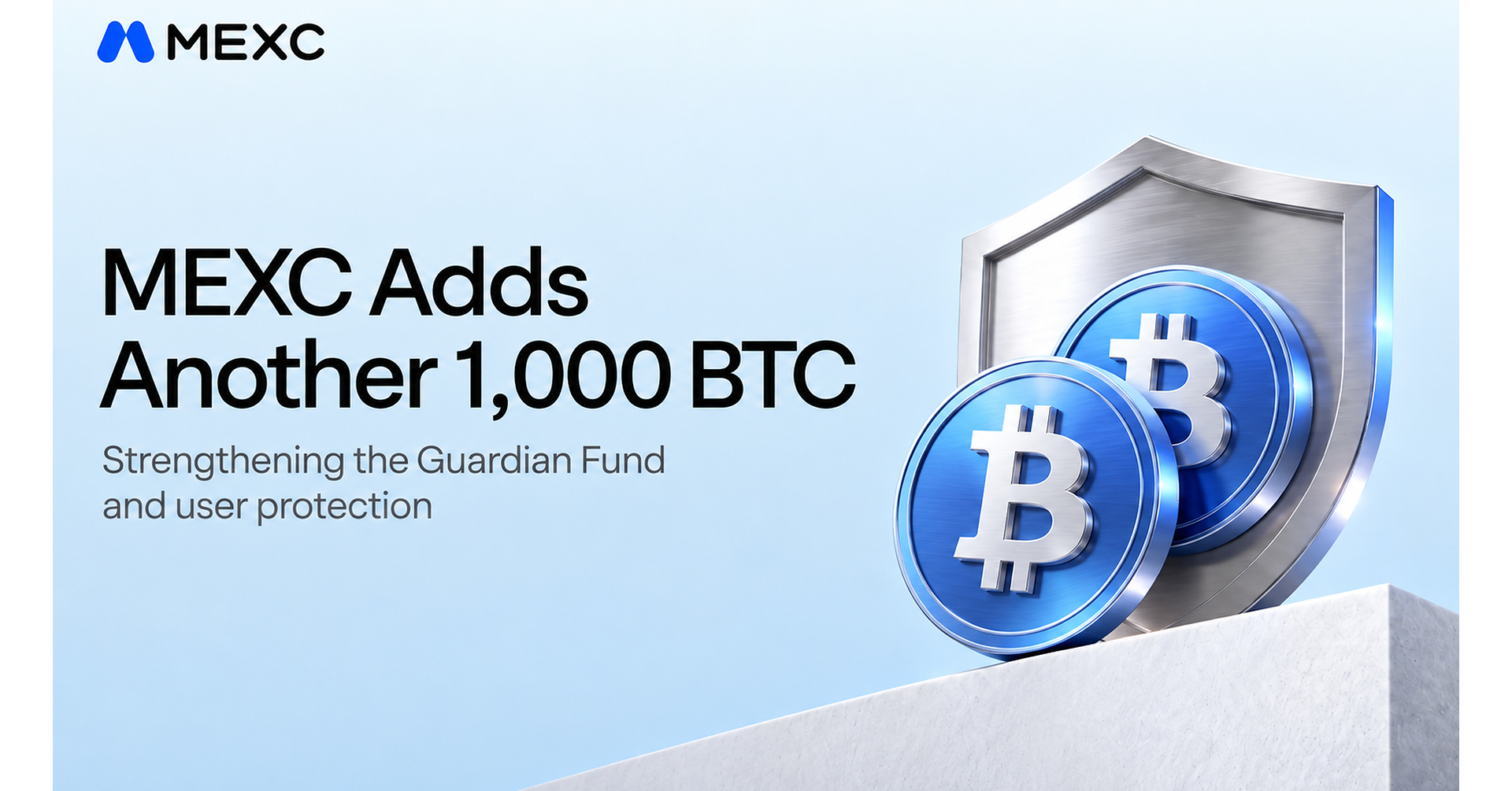
MEXC added 1,000 BTC to its Guardian Fund, bringing the reserve to 2,000 BTC plus $100 million USDT as it works toward a $500 million protection-fund target over two years. The exchange framed the allocation as a response to evolving crypto-industry security threats and said its reserve wallets are publicly verifiable on-chain. The announcement modestly strengthens MEXC's user-protection and transparency positioning but is unlikely to materially affect broader crypto markets.
Analysis
This is not a meaningful incremental demand signal for BTC: a 1,000-BTC transfer is immaterial versus daily spot turnover and, absent proof of new purchases rather than internal wallet relabeling, should not be interpreted as net market buying. The more relevant signal is competitive: reserve branding is becoming a customer-acquisition cost for offshore exchanges, pressuring already-thin economics at zero-fee venues. A BTC-denominated protection pool also creates asset-liability mismatch risk in a sharp crypto drawdown, when customer claims and operational stress may rise as the reserve’s USD value falls.
For listed proxies, COIN and HOOD benefit only indirectly if successive offshore-platform security events shift marginal users toward regulated, audited custodians; that is a 6-18 month trust-premium theme, not an immediate revenue catalyst. Conversely, stronger public reserve disclosures from offshore competitors could modestly reduce the relative safety premium embedded in COIN’s valuation if users regard on-chain balances as equivalent to audited solvency—which they are not. The missing variable is total customer liabilities, legal segregation of reserves, and independently audited control of the disclosed wallets; wallet visibility alone cannot establish coverage or bankruptcy remoteness.
The contrarian view is that markets may overvalue visible reserve balances while underweighting the expense required to maintain liquidity, cybersecurity, compliance, and loss absorption through a cycle. Any near-term read-through should be limited unless the disclosure triggers measurable market-share changes, fee changes, or a broader industry move toward independently attested proof-of-reserves plus proof-of-liabilities.
AllMind Terminal
AI-powered research, real-time alerts, and portfolio analytics for institutional investors.
Request TrialMarket Sentiment
Overall Sentiment
mildly positive
Sentiment Score
0.32
Key Decisions for Investors
- No directional BTC or crypto-equity trade on this announcement alone; treat it as a low-impact, company-issued disclosure rather than independently verified evidence of industry-wide balance-sheet strengthening.
- Maintain a 1-3 month watch on COIN versus offshore-exchange volume share and net take rate. Consider long COIN only if regulated-venue spot/derivatives share rises for at least two consecutive monthly reporting periods without a material decline in transaction revenue guidance; falsifier: falling COIN market share or further take-rate compression.
- For a 6-18 month quality tilt, prefer COIN over unlisted offshore-exchange exposure where institutional access requires a public proxy, but size against valuation risk: the thesis requires audited custody differentiation and sustained institutional trading activity, not reserve-marketing headlines.
- Set an alert for an independently verified exchange insolvency, hack, or withdrawal halt. That is the event that could create a short-duration long COIN / long IBIT relative trade; avoid acting on unverified social-media reports, and reassess if BTC falls sharply enough to impair sector-wide retail risk appetite.
More News
- Paramount Skydance prices $42 billion debt for Warner Bros deal
- Google rolls out Gemini 4 Argon, its most advanced AI model
- OpenAI links China’s Moonshot AI to attempt to extract its models’ reasoning
- OpenAI is sued over rogue AI Hugging Face cyberattack
- FTC is investigating OpenAI, Anthropic and other AI companies over product risks
- Investors thought they were buying pre-IPO OpenAI and SpaceX shares. Their cash went to strip clubs, Bloomingdale’s, and shopping on Amazon, SEC alleges