
Starship Test: SpaceX's Quest for the Holy Grail of Rocketry
Source: zacks.com
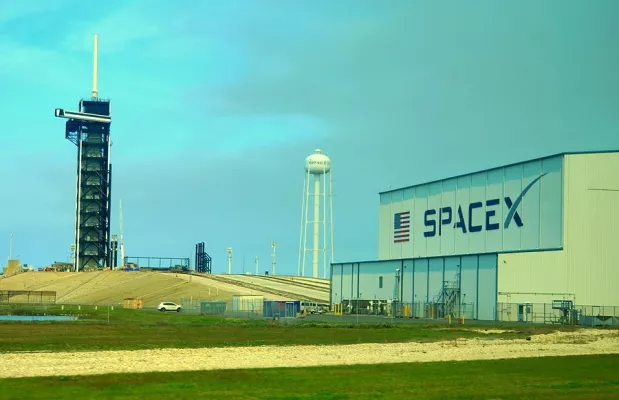
SpaceX plans Starship Flight 14 for September 22, targeting its first full-orbit attempt; if successful, Flight 15 would attempt to catch the vehicle, followed by reflight of both ship and booster later this year or early next year. Full reusability could reduce launch costs from roughly $20 million for Falcon 9 to $2-$5 million for Starship while supporting substantially larger payloads. Ark Invest's Cathie Wood projected up to $1 billion of revenue per launch and 10,000 annual flights, implying $10 trillion in 2030 revenue, though these highly speculative targets are far beyond demonstrated operations.
Analysis
There is no direct public-equity expression of Starship execution: SpaceX remains private, and “SPCX” is not a listed operating-company ticker. TSLA’s economic linkage is indirect and should not justify a material valuation revision; any sympathy move would be sentiment-driven rather than supported by consolidated cash flow, capital allocation, or shared operating assets. QBTS has no credible read-through and should be excluded from the theme.
The investable second-order effect is a prospective compression in launch cost and schedule scarcity, which is structurally negative for smaller launch providers whose economics depend on dedicated access to orbit, notably RKLB. Conversely, lower deployment costs can expand the addressable market for satellite infrastructure and in-space manufacturing, benefiting higher-quality operators such as ASTS and RDW only if they can monetize additional capacity rather than simply face lower barriers to entry. Over 6-18 months, a demonstrated rapid-reuse cadence would also strengthen SpaceX’s bargaining power against satellite customers and government procurement, pressuring competitors’ pricing and backlog quality.
Near-term, a successful test is primarily a private-market valuation and narrative catalyst, not a public-market earnings event. The consensus error is extrapolating technical milestones into implausible revenue outcomes before evidence of turnaround time, refurbishment labor, launch licensing, payload demand, and insurance economics. The relevant proof point is repeated operational reuse at commercially meaningful cadence; a single successful mission or recovery attempt does not establish the unit-cost curve.
Risk is asymmetric for launch peers: failure could create a temporary relief rally in RKLB and other alternative-access names, while a sequence of successful flights may gradually raise the discount rate investors apply to their long-duration launch-margin assumptions. Reassess after disclosed cadence targets, FAA approvals, and evidence that SpaceX converts lower costs into lower customer pricing rather than higher internal margins.
AllMind Terminal
AI-powered research, real-time alerts, and portfolio analytics for institutional investors.
Request TrialMarket Sentiment
Overall Sentiment
moderately positive
Sentiment Score
0.48
Ticker Sentiment
Key Decisions for Investors
- No standalone TSLA trade on this catalyst; require a measurable revision to Tesla deliveries, margins, capital allocation, or disclosed related-party economics before assigning fundamental value. Treat any event-day move as mean-reversion risk.
- Establish a 6-12 month watchlist short thesis on RKLB, not an immediate position: activate only if repeated Starship reuse is demonstrated and RKLB’s launch backlog/pricing or Neutron schedule weakens. Falsification: material Neutron de-risking, sustained backlog growth, or government awards that insulate pricing.
- For a positive reuse-cadence signal, prefer a small basket long ASTS/RDW versus short RKLB rather than a directional space trade; target 2:1 upside/downside over 6-18 months. Size modestly because all three remain execution- and financing-sensitive.
- Do not use QBTS as a proxy. Set an alert for a SpaceX financing round or credible IPO documentation; that is the only event likely to create a direct, liquid valuation read-through.
More News
- US official says upcoming spectrum auctions could generate more than $100 billion
- Status Of Anthropic IPO As AI Fears Mount
- The Competition's Response to Tesla Robotaxi Day
- Musk’s long-time backer is giving SpaceX stock to its investors
- Intel is leading chip gains. A top analyst sees the stock hitting $200 in two years
- Anthropic IPO Date: What Investors Need to Know Before It Prices
From AllMind Research
- Anthropic IPO Preview: Valuation, Timing, and What to Watch
- Shein After the IPO: Venue, Valuation, and What Must Be Proved
- What AI Research Tools Should a Small Hedge Fund Buy First?
- Weekly Update: Sector Analysis, Improvements on Research Data, and Performance Enhancements
- Choosing an AI Copilot for Equity Research