
Broadcom: 5 Reasons To Buy This Dip
Source: seekingalpha.com
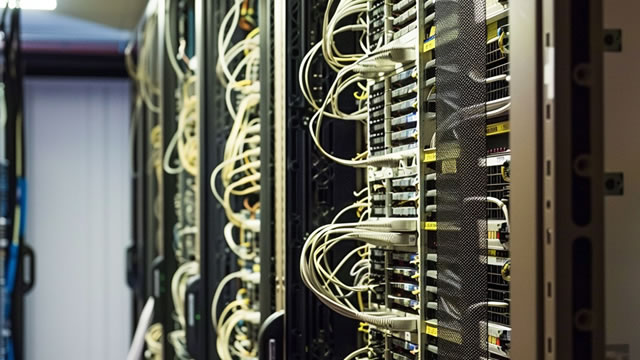
Broadcom's custom AI accelerators and networking silicon are driving rapid growth, supported by co-design partnerships with six frontier-model developers. Higher-memory custom-chip products and rising memory costs are pressuring gross margins, while operating leverage continues to expand EBIT margins. Google's supplier diversification and intensifying custom-chip competition represent a risk to Broadcom's future TPU design share.
Analysis
AVGO’s AI upside is increasingly a systems-integration story rather than a pure accelerator-volume story: proprietary interconnect, switching and co-design create meaningful customer switching costs, but also concentrate revenue in a small number of hyperscaler capex budgets. The near-term market should reward continued AI revenue beats, yet gross-margin dilution means incremental revenue will not translate into EPS at the same rate investors associate with AVGO’s software-heavy historical mix. The key 1-3 month debate is whether EBIT leverage can outrun HBM and advanced-packaging cost inflation; a gross-margin miss alongside intact revenue guidance would likely compress the AI premium multiple.
GOOG supplier diversification is strategically rational but should not be read as a near-term displacement event. Qualification cycles for advanced ASICs, HBM integration and high-radix networking are long, making incumbent content resilient through the next several product ramps; the more material risk is AVGO receiving a smaller share of the next TPU generation’s value stack 6-18 months out. A second-order beneficiary of broader custom-silicon adoption is MRVL, where hyperscaler design-win optionality is more material to valuation, while memory suppliers MU and SK Hynix benefit from rising accelerator memory intensity even if AVGO’s unit economics weaken.
Consensus may be underestimating the asymmetry around margins: investors are likely to tolerate modest gross-margin erosion if AI revenue growth remains elevated, but a deceleration in AI growth would expose that the mix shift has reduced AVGO’s margin floor. Watch HBM pricing, substrate/advanced-packaging availability, and evidence that hyperscalers are moving from bespoke co-design toward multi-vendor sourcing. The thesis is falsified near term by sustained gross-margin expansion with stable AI growth despite higher memory costs, or by a material new hyperscaler design win that extends AVGO’s revenue visibility beyond the current product cycle.
AllMind Terminal
AI-powered research, real-time alerts, and portfolio analytics for institutional investors.
Request TrialMarket Sentiment
Overall Sentiment
mildly positive
Sentiment Score
0.28
Ticker Sentiment
Key Decisions for Investors
- Maintain a tactical long AVGO into the next earnings window only if AI revenue expectations have not moved materially above company-visible demand; target a 5-10% upside on another revenue/EBIT beat over 1-3 months, with risk control on any gross-margin-guide cut not offset by higher EBIT guidance.
- Express the custom-silicon buildout via a relative-value long AVGO / short SMH position over 3-6 months: AVGO has differentiated ASIC/networking exposure, while the hedge reduces broad AI semiconductor beta. Exit if AVGO’s AI growth decelerates materially versus the broader semiconductor complex or Google announces a significant alternate ASIC supplier.
- Add MU as a watch-list beneficiary rather than an immediate AVGO hedge; initiate only after confirmation that HBM contract pricing remains firm into the next two quarters. The catalyst is memory-content growth across custom accelerators, while the principal risk is a conventional DRAM/NAND inventory correction overwhelming HBM strength.
- Monitor GOOG’s TPU supplier disclosures, packaging-capacity commitments and custom-chip hiring for evidence of multi-vendor qualification. A confirmed second-source award is a 6-18 month negative for AVGO’s future content share, not necessarily a reason to short AVGO before the affected product-generation revenue is visible.
More News
- The economy has undergone a structural transformation that ended the low-cost era. ‘The regime change in inflation and interest rates is the outcome’
- Nvidia CEO Jensen Huang emerges as Trump's top ally in AI safety debate
- OpenAI Just Beat Google, Meta, and Amazon To This Key Milestone. Is It Bullish for AI Stocks.
- California’s billionaire tax will ‘kickstart a movement’ that spreads to more states, the federal government and other countries, Nobel laureates say
- Trump vows to create an ‘AI Force’ and nods to justice system after rejecting calls to slow down industry. ‘Rather, we will cherish it’
- An undercover Google analyst infiltrated a notorious supply-chain hacking gang
From AllMind Research
- Anthropic IPO Preview: Valuation, Timing, and What to Watch
- Shein After the IPO: Venue, Valuation, and What Must Be Proved
- What AI Research Tools Should a Small Hedge Fund Buy First?
- Research Workflows, Report Format Selection, and Interactive Synthesis
- Can ChatGPT Analyze a 10-K? A Verification Workflow