
Study: High fuel costs, shipping capacity constraints to drive pricey holiday peak season
Source: PR Newswire
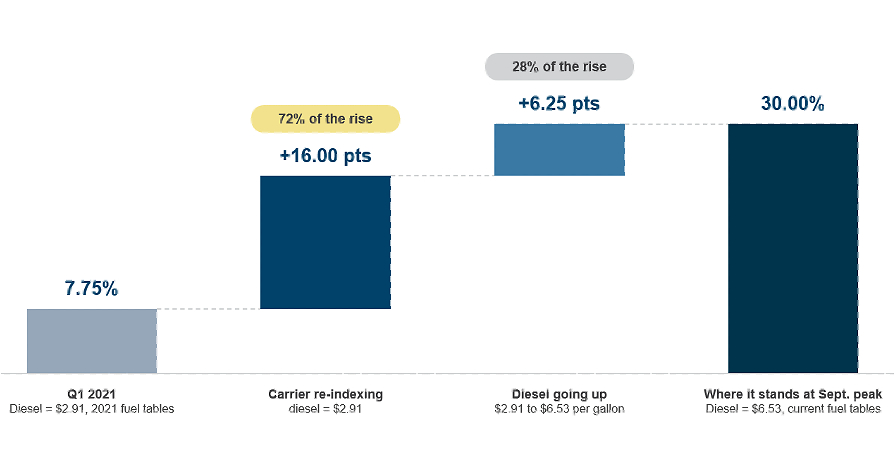
The TD Cowen/AFS Freight Index projects record-high Q4 2026 parcel costs, truckload rates at 23.4% above the January 2018 baseline—the highest since Q1 2022—and LTL rates at 82.5% above baseline. Elevated fuel costs, seasonal surcharges and constrained capacity are driving prices higher despite soft freight demand; 16 trucking companies filed for bankruptcy in a 30-day period. Ground parcel rates are projected up 5.8% year over year and express parcel rates up 13.8%.
Analysis
The investable signal is carrier pricing power, not simply higher freight costs. For FedEx, persistent surcharges and the remote-delivery reclassification could support parcel yield, but the benefit to operating profit depends on whether surcharge revenue exceeds fuel and network costs—and whether shippers accept the increases rather than diverting volume. The study measures shipper charges, not FedEx’s net revenue or margins; treat it as a pricing indicator, not an earnings estimate.
Near term, peak-season capacity scarcity may aid incumbent pricing while creating a share opening for alternative carriers and regional networks. Over 1–3 months, watch FedEx’s realized yield, package volume, surcharge capture and customer commentary on diversion. The Jan. 4, 2027 fee change is a more specific catalyst, but remote-area customers may redesign fulfillment or route around the fee. Over 6–18 months, driver attrition and carrier exits could tighten truckload supply even without strong goods demand; that raises transportation costs for retailers and e-commerce shippers and could eventually constrain parcel growth.
Contrarian point: record shipper rates do not automatically mean record carrier profits. Soft goods demand, fuel exposure and customer substitution can offset price increases. The report is from a freight-cost intermediary and its forecasts are not independently verified carrier guidance. A reversal in diesel prices alone may not quickly unwind parcel surcharges, but falling volumes or renewed capacity would weaken pricing power.
AllMind Terminal
AI-powered research, real-time alerts, and portfolio analytics for institutional investors.
Request TrialMarket Sentiment
Overall Sentiment
mildly negative
Sentiment Score
-0.35
Ticker Sentiment
Key Decisions for Investors
- Do not buy FedEx solely on the index’s record-rate projections. Treat the news as a modest positive for pricing power, conditional on FedEx demonstrating yield gains without material package-volume deterioration.
- For the next earnings update, monitor FedEx parcel yield and volume together, fuel-related expense/pass-through, and any commentary on remote-area surcharge capture or customer diversion. A yield increase accompanied by accelerating volume declines would falsify the bullish read-through.
- Keep the Jan. 4, 2027 remote-DAS change on the catalyst calendar; seek evidence that the added fee is retained as revenue rather than offset by concessions or lost shipments before increasing exposure.
- Avoid a broad long in trucking on the rate forecast alone: supply contraction can lift rates, but soft goods demand and high fuel costs leave carriers vulnerable. Reassess if capacity returns or spot pricing rolls over; the article provides no company-level earnings data to support a named carrier position.
More News
- Why is Domino’s Pizza Enterprises stock sliding today?
- Taiwan agrees to buy 30% of gas from Alaska LNG project, Trump says
- Oil rises amid growing Mideast tensions between Iran-backed Houthis and Saudi Arabia
- South Korean carmaker Hyundai plans 'strategic' investment of $15.5 billion in India by 2032
- Houthis Hit Saudi Aramco Headquarters in Missile Attack
- Airport attacks put aviation in crosshairs of geopolitical conflicts