
i2Cool Secures Tens of Millions of Yuan in Series B Funding from TopoScend Capital
Source: PR Newswire
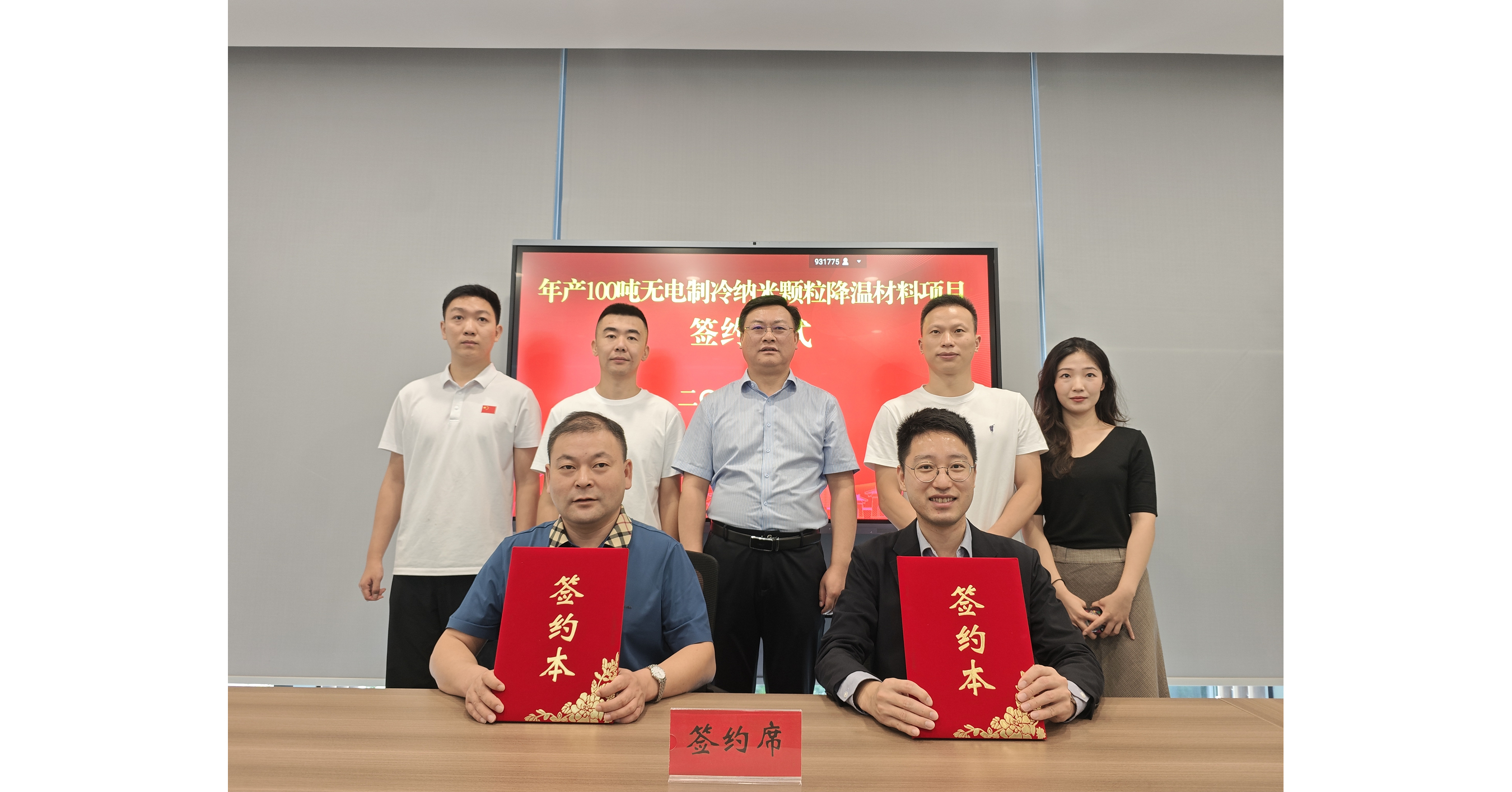
i2Cool raised a Series B round worth tens of millions of yuan (several million U.S. dollars) from TopoScend Capital to scale standardized nanoparticle production, expand R&D and accelerate global commercialization of passive radiative-cooling materials. The company reports a CNY120 million (US$17.9 million) order backlog, 377% three-year revenue CAGR, and more than 500 projects covering 1.1 million square metres across over 30 markets. Funding supports expansion into higher-value applications including AI data centres, robotics and new-energy vehicles, with overseas markets already representing 50% of revenue.
Analysis
This is not directly tradable public-equity news, but it modestly validates passive thermal-management materials as an emerging efficiency layer for cooling-constrained assets. The nearer listed beneficiaries are building-envelope suppliers with reflective-coating capability—PPG, SHW, RPM—and specialty materials companies such as DOW and KRO, although i2Cool’s small financing does not alter their earnings outlook. The larger second-order implication is that passive heat-load reduction can defer capital spending on HVAC capacity, creating a marginal headwind to pure-play cooling-equipment demand where adoption is proven.
The most investable read-through is AI data-center power density: reducing solar and envelope heat gain improves the economics of constrained sites, but it does not solve the dominant server-level thermal problem. VRT, TT, CARR and JCI remain structural beneficiaries of liquid cooling and high-efficiency HVAC; passive materials are more likely complementary than substitutive over the next 12-24 months. Any narrative that this displaces mechanical cooling is premature absent independently verified installed-site energy savings, durability data, fire ratings, and customer-level repeat orders.
For EVs, exterior coatings can modestly reduce cabin heat soak and air-conditioning load, but the battery-range benefit is unlikely to be material enough to move OEM margins near term. Watch Chinese battery and automotive supply-chain customers for procurement disclosures: large-scale adoption would favor coating formulators and specialty pigment/material suppliers before it impacts OEM economics. The key falsifier is weak conversion of reported backlog into revenue and gross margin once standardized production begins; low-cost conventional white coatings and installation complexity remain the principal commercial risks.
AllMind Terminal
AI-powered research, real-time alerts, and portfolio analytics for institutional investors.
Request TrialMarket Sentiment
Overall Sentiment
moderately positive
Sentiment Score
0.62
Key Decisions for Investors
- No standalone trade on this financing; treat it as a thematic watch item rather than a catalyst for public equities.
- Maintain core long exposure to VRT versus a diversified industrial basket over 6-18 months; passive envelope solutions are complementary to, not substitutes for, data-center cooling. Reassess if hyperscalers disclose materially lower mechanical-cooling capex or cooling-power intensity.
- Create an alert on PPG, SHW and RPM for commercial partnerships, SKU launches, or quantified energy-savings claims in high-reflectance coatings. Consider a 3-6 month long basket only after independently disclosed order flow or margin-accretive adoption, not on laboratory performance claims.
- Monitor Sunwoda-related public disclosures and Chinese EV OEM supplier tenders over the next 6-12 months. A repeatable automotive-coating award would be a more credible signal for materials-sector demand than project-count or backlog claims.
More News
- Next week brings major risks for the stock market, just as the AI trade keeps faltering
- AI Doubts Spread Cracks in Equities, Credit Markets: Evening Briefing Americas
- Kinder Morgan, Energy Transfer and Williams could benefit from cheap natural gas
- CrowdStrike CEO's alarming prediction — plus, the sell-off spreads beyond tech
- Elon Musk’s dangerous grip on outer space
- 10-year Treasury yield drops back to 5% this week as investors seek cover from AI worries
From AllMind Research
- Anthropic IPO Preview: Valuation, Timing, and What to Watch
- Shein After the IPO: Venue, Valuation, and What Must Be Proved
- What AI Research Tools Should a Small Hedge Fund Buy First?
- Weekly Update: Adding Live MBO Level 3 Data - Liquidity Heatmap, OFI Charts, and More
- Alternative Data Due Diligence for Institutional Investors