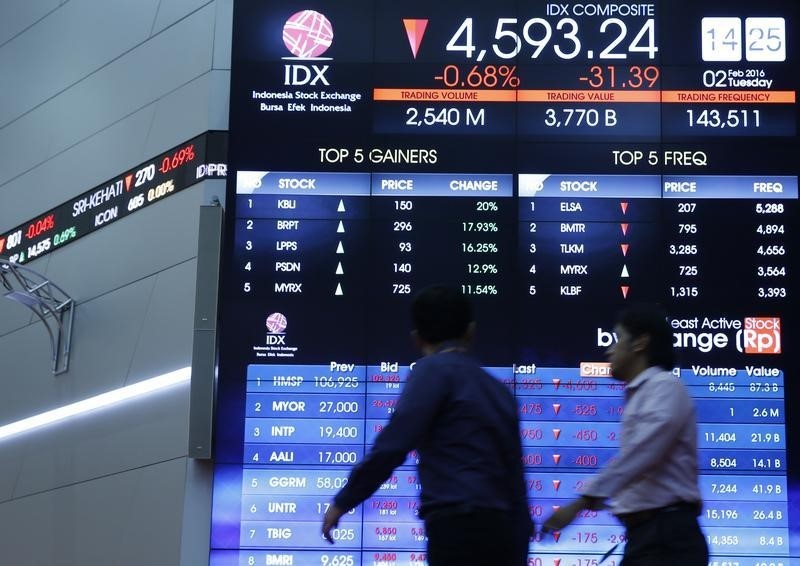
Brent crude rose to cross $90, with September Brent up 0.28% to $88.35/bbl, as the US-Iran conflict worsened, lifting broader commodity risk. In Jakarta, the IDX Composite still gained 0.67% to a new 1-month high, led by Infrastructure, Financials, and Agriculture. FX was mixed: USD/IDR rose 0.44% to 17,949.10, while the US Dollar Index Futures eased slightly (-0.03%), and gold futures fell 1.78% to $4,026.70/oz.
This is less an oil-beta event than a macro transmission shock. In import-dependent Asia, the first winners are upstream producers and dollar earners; the first losers are the sectors that cannot pass through fuel and freight quickly enough: airlines, transport, chemicals, discretionary retail, and leveraged real estate. For Indonesia specifically, the key mechanism is not the absolute Brent level but the combination of a weaker rupiah and a higher subsidy/import bill, which can force either tighter policy or slower consumption growth.
Second-order effects matter more over the next 1-3 months than the spot move itself. If shipping and insurance premia rise on Middle East risk, Asian refiners and industrial users will feel cost pressure before end-demand changes, while banks begin to see indirect stress through SME margins and working-capital demand. That makes financials look defensive on the surface but more cyclical underneath if rate expectations stay elevated and FX continues to bleed.
The contrarian point is that the market often extrapolates geopolitics linearly, but oil shocks usually fade unless physical supply is actually disrupted. If Brent stays elevated for several weeks, the trade becomes a demand-destruction story rather than a pure supply story, and policy response can reverse it quickly. The cleaner tell is USD/IDR: if the rupiah keeps weakening while Brent holds, the local-market damage is broader than headline index action suggests.
AI-powered research, real-time alerts, and portfolio analytics for institutional investors.
Overall Sentiment
mildly negative
Sentiment Score
-0.20
