
The Oil Market Needs a Quick Saudi Pipeline Restart
Source: Bloomberg
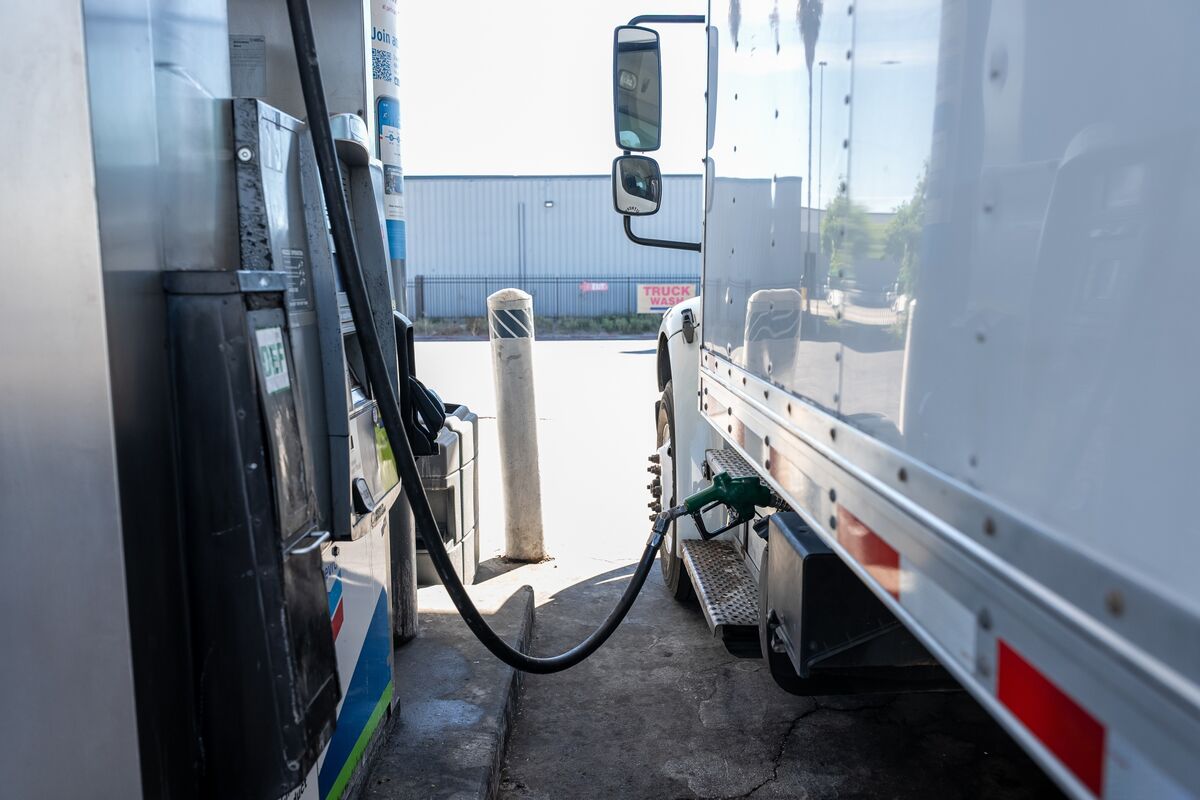
Saudi Arabia’s closure of the East-West pipeline has disrupted a key oil export route at a time when global crude supplies are already stretched. The outage heightens the risk that Middle East conflict will tighten supply further and support higher oil prices unless the pipeline is restarted quickly.
Analysis
The relevant transmission mechanism is not merely lost barrels but the removal of routing redundancy: Saudi export optionality is worth disproportionately more when regional inventories are thin and buyers are already pricing a geopolitical insurance premium. A prolonged outage would steepen prompt Brent time spreads and widen light-sour crude differentials, benefiting unhedged upstream cash flows more reliably than integrated refiners, whose crude-input gains are offset by working-capital and product-demand risk. XLE should outperform XLI and JETS over days to weeks if front-month Brent holds its premium.
The less obvious exposure is maritime concentration risk. More dependence on a single export corridor raises war-risk insurance, freight volatility and the probability of physical buyers bidding for Atlantic Basin substitutes; this favors US Gulf Coast export-linked producers such as FANG, DVN and EOG, while Asian refiners with limited crude flexibility face margin pressure. Tanker equities are not a clean first-order long: higher insurance costs can absorb spot-rate gains unless rerouting creates sustained incremental ton-miles.
Consensus may over-extrapolate a headline-driven price spike if flows are restored quickly or Saudi spare capacity is redirected without meaningful export disruption. The higher-conviction signal is not spot Brent alone but backwardation, Dubai-Brent widening, Saudi official selling-price revisions, and physical cargo delays. A failure of those indicators to tighten within 3-5 trading sessions would argue that the disruption is operationally manageable rather than a durable supply shock.
Over 1-3 months, the key downside catalyst for energy longs is a de-escalation combined with weak Chinese import data or OECD inventory builds; that combination would compress the geopolitical premium rapidly. Over 6-18 months, repeated infrastructure security events would support a structurally higher risk premium for diversified non-Middle-East supply, but only if producers maintain capital discipline rather than respond with aggressive output growth.
AllMind Terminal
AI-powered research, real-time alerts, and portfolio analytics for institutional investors.
Request TrialMarket Sentiment
Overall Sentiment
moderately negative
Sentiment Score
-0.45
Key Decisions for Investors
- Initiate a 1-3 month pair: long XLE / short JETS, sized at 1:1 beta. Energy captures a sustained crude-risk premium while airline fuel costs reset faster than ticket pricing; exit if Brent backwardation fails to widen or if front-month Brent closes below its pre-disruption level.
- Accumulate EOG, FANG and DVN on broad-market weakness rather than chase an opening oil spike; use a 3-6 month horizon. Favor these over XOM/CVX for greater realized-price and free-cash-flow sensitivity, with the thesis invalidated by a material downward revision in Brent strip pricing or producer guidance shifting toward volume growth.
- For defined-risk upside, buy 2-3 month USO call spreads rather than outright futures after confirmation from prompt spreads and physical differentials. Target roughly 2:1 payoff; abandon if pipeline/export normalization is independently confirmed before physical-market indicators tighten.
- Place FRO, STNG and DHT on alert rather than initiate immediately. Buy only if VLCC/Suezmax spot rates and war-risk premia rise concurrently for at least a week, confirming rerouting and ton-mile demand rather than a temporary insurance-cost shock.
More News
- Temporary Hormuz solution deferred as Iran-Arab summit falls through
- AI models are becoming the ‘most potent cyber weapon’ ever created, Cohere CEO says
- US says it’s clearing Hormuz traffic: Why are oil futures beyond $100?
- Strait of Hormuz talks postponed due to Yemen events, says Iran
- Scott Bessent warned the bond market ‘has taken down more governments than howitzers’: That theory may give the Fed’s Warsh room to breathe this week
- Satellite images show extent of damage to Saudi Arabia’s oil pipeline that bypasses Strait of Hormuz