
In HelloNation, Commercial Plumbing and Mechanical Expert Jason Brownlie Examines How Design-Build Construction Reduces Costs and Shortens Timelines
Source: PR Newswire
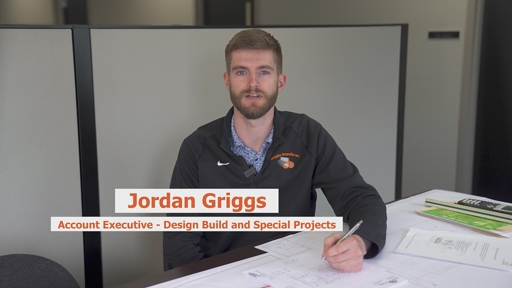
The article argues that design-build delivery can improve commercial project economics by cutting change orders, compressing schedules, and enabling earlier procurement of long-lead equipment. It claims indirect financial benefits as well: opening months earlier can reduce carrying costs and accelerate revenue/expense relief, compounding over the life of a commercial real estate investment. It also highlights fewer design-contractor disputes and more effective value engineering under single-point accountability.
Analysis
The economically relevant takeaway is not “design-build is good,” but that integrated delivery shifts margin capture toward firms that can monetize preconstruction, procurement, and field execution as one bundle. That favors integrated contractors and MEP-heavy players such as FIX, EME, and PWR, while traditional design-first firms and fragmented subcontractors risk losing fee pool and seeing more pricing pressure on the parts of the job they used to control. The second-order effect is that better schedule certainty can also improve working-capital turns, which matters more in a higher-rate environment than the article implies.
The main risk is that this is a selection story, not an industry-wide volume story. If owners keep tightening budgets, they may demand design-build for cost certainty, but the same pressure can force contractors to bid harder and absorb more preconstruction work up front, delaying margin recognition by 1-2 quarters. For public names, the market will care less about the concept and more about whether backlog mix shifts toward higher-margin self-performed work versus pass-through coordination revenue.
Contrarian view: the market may be overestimating the immediate EPS benefit from schedule compression. In practice, the upfront design integration usually increases bidding/precon expense before it reduces change orders, so the P&L inflection can lag the narrative by multiple quarters. There is no direct fundamental read-through to CRMT from this item; the signal is too weak for a company-specific trade and should be treated as a watch item for construction-exposed names only.
AllMind Terminal
AI-powered research, real-time alerts, and portfolio analytics for institutional investors.
Request TrialMarket Sentiment
Overall Sentiment
mildly positive
Sentiment Score
0.15
Ticker Sentiment
Key Decisions for Investors
- No trade on CRMT; the article has no direct economic linkage. Treat as non-actionable unless new data ties CRMT to construction-cycle exposure.
- Watchlist long FIX / EME / PWR on any pullback: design-build exposure can support higher margin consistency and better cash conversion over 6-12 months if private commercial activity stays resilient.
- Relative-value idea: long FIX vs short AEC on a 3-6 month horizon if backlog commentary shows integrated contractors capturing more preconstruction value while pure design revenue remains price-competitive.
- Set an alert for 2Q/3Q earnings on backlog mix, gross margin, and working-capital turns. A thesis break would be precon cost inflation without corresponding margin improvement, or guidance that schedule compression is not converting into faster cash collection.
- If forced to express the theme, use a small basket long construction-integrators (FIX/EME/PWR) rather than a directional equity bet; this keeps execution risk diversified and isolates the design-build margin mix effect.
More News
- Why is T-Mobile stock tumbling today?
- This exchange stock is a buy on renewed options deal, Morgan Stanley says
- The AI race may be decided by financing—not just better chips
- Why is Verizon stock sliding today?
- OpenAI projected to bring in $20bn less in revenue than expected
- SpaceX wants to become a 'major mobile carrier' with low-band spectrum acquisition