
China Races to Build AI Data Centers Far Away From Its Biggest Cities
Source: Bloomberg
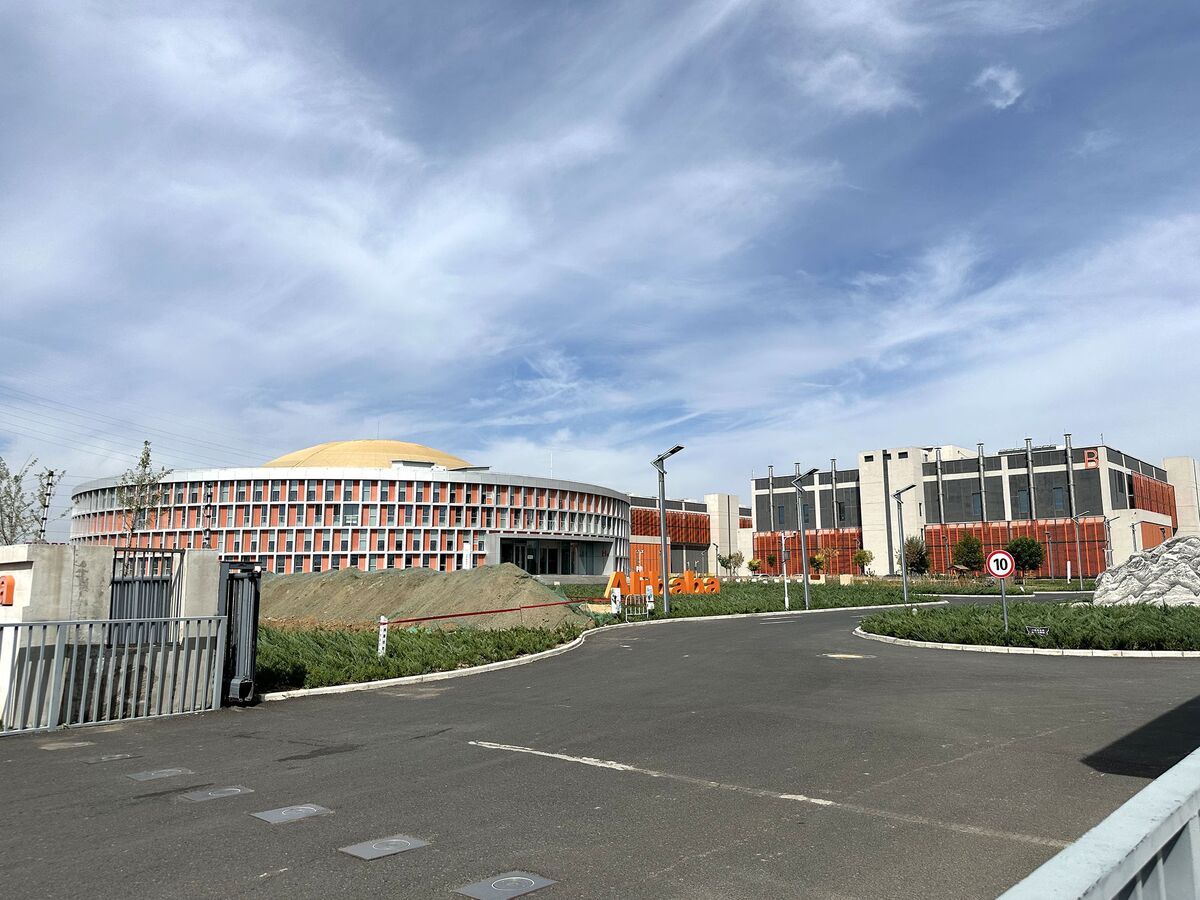
More than half of China’s data-center development pipeline is located in northern and northwestern regions, according to BNEF data. China is shifting AI computing capacity away from crowded eastern megacities toward areas such as Ulanqab in Inner Mongolia, where land availability and lower-cost renewable energy can support large-scale data-center expansion.
Analysis
The investable implication is less about incremental Chinese AI demand than a geographic re-pricing of the compute stack. Moving inference and batch-training capacity inland favors operators with access to low-cost renewable power, land and transmission, while reducing the relative scarcity value of coastal colocation assets. The bottleneck shifts to long-haul fiber, grid interconnection, power-electronics equipment and cooling reliability; this creates a multi-year capex cycle for Chinese network, HVDC and electrical-equipment suppliers rather than a near-term windfall for model developers.
For global markets, cheaper Chinese compute could compress the cost of domestic AI deployment and intensify competition for hyperscalers and enterprise-software vendors exposed to China, but the latency penalty limits substitution for real-time coastal workloads. The more immediate second-order risk is renewable curtailment: data centers can absorb otherwise stranded wind/solar generation, improving project utilization, yet only if transmission and local grid balancing keep pace. If utilization remains low, these facilities become capital-intensive policy assets rather than economically competitive compute supply.
Consensus may overstate the strategic advantage from abundant renewable power. Data-center economics depend on delivered, firm power—not headline generation capacity—and remote clusters require expensive redundancy, water/cooling solutions, fiber backhaul and hardware logistics. Over the next 1-3 months, treat this as a procurement and policy-monitoring theme; the 6-18 month catalyst is evidence that commissioned capacity is achieving high utilization and power costs below eastern alternatives. Falsification would be persistent renewable curtailment, delayed grid connections, weak server shipments, or government-directed construction without commercial occupancy.
AllMind Terminal
AI-powered research, real-time alerts, and portfolio analytics for institutional investors.
Request TrialMarket Sentiment
Overall Sentiment
mildly positive
Sentiment Score
0.15
Key Decisions for Investors
- No directional China AI-platform trade solely on this development; wait for disclosed utilization, power-price contracts and server procurement before underwriting earnings impact.
- Monitor China electrical-grid and transmission proxies, including State Grid-linked equipment suppliers such as NARI Technology (600406 CH) and TBEA (600089 CH), for order-book acceleration over the next 2-4 quarters; favor a basket over single-name exposure given policy-driven tender risk.
- Watch fiber-optic and network-equipment suppliers such as YOFC (601869 CH) and ZTE (763 HK) as secondary beneficiaries of remote-compute backhaul. Initiate only after capex guidance or tender data confirm demand; key downside is centralized procurement pressure compressing margins.
- For global relative value, maintain a watchlist for long electrical infrastructure suppliers versus short premium-valued coastal-data-center/colocation proxies where remote capacity demonstrably lowers pricing power. Do not execute without regional pricing and occupancy data, the critical missing inputs.
More News
- Next week brings major risks for the stock market, just as the AI trade keeps faltering
- AI Doubts Spread Cracks in Equities, Credit Markets: Evening Briefing Americas
- Kinder Morgan, Energy Transfer and Williams could benefit from cheap natural gas
- CrowdStrike CEO's alarming prediction — plus, the sell-off spreads beyond tech
- Elon Musk’s dangerous grip on outer space
- Brazil’s Lula and Bolsonaro debate policy proposals before run-off
From AllMind Research
- Anthropic IPO Preview: Valuation, Timing, and What to Watch
- Shein After the IPO: Venue, Valuation, and What Must Be Proved
- What AI Research Tools Should a Small Hedge Fund Buy First?
- What Is an AI Research Agent?
- Bitcoin's 52% Crash Proves It's a Tech Stock: Here's What That Means for Portfolio Construction