
Micron Technology Has Just Shared Great News
Source: seekingalpha.com
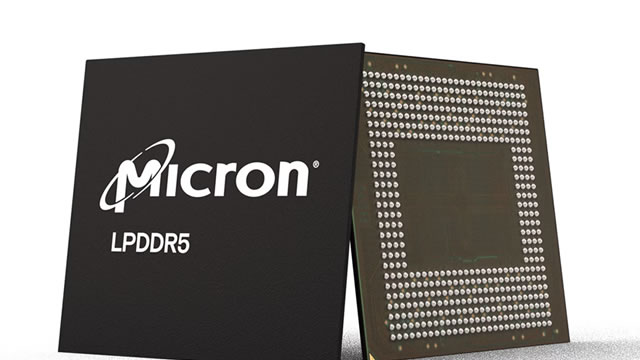
Micron is characterized as undervalued despite delivering a 1,300% return since April 2025. The company announced the first 512GB DDR5 memory module, positioning it with a first-mover advantage in high-performance, energy-efficient data-center memory. Persistent memory shortages projected through 2030 could provide multi-year revenue visibility and support Micron's growth outlook.
Analysis
The relevant earnings lever is not the module announcement itself but whether it expands Micron's share of high-density enterprise DRAM at a premium versus commodity DDR5. Qualification cycles at hyperscalers and OEMs typically lag product disclosure by 2-4 quarters; revenue upside will be meaningful only if management shows mix-driven DRAM ASP gains and gross-margin expansion rather than simply higher bit shipments. Samsung and SK Hynix remain credible supply responses, so first-mover status should not be capitalized as a durable monopoly premium without customer-design-win evidence.
Near term, MU is increasingly exposed to a crowded AI-memory expectation set. The more consequential variables over the next 1-3 months are HBM allocation, conventional DRAM contract-price revisions, China demand, and capex discipline across the three major suppliers. A broad memory-price rollover would compress MU's earnings multiple before reported revenue weakens, while an upside catalyst would be another upward revision to fiscal gross-margin or HBM revenue guidance.
The contrarian concern is that high-capacity server DIMMs can cannibalize lower-density units without proportionate dollar-content growth if platform adoption is slower than expected or customers optimize memory-per-workload. Over 6-18 months, AI inference and memory-intensive databases support higher DRAM content, but this remains a cyclical industry: sustained pricing power depends on suppliers restraining wafer starts, not on one product specification. Treat claims of shortages extending through the end of the decade as a low-confidence premise rather than a base-case underwriting input.
AllMind Terminal
AI-powered research, real-time alerts, and portfolio analytics for institutional investors.
Request TrialMarket Sentiment
Overall Sentiment
moderately positive
Sentiment Score
0.68
Ticker Sentiment
Key Decisions for Investors
- Maintain or initiate a measured long MU only into the next earnings cycle if DRAM contract prices remain positive and management raises gross-margin guidance; target a 10-15% upside on estimate revisions versus a 7-10% stop if HBM/DRAM guidance or utilization commentary deteriorates.
- Prefer a relative-value expression: long MU / short SOXX or SMH over 3-6 months. This isolates potential memory pricing and mix upside from a broad AI-semiconductor de-rating; exit if MU's DRAM ASP trend fails to outperform industry pricing or if semiconductor ETF relative strength reverses materially.
- Do not underwrite a standalone trade on the high-density DIMM claim until customer qualification, shipment timing, incremental ASP, and gross-margin contribution are disclosed. Set an alert for the next earnings call or major hyperscaler platform launch rather than chasing product-news strength.
- Hedge a long MU with downside protection around earnings if implied volatility is below its prior-report range: a 1-3 month put spread limits exposure to a memory-cycle reset, with the thesis invalidated by downward DRAM pricing commentary, weaker China demand, or a material supplier-capex increase.
More News
- Micron vs. Sandisk: Which AI Memory Stock Benefits More From Nvidia's $279 Billion Warning?
- Micron’s stock could climb 70% higher thanks to a factor that’s been largely absent so far
- Former Infosys chief’s AI startup nabs another $53M
- Why is SK hynix stock rallying today?
- What Nvidia and SK Hynix Are Signaling About Micron's Outlook
- Growth stocks are still attractive compared to value even as rates rise, charts show