
Cellipont Bioservices and Xiogenix Publish New White Paper on Automated Fill-Finish for Scalable Cell Therapy Manufacturing
Source: PR Newswire
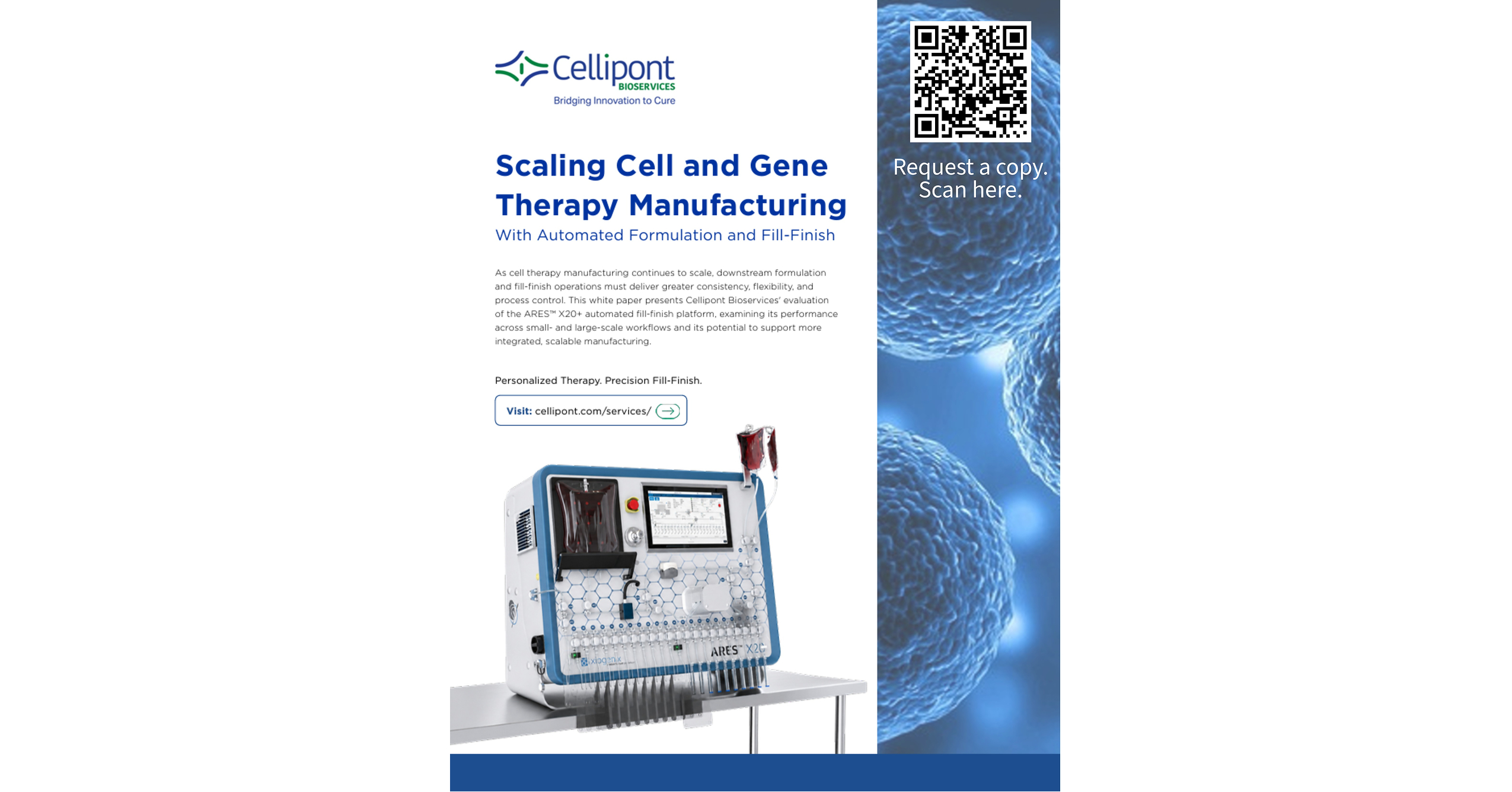
Cellipont Bioservices and Xiogenix published evaluation results for Xiogenix's ARES X20+ automated cell-therapy fill-finish platform, showing consistent formulation performance across an approximately 17-fold scale increase. Final formulation-volume accuracy was 98.2% at small scale and 103.6% at large scale, while cell viability remained stable before and after automation. The collaboration also informed platform enhancements intended to improve scalable, reproducible downstream manufacturing as cell therapies advance toward commercialization.
Analysis
This is a weak public-markets signal: neither collaborator is listed and the disclosed work is a vendor-sponsored technical evaluation rather than evidence of customer orders, utilization, validated commercial throughput, or unit-cost reduction. The near-term read-through is limited to private cell-therapy manufacturing equipment demand; it should not alter estimates for public CDMOs or therapy developers without evidence that automated fill-finish is being specified in funded commercial programs.
The relevant 6-18 month competitive dynamic is that closed, automated downstream workflows could reduce labor and deviation-related cost per dose, improving the economics of autologous cell therapy at scale. That is directionally favorable for commercial-stage cell-therapy manufacturers such as Gilead/Kite (GILD) and Bristol Myers Squibb (BMY), but the benefit is likely captured first by manufacturing vendors and CDMOs rather than therapy sponsors, whose larger constraints remain patient logistics, vein-to-vein time, reimbursement, and demand generation. Automation also raises switching costs once a process is validated, potentially favoring incumbent equipment ecosystems at Thermo Fisher (TMO), Danaher (DHR), and Sartorius (SRT3.DE).
Contrarian view: better fill-finish reproducibility does not automatically translate into gross-margin expansion. Each equipment change can trigger comparability work, validation expense, and regulatory interaction; for marketed autologous products, the transition cycle may be measured in quarters rather than weeks. A meaningful catalyst would be disclosed commercial adoption, a named therapy program, or data showing materially higher batch success/yield—not incremental accuracy metrics from a controlled evaluation.
AllMind Terminal
AI-powered research, real-time alerts, and portfolio analytics for institutional investors.
Request TrialMarket Sentiment
Overall Sentiment
mildly positive
Sentiment Score
0.32
Key Decisions for Investors
- No immediate trade: treat the announcement as an industry watch item, not an earnings catalyst, because there is no disclosed contract value, backlog, commercial customer, or public equity exposure.
- Monitor TMO, DHR, and SRT3.DE over the next 1-3 months for CAR-TCR Summit customer commentary on closed-system formulation/fill-finish, commercial cell-therapy capex, and automation-driven consumables pull-through; upgrade only if management identifies orders or recurring single-use revenue.
- For a 6-18 month thematic expression, prefer a small long basket of TMO/DHR versus a broad, high-beta cell-therapy ETF proxy such as XBI rather than a directional long in clinical-stage developers. The thesis is that picks-and-shovels suppliers monetize manufacturing standardization with lower binary clinical risk; invalidate if cell-therapy commercial volumes or CDMO capex guidance weaken.
- Watch GILD and BMY quarterly disclosures for CAR-T gross margin, manufacturing turnaround time, and capacity-utilization commentary. Evidence of sustained margin improvement or reduced manufacturing deviations would support a longer-duration operational-upside thesis; absent those metrics, do not attribute margin expansion to automation.
More News
- Here’s the ‘core economic flaw’ in the AI bull case as stock and bond trades unravel, according to a top economist
- 5 big analyst AI moves: ’Uniquely catalyst-rich’ months ahead for SpaceX
- Xencor reports phase 1 data for cancer drug XmAb819
- The experience economy keeps defying expectations. Maybe we’ve been looking at it all wrong
- The U.S. military and NASA have power problems. Nuclear microreactors might solve both
- Biotech stocks are surging. How investors can play the new drug innovation boom
From AllMind Research
- Anthropic IPO Preview: Valuation, Timing, and What to Watch
- Shein After the IPO: Venue, Valuation, and What Must Be Proved
- What AI Research Tools Should a Small Hedge Fund Buy First?
- State of Public Markets, June 2026: Higher for Longer Meets the AI Supercycle
- AI Research Tools With Exact Source Citations