
Hanwha Power erhält grundsätzliche ABS-Zulassung für batteriebetriebenes Containerschiffdesign mit 1.700 TEU
Source: PR Newswire
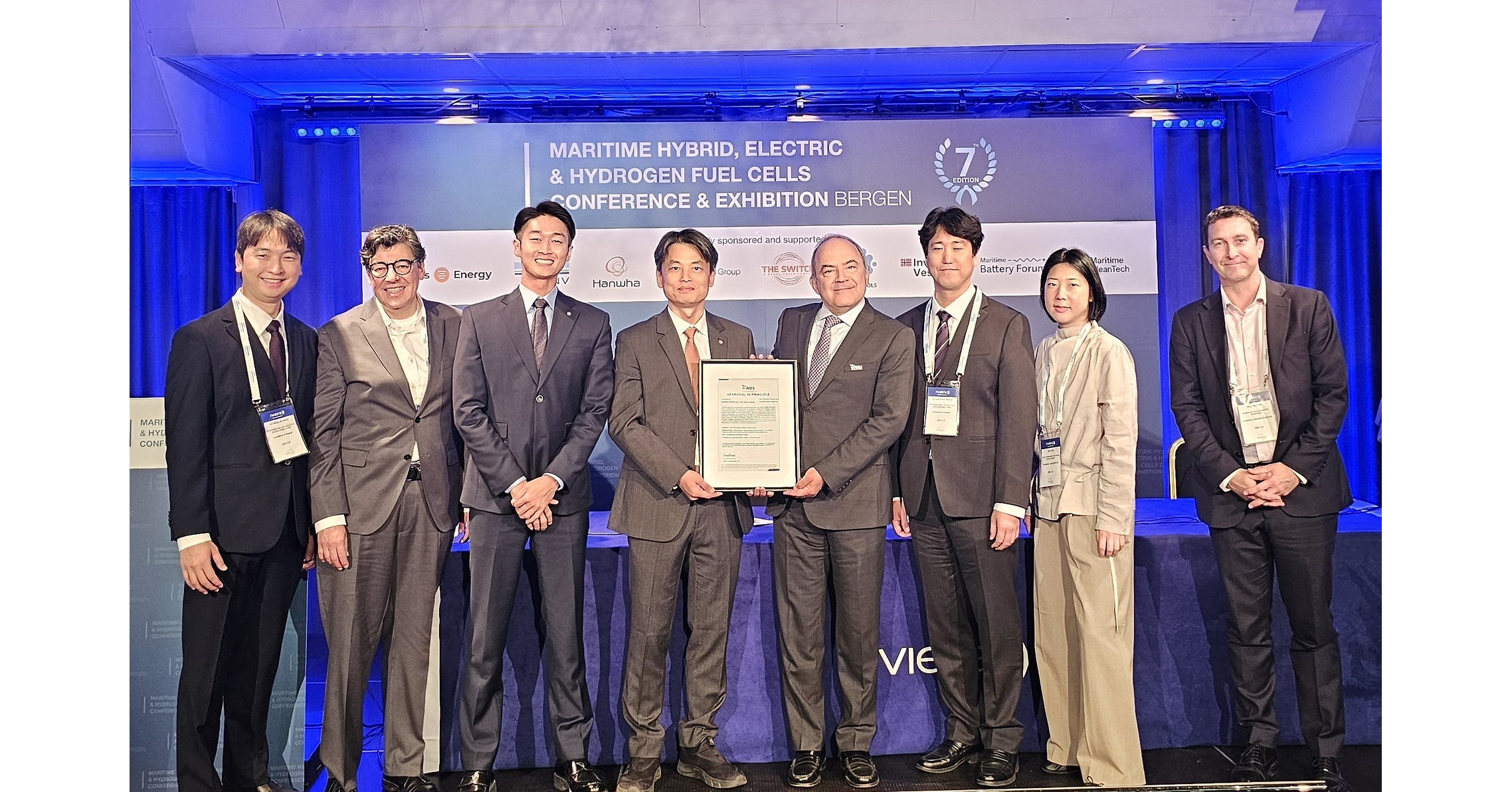
Hanwha Power received ABS Approval in Principle for a fully electric 1,700-TEU container-ship design powered by a 151-MWh battery energy-storage system. The approval expands the company’s zero-emission marine propulsion capabilities; separately, it completed a basic design for a 1,000-TEU battery-powered ship. These are design and portfolio milestones, not reports of a vessel entering service or a commercial order.
Analysis
The signal is capability validation, not evidence of commercial demand: an ABS Approval in Principle does not establish final class approval, a shipyard order, route economics, or financing. Near term, any equity read-through should therefore be modest. The investable question is whether the design can clear the operational hurdle of battery mass and volume, charging time, battery life, and safe handling without sacrificing payload or vessel utilization. Containerized swaps could reduce port turnaround constraints, but only if ports standardize interfaces and invest in high-capacity connections, grid upgrades, and battery inventory.
The most plausible beneficiaries, if projects advance, are marine battery and power-electronics suppliers, charging-infrastructure providers, and ports serving short, repeatable routes. Shipyards and incumbent propulsion suppliers may gain from integration work but could face substitution risk if battery vessels become economical on suitable routes. These effects are conditional; the release identifies no supplier, customer, order, or deployment timetable. Lifecycle emissions also depend on the electricity used to charge the vessels.
Over 1–3 months, seek independent evidence of a customer, shipyard, route, and charging partner rather than extrapolating from the technical milestone. Over 6–18 months, monitor firm orders and operating data for payload, range, charging time, availability, and battery replacement costs. A practical contrarian point: the concept may be more relevant to constrained regional routes than to broad container shipping, so addressable-market claims should not be generalized. No direct equity exposure can be mapped from the supplied company identities; there is not enough evidence for a directional trade.
AllMind Terminal
AI-powered research, real-time alerts, and portfolio analytics for institutional investors.
Request TrialMarket Sentiment
Overall Sentiment
mildly positive
Sentiment Score
0.30
Key Decisions for Investors
- Do not trade the approval as a near-term earnings catalyst; treat it as an early technical de-risking milestone, not a commercial award.
- Place marine battery, power-electronics, and port-charging beneficiaries on a watchlist. Reassess only when named suppliers, customer orders, and project economics are disclosed.
- Track whether a deployment specifies route length, port charging capacity, vessel utilization, payload trade-offs, battery life, and electricity source. These determine whether the design has viable economics and emissions benefits.
- Falsify the adoption thesis if follow-on disclosures fail to produce a customer or shipyard commitment, or if operating requirements materially constrain payload or turnaround; strengthen it only with firm orders and independently verifiable operating performance.
More News
- AI Doubts Spread Cracks in Equities, Credit Markets: Evening Briefing Americas
- With earnings in rearview mirror, SpaceX-Tesla merger chatter takes center stage
- AI agents could disrupt bank deposits. Why Wall Street may be overreacting
- Apple’s $2,000 iPhone Duo Debuts With Limited Supply
- Are global oil reserves sufficient to withstand renewed US-Iran war?
- Boeing 777 freighter output halted for two months over supplier row