
Aeson Power Showcases Advanced Sodium-Ion Auxiliary Battery Solutions at Automechanika Frankfurt 2026
Source: PR Newswire
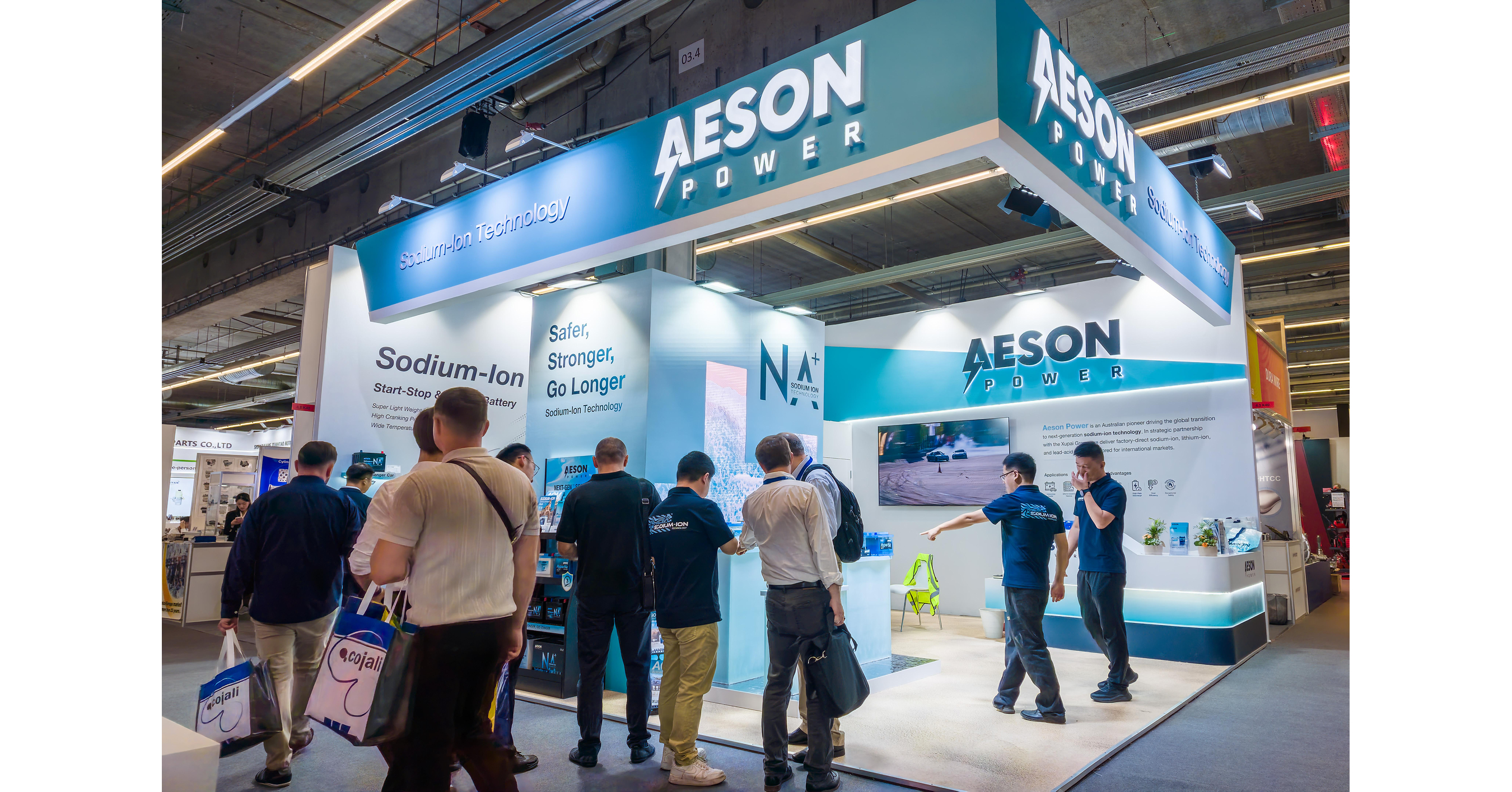
Aeson Power showcased sodium-ion starting, start-stop and EV/commercial-vehicle auxiliary battery solutions at Automechanika Frankfurt 2026, targeting expanded OEM adoption. Its aftermarket sodium-ion batteries have surpassed 100,000 units deployed across more than 30 countries and are marketed as offering more than three times the service life of conventional lead-acid batteries in start-stop applications. The company is partnering with Xupai Group to develop production-ready low-voltage battery systems for EV auxiliary power and internal-combustion start-stop applications.
Analysis
This is not yet an investable public-equity catalyst: the issuer is unlisted, commercial discussions are not equivalent to OEM nominations, and the stated installed base is too small to alter listed battery suppliers' earnings. The relevant disruption is concentrated in the low-voltage battery pool, where replacement economics and warranty performance matter more than cell energy density. If sodium-ion delivers materially longer field life without a meaningful premium, it could gradually pressure the replacement-cycle revenue and pricing of lead-acid incumbents, particularly Clarios (private), GS Yuasa (6674 JP), and EnerSys (ENS); however, automotive qualification cycles and distributor conservatism make any OEM volume impact a 3-5 year issue rather than a 2026 earnings event.
The nearer-term second-order beneficiary is the sodium-ion supply chain, not vehicle OEMs. A credible OEM award would validate a less lithium-intensive chemistry for 12V/48V auxiliary systems, supporting optionality for CATL (3750 HK) and other scaled cell makers, while modestly weakening the long-duration demand narrative for automotive lead and, at the margin, lithium chemicals. The contrarian view is that this application may remain niche: 12V batteries are a low percentage of vehicle bill-of-materials, and established lead-acid systems retain major advantages in manufacturing scale, recycling infrastructure, and proven cold-weather reliability. The thesis is falsified if announced programs fail to identify a named OEM, production start date, annual unit commitment, or warranty data within the next 6-12 months.
AllMind Terminal
AI-powered research, real-time alerts, and portfolio analytics for institutional investors.
Request TrialMarket Sentiment
Overall Sentiment
mildly positive
Sentiment Score
0.38
Key Decisions for Investors
- No immediate directional trade on this release; treat it as a watch item because there is no disclosed OEM award, pricing, capacity, or public-company revenue exposure.
- Create an event alert for named OEM sourcing awards or SOP dates involving sodium-ion 12V/auxiliary batteries. A commitment exceeding roughly 100,000 annual vehicles would justify reassessing relative downside to ENS and 6674 JP over a 12-24 month horizon.
- Maintain a medium-term watchlist pair: long 3750 HK / short ENS only after independently verified automotive sodium-ion contracts emerge. The upside rests on chemistry-validation multiple expansion for CATL; key risk is that CATL's automotive sodium-ion economics remain immaterial while ENS benefits from replacement demand and disciplined pricing.
- Monitor lead prices, European vehicle production, and warranty-return data rather than trade-show announcements. A sustained deterioration in lead-acid aftermarket pricing or a documented sodium-ion warranty advantage would be the earliest measurable signal of competitive pressure.
More News
- Here’s the ‘core economic flaw’ in the AI bull case as stock and bond trades unravel, according to a top economist
- 5 big analyst AI moves: ’Uniquely catalyst-rich’ months ahead for SpaceX
- The experience economy keeps defying expectations. Maybe we’ve been looking at it all wrong
- The U.S. military and NASA have power problems. Nuclear microreactors might solve both
- Trump set to announce plan by Audi to build a U.S. factory in Georgia, source says
- Biotech stocks are surging. How investors can play the new drug innovation boom