
NABEP reinicia un horno de cinta clave en Orinoco en el marco de su continuo impulso a la producción
Source: PR Newswire
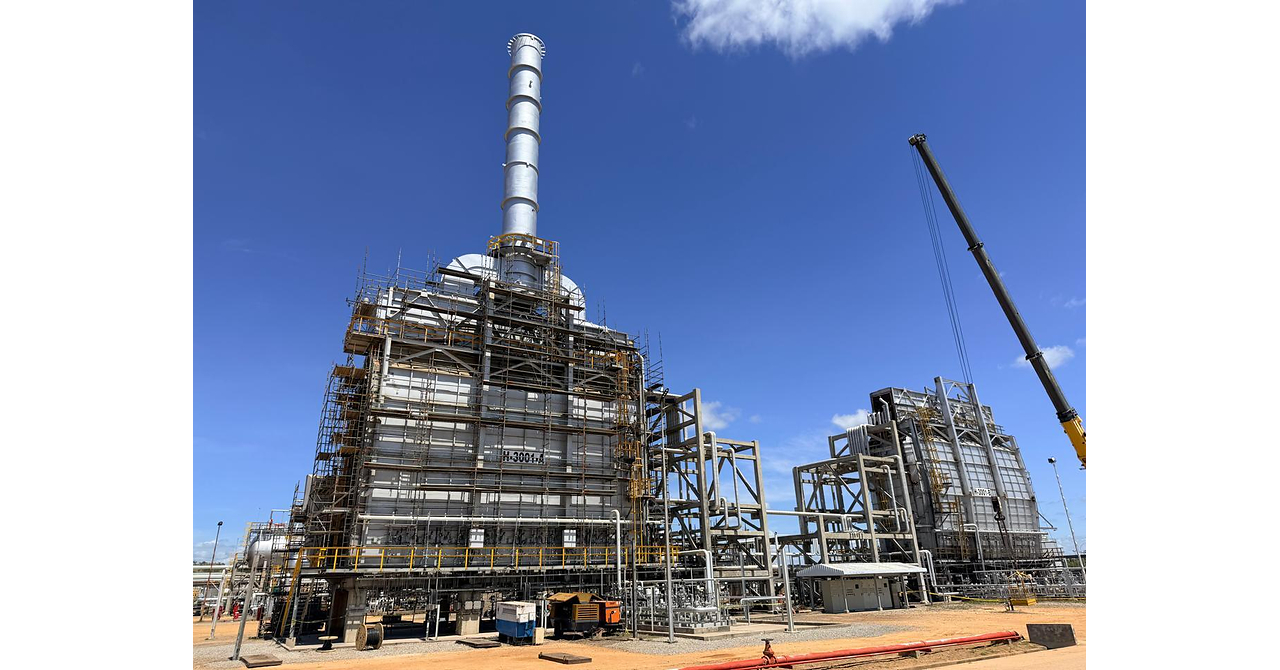
NABEP restarted a key furnace at its Zuata 2 facility on October 31 after five years offline and expects it to add 8,000–10,000 barrels of oil per day in the coming weeks. The company reported total production of 223,509 barrels of oil equivalent per day on October 19, up from about 200,000 in August; the furnace’s projected addition is an expectation, not yet reported production. NABEP also targets 500,000 barrels per day by the end of 2028 and more than 1 million barrels per day longer term.
Analysis
The market-relevant question is whether this is durable, exportable heavy-crude supply—not whether a repaired furnace can briefly lift throughput. Net barrels depend on upstream delivery, water separation, diluent, power, downstream plant availability and export/payment permissions. Any bottleneck can turn the announced uplift into capacity rather than saleable production; a single restart after prolonged idling also raises uptime risk.
If incremental Venezuelan heavy crude reaches Gulf Coast buyers, complex refiners could gain feedstock optionality, while Canadian heavy producers may face a modestly less favorable differential if Venezuelan barrels substitute for their grades. The effect on global benchmarks should be negligible at this scale; the more plausible transmission is through heavy-sour discounts and refinery feedstock economics. Refinery benefit is not automatic: the discount must compensate for logistics, blending and policy risk.
Near term, the release may prompt sentiment-driven repricing, but the company is absent from the supplied identity/ticker mapping, and the claimed production, commercial access and U.S. agreement are not independently established here. Over 1–3 months, verify metered field output, cargo loadings and sustained plant uptime. Over 6–18 months, broader Venezuelan growth would require repeatable maintenance, investment and stable operating/export permissions; reserve claims alone do not establish deliverable supply. Contrarian view: investors may overvalue nameplate capacity and underweight reliability and authorization risk. No direct equity trade is warranted on this release alone.
AllMind Terminal
AI-powered research, real-time alerts, and portfolio analytics for institutional investors.
Request TrialMarket Sentiment
Overall Sentiment
moderately positive
Sentiment Score
0.55
Key Decisions for Investors
- Treat the announcement as a watch item, not a standalone long: seek independent confirmation of incremental production, water-spec compliance, cargo nominations and completed loadings before underwriting recurring revenue.
- Monitor Gulf Coast heavy-sour crude differentials versus Canadian heavy grades and complex-refiner feedstock commentary over the next 1–3 months. Only consider a relative-value position if Venezuelan cargoes are verified and the differential move is persistent; avoid extrapolating a single restart into a broad crude-price view.
- Do not infer a trade in NABEP securities from the supplied data: no ticker or listed-company identity is provided. Verify corporate identity, audited production history, cash realization and the precise scope and durability of operating/export permissions.
- Falsification trigger: no sustained production uplift or cargo evidence over the coming weeks, renewed plant downtime, or a change in permissions/payments that blocks sales. These would favor reversing any supply-driven heavy-crude differential thesis.
More News
- Binance co-CEO Richard Teng says hackers used fake job interviews, AI tool to steal $6.3 billion in crypto 108511116
- AMD stock jumps 7% on earnings as data center revenue nearly doubles
- The Strait of Hormuz closure has cost Europe an extra $142 billion for the same energy it was already buying
- Marvell Technology could plunge on latest multibillion-dollar acquisition
- US hits Qeshm Island, Pezeshkian signals more diplomacy: Iran war latest
- Disney Plans Thousands of Layoffs Companywide
From AllMind Research
- AllMind Platform Feature Updates - Fall 2026
- AI Credit Covenant Monitoring: From Clause to Review
- AI-Led Expert Interviews vs. Transcript Libraries
- The Great Divergence: North American Banking at the Crossroads of Monetary Policy and Agentic AI (Q4 2025 Bank Earnings)
- How to Extract KPIs From Earnings Transcripts With AI