
KIA EV3 NAMED "GREEN CAR OF THE YEAR®"AND CARNIVAL HYBRID NAMED "GREEN MINIVAN OF THE YEAR™" BY GREEN CAR JOURNAL
Source: PR Newswire
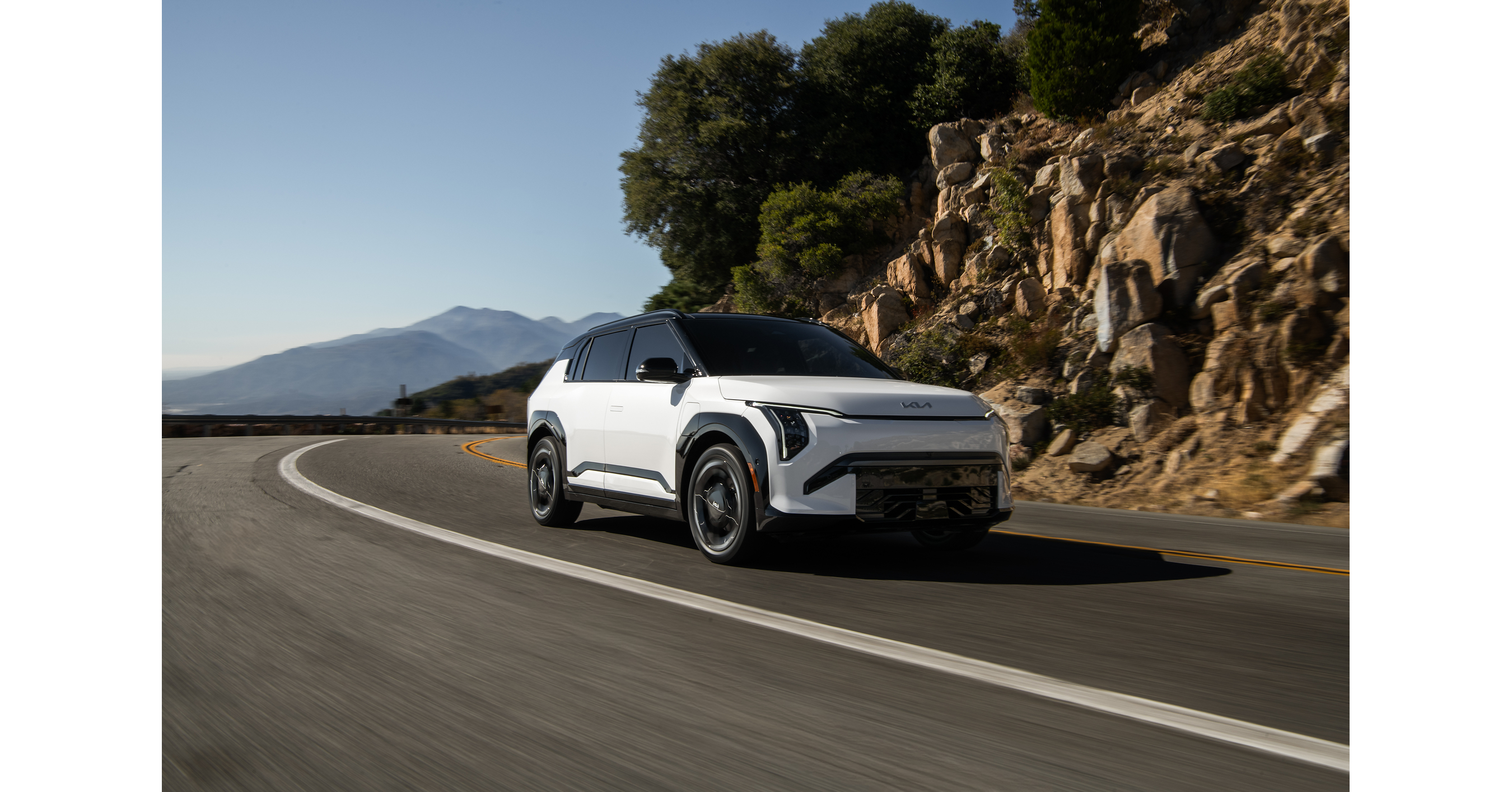
Kia's 2027 all-electric EV3 won Green Car Journal's Green Car of the Year award, while the 2026 Carnival Hybrid was named Green Minivan of the Year. The EV3 offers up to 321 miles of range and 10%-80% charging in about 31 minutes on a 350kW DC fast charger, with U.S. showroom availability expected in late 2026. The Carnival Hybrid delivers 242 horsepower and an EPA-estimated 33 mpg combined, reinforcing Kia's electrified lineup across EV and hybrid segments.
Analysis
This is not independently investable news: third-party awards have negligible direct read-through to unit volume, pricing, or Hyundai Motor (005380 KS/HYMTF) valuation. The relevant underwriting question is whether Kia can translate EV3 awareness into profitable U.S. compact-EV share without incentives; that depends on transaction price, lease subvention, dealer inventory, and battery sourcing rather than award recognition. Until those data are disclosed, the announcement should not alter estimates.
The competitive pressure is more meaningful than the publicity. A credible lower-priced, long-range compact EV raises promotional risk for GM's Equinox EV/Blazer EV, Volkswagen's ID.4, Volvo's EX30, and Tesla's entry-level crossover positioning; incumbents with excess EV capacity may respond through lease incentives, depressing residual values and industry EV margins over the next 6-18 months. Conversely, a hybrid family-vehicle offering supports Hyundai/Kia's broader hedge against slower BEV adoption and could take incremental share from Toyota's Sienna and Honda's Odyssey, where constrained supply and high transaction prices have protected margins.
Near term, expect no material stock reaction because the launch is too distant and the release contains no price, production, reservation, or profitability disclosure. Over the next 1-3 months, monitor U.S. dealer allocation and incentive data across Hyundai/Kia versus GM and VW; widening EV incentives would indicate that volume is being purchased rather than earned. The thesis becomes constructive for Hyundai Motor only if U.S. hybrid mix improves while BEV launch spending remains contained, preserving consolidated automotive operating-margin resilience.
The contrarian view is that an accessible EV launch could be margin-dilutive even if it gains share. Compact EV economics remain highly sensitive to battery costs, residual values, and U.S. tax-credit qualification; aggressive pricing by Tesla or Chinese-origin competition entering adjacent markets could force a lower industry clearing price before the model reaches scale. Falsify the cautious stance with disclosed EV3 pricing that sustains Hyundai/Kia's North American margin profile, strong pre-launch dealer orders, and no increase in competitor incentive intensity.
AllMind Terminal
AI-powered research, real-time alerts, and portfolio analytics for institutional investors.
Request TrialMarket Sentiment
Overall Sentiment
mildly positive
Sentiment Score
0.32
Key Decisions for Investors
- No new directional position on this release; treat it as a marketing datapoint rather than an earnings catalyst.
- Place Hyundai Motor (005380 KS/HYMTF) on a 1-3 month watch list: become constructive only if U.S. hybrid mix/share gains are accompanied by stable North American incentives and management does not cut automotive-margin guidance.
- Monitor a potential relative-value trade, long Hyundai Motor versus short GM (GM) or Volkswagen (VOW3 GR), if U.S. EV incentive data show GM/VW discounting accelerating while Hyundai/Kia hybrid transaction prices remain stable. Target a 6-12 month horizon; exit if Hyundai/Kia incentives rise comparably or GM/VW demonstrate production cuts that restore pricing discipline.
- For GM and VW, use monthly EV days-supply, lease payments, and residual-value trends as downside alerts rather than short triggers. A sustained increase in incentives alongside unchanged deliveries would be the actionable evidence of margin pressure; absence of that evidence falsifies the competitive-risk thesis.
More News
- Vertex reports positive IgAN trial data, FDA decision due Nov. 30
- Elon Musk’s dangerous grip on outer space
- With earnings in rearview mirror, SpaceX-Tesla merger chatter takes center stage
- Volvo CEO Says China Market Gone, Luxury Weakness Remains
- Ukraine Says Restrictions on Starlink Speed Have Been Lifted
- AI agents could disrupt bank deposits. Why Wall Street may be overreacting