
Atomica Launches AI Thermal Microstructures Platform to Address the Heat Bottleneck in AI Infrastructure
Source: PRWeb
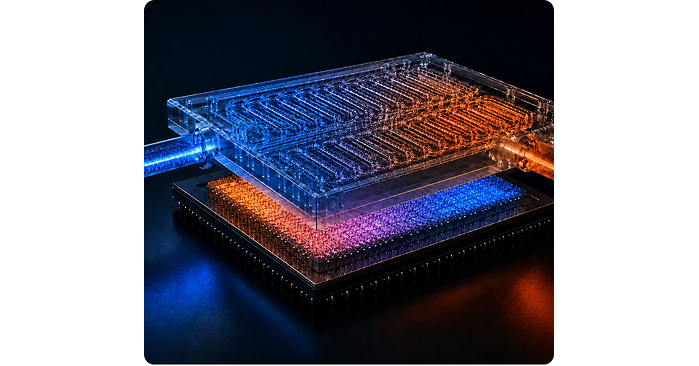
Atomica launched its AI Thermal Microstructures Platform to address the “physical limit” of AI cooling in denser, higher-heat microarchitectures, integrating microfluidic cooling, thermal pathways, interposers, sensing structures, and wafer-level packaging. The platform targets high-density AI compute, advanced packaging, photonic/optical systems, and edge/defense hardware, following Atomica’s prior AI optical connectivity and photonic integration launches. While the news is product-focused, it signals continued advancement in AI hardware infrastructure and thermal-management enablement for next-gen systems.
Analysis
This is less a standalone revenue event than a confirmation that AI scaling is shifting capex from “chips plus racks” to a full-stack thermal engineering problem. The economic winner is whoever can turn package-level heat removal into a qualified, repeatable manufacturing process; that favors advanced packaging, photonics integration, and specialty equipment over generic data-center airflow vendors. In practice, the incremental dollar likely migrates toward higher-value content per accelerator module rather than toward commodity cooling hardware.
The second-order effect is that thermal breakthroughs tend to unlock higher power envelopes, not lower spending. If package-level cooling becomes manufacturable, hyperscalers can push denser systems and maintain procurement cadence longer, which is constructive for NVDA, AVGO, MRVL, and the advanced-packaging supply chain; it is also supportive for equipment names tied to deposition, metrology, bonding, and wafer-level assembly such as AMAT, LRCX, and KLAC. The losers are the solutions that only work at the rack perimeter: those may still grow, but their pricing power erodes if the bottleneck moves inward.
Timing matters: this is a 6-18 month design-win story, not a next-quarter earnings catalyst. The contrarian risk is that most of the addressable market is still prototyping and qualification, so the press-release enthusiasm can run ahead of actual socket conversion and volume manufacturing. What would falsify the bullish read is any evidence that liquid-cooled deployments stall, hyperscaler capex is re-optimized toward lower-power architectures, or packaging yield/qualification issues make thermal microstructures too expensive versus conventional cold-plate solutions.
AllMind Terminal
AI-powered research, real-time alerts, and portfolio analytics for institutional investors.
Request TrialMarket Sentiment
Overall Sentiment
mildly positive
Sentiment Score
0.15
Key Decisions for Investors
- Watchlist, not immediate trade: wait for public design-win evidence before taking exposure to private-foundry claims; the first confirmatory data points are hyperscaler module announcements, packaging capacity additions, or supplier commentary on thermal-aware chiplet programs.
- Long NVDA / AVGO / MRVL basket against a short basket of legacy air-cooling-sensitive data-center infrastructure names if packaging thermal solutions start validating in earnings commentary; thesis is higher feasible power density expands accelerator TAM faster than it commoditizes cooling.
- Overweight AMAT / LRCX / KLAC on a 3-12 month horizon if advanced packaging and wafer-level assembly spend inflects; risk/reward improves only if managements confirm rising tool intensity per packaged AI device.
- Pair trade: long VRT, short a basket of generic HVAC/data-center mechanical names if the market over-discounts the shift to package-level thermal management; VRT has more leverage to liquid-cooling penetration, but the trade needs confirmation from order growth, not press releases.
- Set an alert on hyperscaler capex guides and liquid-cooling attachment rates; if adoption stays below expectations over the next two quarters, treat this as an overhyped niche rather than a structural thermal bottleneck breakthrough.
More News
- ‘Indentured servants’: US green card move will hit thousands of IT workers
- Pilot killed in attacks by Iran-backed Houthis on Riyadh airport; Saudi-led coalition vows 'firm' response
- Is Trump signalling a return to war with Iran after the midterms?
- Delta Air Lines cuts 2026 forecast on fuel surge, but CEO says demand is still strong
- Is AI the new China Shock?
- Why is T-Mobile stock tumbling today?