
MacKenzie-Childs Introduces the 1 Quart Tea Kettle, a Petite New Size for a Perfectly Personal Pour
Source: PR Newswire
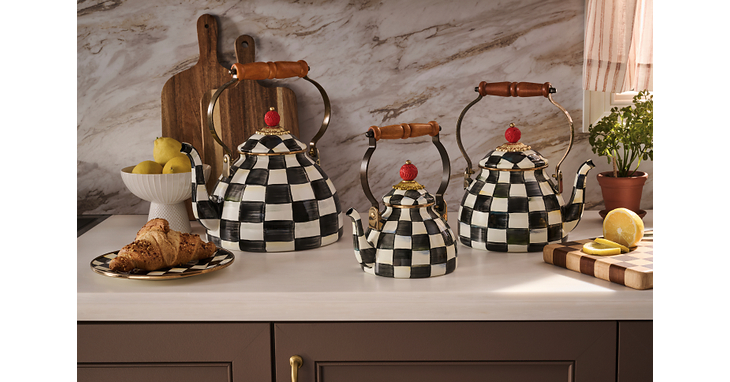
MacKenzie-Childs introduced a 1-quart version of its Tea Kettle, priced at $149.95 and available in seven Check colorways through its website, New York retail stores and select specialty retailers. The smaller size expands the existing 2- and 3-quart collection, with the company positioning it for smaller spaces and gifting.
Analysis
This is a brand-extension signal, not yet an earnings signal. A lower-priced entry product can recruit first-time buyers and support later cross-selling, but it may also shift demand from existing sizes rather than expand the customer base. The key distinction is incremental buyers and basket attachment versus mix dilution and cannibalization; the release provides no sell-through, margin, or repeat-purchase evidence. Hand-finishing may also constrain the ability to scale volume economically, so strong demand would not automatically translate into meaningful profit growth.
The fall gifting window offers a near-term read on product-market fit, but this single launch is unlikely to move broader homewares peers absent evidence of a category-wide demand change. Over 1–3 months, watch retailer reorder rates, online availability, and whether the brand promotes the item broadly or relies on owned channels. Over 6–18 months, the strategic question is whether entry products widen the buyer funnel without weakening the premium positioning. The article identifies no investable public-company mapping; treat the announcement as a brand-monitoring item, not a standalone catalyst.
AllMind Terminal
AI-powered research, real-time alerts, and portfolio analytics for institutional investors.
Request TrialMarket Sentiment
Overall Sentiment
mildly positive
Sentiment Score
0.15
Key Decisions for Investors
- No trade on the announcement alone: no listed security is identified in the supplied company mapping, and the release gives no quantified sales or profit contribution.
- Track holiday sell-through and retailer reorders as the first meaningful validation; broad distribution and repeat purchases would support an incremental-customer thesis, while persistent availability or discounting would weaken it.
- For any future exposure to the brand or its owner, verify the parent-company identity, product-level gross margin, production capacity, and whether sales are incremental versus substitution from existing sizes before underwriting earnings impact.
- Falsification watch: evidence that the new entry tier is discounted, displaces higher-priced products, or cannot be replenished without margin pressure would argue against a durable brand-extension benefit.
More News
- Why is Domino’s Pizza Enterprises stock sliding today?
- South Korean carmaker Hyundai plans 'strategic' investment of $15.5 billion in India by 2032
- Namibia battles cattle disease outbreak as EU suspends several meat imports
- Applied Materials’ $5 billion AI lab aims to cut chip development time in half—and restore Silicon Valley’s edge
- Wells Fargo CFO on Earnings, Deals, Consumer Strength
- Bank of America hit with more than $1.2 billion in penalties over money-laundering violations