
Truck Service Expert Jonas Martin Highlights Why Certified Mechanics Matter More Than Most Drivers Realize in HelloNation
Source: PR Newswire
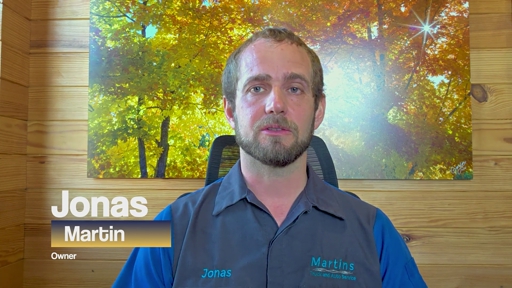
The article argues that ASE certification matters for vehicle service quality, citing that certified mechanics pass exams (e.g., engine repair, brakes, suspension, electrical systems) and must retest regularly as vehicles evolve. It claims certification improves diagnosis accuracy by using structured diagnostic steps and proper tools, and supports safer work on increasingly complex systems (e.g., sensor calibration, electrical testing, computer programming). Overall, it is a consumer-focused informational piece with no new financial or market data.
Analysis
This is a quality-control story, not a demand catalyst. The financial edge from certification is mostly in lower comeback rates, less unnecessary parts replacement, and higher labor productivity, which is why the real beneficiaries are scaled service networks and dealer bays that can amortize training and diagnostic equipment. Independent shops without that capex budget should gradually lose wallet share as vehicle repair shifts from mechanical intuition to software-driven troubleshooting.
For CRMT, the linkage is only indirect: a more professional repair ecosystem can modestly improve reconditioning efficiency and reduce warranty claim volatility, but that is too small to move the earnings model on its own. The bigger second-order effect is cost inflation for older-car ownership; if certified labor and calibration work get more expensive, that raises total cost of keeping a used vehicle on the road, which can soften affordability in the subprime segment over 6-18 months.
The contrarian point is that investors may overvalue the 'trust' narrative and underweight the lack of immediate earnings sensitivity. Unless the next few quarters show measurable changes in warranty reserves, reconditioning days, or service penetration, this remains noise rather than a tradable catalyst. The right monitoring window is months, not days: the stock-level signal will come from operating metrics, not from the branding around certification.
AllMind Terminal
AI-powered research, real-time alerts, and portfolio analytics for institutional investors.
Request TrialMarket Sentiment
Overall Sentiment
neutral
Sentiment Score
0.10
Key Decisions for Investors
- No position in CRMT today; treat this as a non-catalyst unless the next earnings print shows a clear deterioration or improvement in warranty reserves and reconditioning expense.
- If expressing the broader theme, prefer a 3-6 month long ORLY / short AAP pair: ORLY should capture more of the professional-shop upgrade cycle, while AAP is more exposed to lower productivity and weaker execution. Target a modest 1.5:1 reward/risk, with the thesis invalidated if AAP margin leverage improves faster than ORLY.
- Set an alert on CRMT's next quarterly filing for reconditioning cost per unit, warranty reserve additions, and gross margin by vehicle age. A >100 bps move in reserve ratio or a sustained rise in turn time would be the first evidence that repair inflation is leaking into economics.
More News
- Why is T-Mobile stock tumbling today?
- Why is Verizon stock sliding today?
- SpaceX wants to become a 'major mobile carrier' with low-band spectrum acquisition
- OpenAI projected to bring in $20bn less in revenue than expected
- Soitec climbs 7% as BofA turns bullish on silicon photonics demand
- Schott Pharma drops after Deutsche Bank downgrades on demanding valuation
From AllMind Research
- Anthropic IPO Preview: Valuation, Timing, and What to Watch
- Shein After the IPO: Venue, Valuation, and What Must Be Proved
- What AI Research Tools Should a Small Hedge Fund Buy First?
- Weekly Update: Adding Live MBO Level 3 Data - Liquidity Heatmap, OFI Charts, and More
- AI Software for Buy-Side Teams: Build the Research Stack