
Hyosung Chairman Cho Hyun-Joon targets U.S. AI power market with 22.9kV SST
Source: PR Newswire
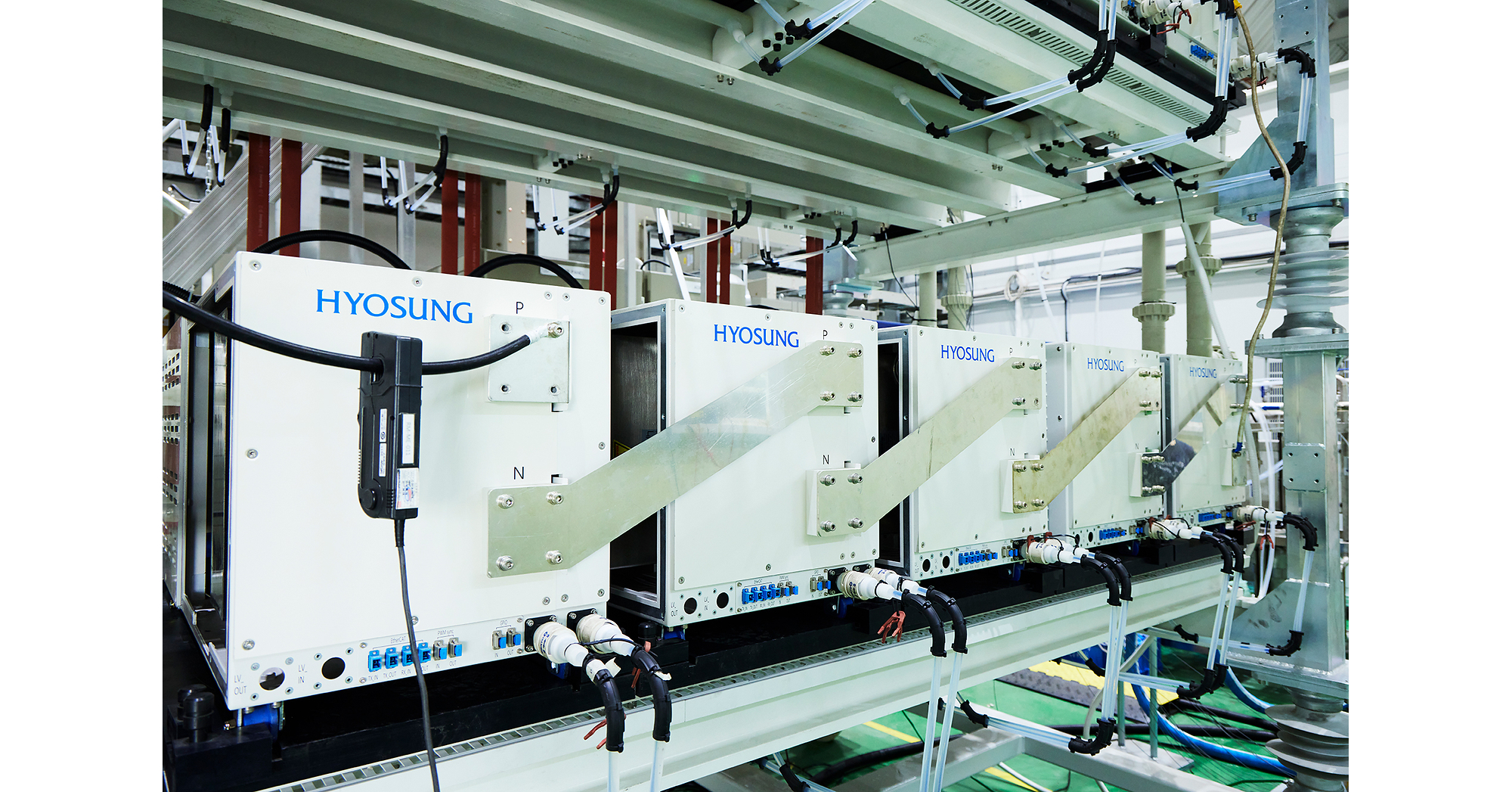
Hyosung Heavy Industries highlighted its world-first 22.9kV, 1.05MVA solid-state transformer, positioning the company for early entry into the nascent high-voltage data-center power market, where the broader SST market is projected to grow at more than 40% annually. The company has invested $300 million to acquire and expand its Memphis ultra-high-voltage transformer facility and formed a joint venture with Quanta Services to manufacture 72.5kV-to-800kV circuit breakers in Pennsylvania. The investments give Hyosung local U.S. production capabilities for both transformers and breakers as AI-driven data-center demand and grid replacement spending accelerate.
Analysis
The investable read-through is strongest for PWR, but the economics are indirect: local switchgear manufacturing can pull more turnkey substation and interconnection work into Quanta's pipeline, particularly where hyperscalers prioritize schedule certainty over lowest equipment cost. The near-term benefit is likely limited to bidding advantage and backlog conversion rather than a material earnings step-up; PWR's valuation already embeds elevated data-center/grid execution expectations, so incremental upside requires disclosed awards or margin-accretive JV economics.
SST commercialization is the higher-beta but less immediately monetizable angle. A viable medium-voltage SST architecture could eventually displace portions of conventional transformer, power-quality and backup-power spending by integrating voltage conversion and grid-control functions; that is a 6-18 month pilot-to-order-cycle opportunity, not a 1-3 month earnings catalyst. The semiconductor content creates a potential second-order beneficiary set in SiC power devices (ON, IFNNY, WOLF), although WOLF should not be treated as a beneficiary absent evidence of design wins and acceptable device yields/cost.
The more immediate competitive pressure falls on imported high-voltage equipment suppliers facing longer delivery times, tariff/local-content exposure, and weaker utility relationships. GE Vernova (GEV), Siemens Energy (ENR.DE), Eaton (ETN), Hubbell (HUBB), and Powell (POWL) remain better liquid proxies for the broader data-center electrification cycle; Hyosung's capacity addition is not enough to alter an industry-wide supply deficit by itself. The thesis is falsified if PWR's data-center backlog growth decelerates, equipment lead times normalize sharply, or project owners defer capacity because utility interconnection queues remain binding.
Consensus may overvalue the novelty premium attached to SSTs while underweighting the bottleneck value of conventional transformers, breakers, protection systems and field labor. A successful demonstration does not establish reliability, utility certification, serviceability, or cost parity—each can take multiple procurement cycles. Prefer monetizing near-term grid buildout through established listed suppliers rather than assigning material value to SST adoption before pilot customer, order backlog, and unit-economics disclosure.
AllMind Terminal
AI-powered research, real-time alerts, and portfolio analytics for institutional investors.
Request TrialMarket Sentiment
Overall Sentiment
strongly positive
Sentiment Score
0.58
Ticker Sentiment
Key Decisions for Investors
- Maintain PWR as a tactical 1-3 month long only on confirmation of incremental data-center/substation awards or backlog disclosure; target a 10-15% upside from an award-driven rerating, with a 7-8% stop if bookings or margin guidance fail to improve. Avoid chasing a press-release-only move.
- Pair long ETN or HUBB versus short a broad industrial ETF (XLI) over 6-12 months: both have direct exposure to distribution equipment and power-quality spend, while the hedge reduces general AI-capex and macro beta. Reassess if utility capex guidance weakens or transformer lead times fall materially.
- Use GEV as a watch-list long rather than an immediate trade: initiate after evidence that high-voltage equipment orders and service backlog are converting without working-capital deterioration. The risk is that supply-chain normalization compresses scarcity-driven margins before revenue recognition.
- Do not establish a standalone SST/SiC trade yet. Set an alert for named pilot customers, UL/utility qualification, delivered-system reliability data, and semiconductor supplier disclosures; absent these, SST exposure is venture-style optionality rather than a forecastable public-equity earnings catalyst.
More News
- Are global oil reserves sufficient to withstand renewed US-Iran war?
- OpenAI Trims Target Value & Volvo Cars Cuts 2,500 Jobs
- Russia and Ukraine trade fresh strikes despite renewed push for U.S.-brokered peace talks
- U.S. oil holds above $100, Brent at five-month high as Iran says it’s prepared for warfare
- PG&E’s CEO says AI is ‘the best thing that could’ve ever happened to the grid’
- The mobile ambitions of SpaceX see telecom stocks get hit again. What the latest developments mean.
From AllMind Research
- Anthropic IPO Preview: Valuation, Timing, and What to Watch
- Shein After the IPO: Venue, Valuation, and What Must Be Proved
- What AI Research Tools Should a Small Hedge Fund Buy First?
- AI Vendor Landscape for Institutional Investment Teams
- AllMind Fixed Income Compass for October 2025: Navigating Policy Divergence and Political Risk