
More home builders cut prices as buyers get spooked
Source: MarketWatch
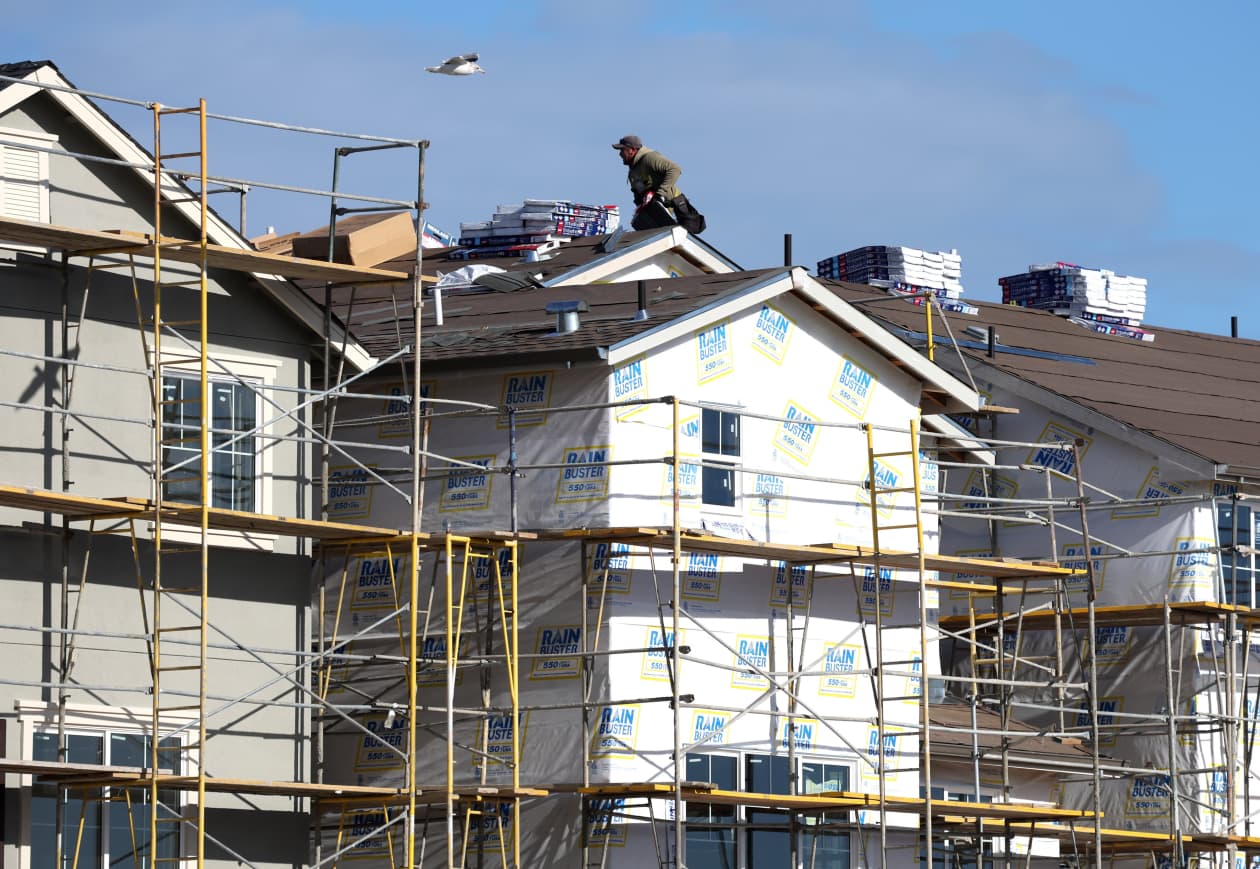
U.S. home-builder confidence fell in September to its lowest level in a year as elevated mortgage rates deterred prospective buyers. A growing share of builders is cutting prices on new homes despite rising construction costs, pressuring margins and signaling softer housing demand. Immigration crackdowns are also beginning to disrupt construction projects, adding labor and execution risks for builders.
Analysis
The relevant earnings risk is not simply weaker unit demand; it is the simultaneous compression of gross margin from incentives and higher labor/subcontractor costs. DHI, LEN and PHM have more scale to protect absorption through financing buydowns and community-level price optimization, while smaller, geographically concentrated builders face a sharper tradeoff between preserving backlog and maintaining returns. Immigration enforcement is a second-order negative for labor-intensive markets in the South and Southwest, where delayed starts can raise carrying costs and reduce asset turns even if headline demand stabilizes.
Over the next 1-3 months, the key read-through is whether incentives remain a localized response or broaden into reported margin-guide cuts. Watch cancellation rates, net orders per community, spec inventory, and mortgage-rate lock data; a sustained rise in spec supply would shift the market from a rate-sensitive demand story to an inventory-and-margin story. Building-products names with new-construction exposure, including BLD, FBIN and MHK, could lag builders because they lack the builders' ability to use financing incentives to clear inventory.
Consensus may be too uniformly bearish on public builders. Large public operators can gain share when private builders lose access to labor, credit and affordable rate-lock programs; this can support volumes while aggregate housing activity weakens. The differentiator will be land discipline: firms forced to reprice completed homes without writing down older, higher-cost land positions are most exposed to 6-18 month book-value and multiple pressure.
AllMind Terminal
AI-powered research, real-time alerts, and portfolio analytics for institutional investors.
Request TrialMarket Sentiment
Overall Sentiment
moderately negative
Sentiment Score
-0.38
Key Decisions for Investors
- Maintain a defensive relative-value posture: long DHI or LEN versus short BLD over the next 1-3 months. Builders retain more direct control over incentives and financing capture; BLD is exposed to both lower starts and labor-cost pressure. Reassess if builder gross-margin guidance is cut by more than 150 bps or if single-family starts reaccelerate materially.
- Avoid adding broad long exposure to PHM and TOL ahead of the next order-update cycle unless mortgage rates decline enough to improve buyer affordability. A sustained decline in the 30-year mortgage rate is the principal upside catalyst; absent that, price concessions can outrun volume gains.
- Use ITB versus XHB as a watch trade rather than an immediate position: favor ITB if public-builder order growth holds while private-builder stress rises, but reverse the view if reported incentives broaden across markets and public-builder margins begin to reset.
- For a tactical downside hedge, consider a 2-3 month XHB put spread only after confirmation from rising cancellations or weaker new-home sales data. The thesis is falsified by a rate-driven rebound in reservations and stable gross-margin commentary; do not pay elevated implied volatility before such confirmation.
More News
- Oil extends losses as Saudi Arabia reportedly offers ship-to-ship crude transfers after pipeline hit
- Japan’s corporate leaders sound alarm over weak yen — even dollar-earners are voicing concerns
- Hawkish Fed lifts dollar to seven-week high as focus turn to BOJ
- Fed hikes again - an AI-Picked insurer is still cashing in
- Congress passes sweeping US sanctions bill targeting Russia
- 'Science fiction': Transport companies — the backbone of economy — are sounding alarm on fuel prices