
Asia-Pacific's Autumn Travel Boom Sees Rising Demand for Emerging Destinations
Source: PR Newswire
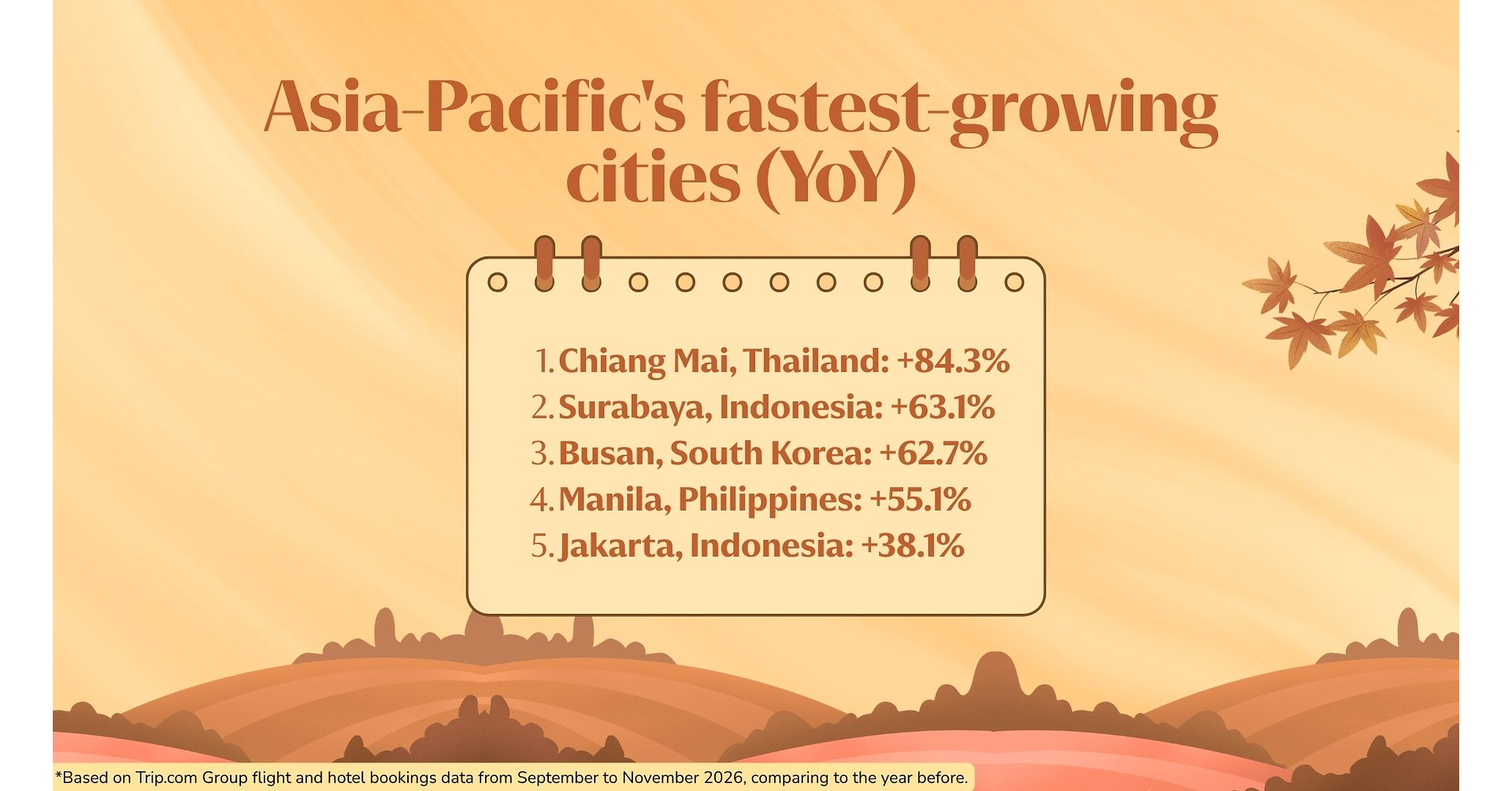
Trip.com Group reported strong year-on-year autumn booking growth in several Asia-Pacific cities, led by Chiang Mai at 84.3%, Surabaya at 63.1% and Busan at 62.7%; Japan accounted for 11 of the top 12 global autumn foliage attractions. Gen Z flight bookings posted the strongest growth among generations, while Trip.Moments autumn-viewing posts rose 203% year-on-year to 2,497 in September. The company is rolling out an AI-powered Trip Discovery Agent in stages; the release provides travel-demand and product updates but no financial results.
Analysis
TCOM’s read-through is modestly positive, but the more important signal is potential booking mix and customer-acquisition economics—not the reported city growth rates themselves. Short-haul, multi-city China itineraries could increase transaction frequency and cross-sell opportunities, while also skewing toward lower-value trips; booking growth alone does not establish higher gross bookings, take rate, or profit. The risk is that demand is seasonal and distributed across destinations, so local growth may not translate into material consolidated earnings.
The company’s own platform data and AI feature announcement are not independent evidence of incremental conversion. A discovery tool could improve funnel capture and reduce reliance on paid traffic over time, but only if it lifts conversion or repeat use without costly incentives. Competing online travel platforms, including Booking Holdings and Expedia Group, can replicate discovery features; differentiation will depend on inventory, localization, and conversion outcomes.
Near term, seasonal Japan demand may support travel-platform activity, but weather disruption, air capacity, yen moves, or renewed weakness in China outbound demand could quickly reverse it. Over 1–3 months, verify TCOM’s reported outbound bookings and monetization against broader travel demand; over 6–18 months, treat AI as an option rather than an earnings driver until adoption and unit economics are disclosed. The contrarian point: eye-catching growth rates from a company release may overstate the investment signal because they lack booking bases, revenue contribution, and profitability data.
AllMind Terminal
AI-powered research, real-time alerts, and portfolio analytics for institutional investors.
Request TrialMarket Sentiment
Overall Sentiment
mildly positive
Sentiment Score
0.30
Ticker Sentiment
Key Decisions for Investors
- Do not chase TCOM on this release alone. Keep a constructive watch bias; the data support demand momentum, not a measurable earnings revision.
- For the next 1–3 months, monitor TCOM’s quarterly outbound gross bookings, revenue growth, and take-rate or margin commentary. Upgrade the thesis only if monetization keeps pace with booking growth; weaken it if growth is accompanied by poorer margins or incentives.
- Treat the AI Discovery Agent as a catalyst watch, not a current valuation premium: seek evidence on adoption, conversion lift, repeat bookings, and customer-acquisition cost before underwriting material benefits.
- Falsifiers include a deterioration in China outbound travel, capacity or weather disruptions during peak travel periods, and TCOM guidance showing that seasonal demand is not converting into revenue or profitability.
More News
- US tech stocks tumble as investors fret over AI spending
- Asian shares wobble as tech rout boosts bonds, dents rate hike bets
- Asia stocks fall as AI rout batters S.Korea; Japan spooked by strong CPI
- AI debt and French bonds face a stress test — why it may not be over
- Nasdaq 100 Drops as Oil Rise Fuels Risk-Off Mood
- SK Hynix shares slide after chipmaker scraps Solidigm IPO plans