
Hoymiles wprowadza ładowarkę V2X DC 22 kW, uzupełniając zintegrowany ekosystem energetyczny domu
Source: PR Newswire
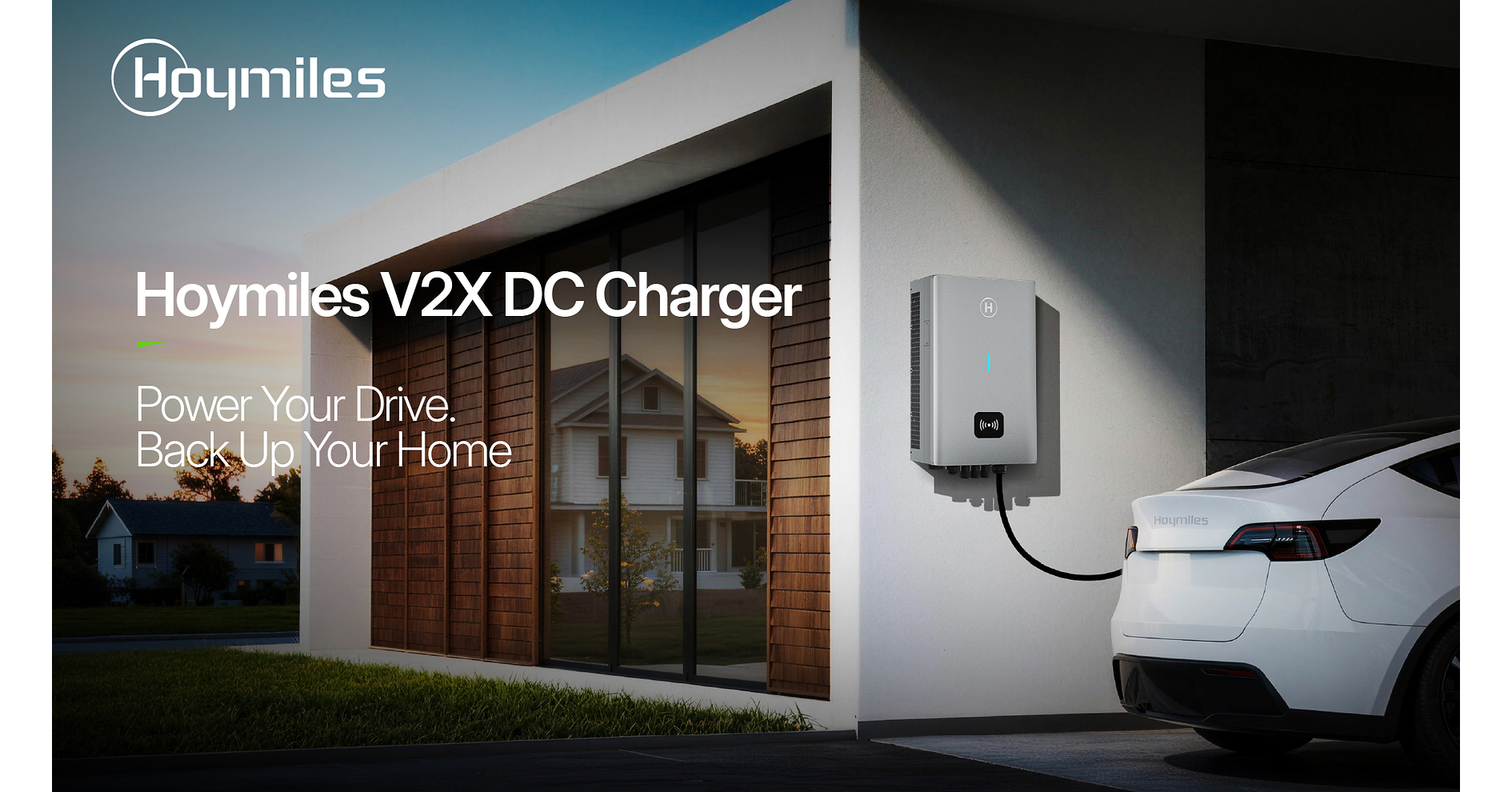
Hoymiles launched a 22 kW DC V2X charger integrated with its HiOne all-in-one home battery-energy-storage system, enabling vehicle-to-home backup power and vehicle-to-grid participation. The charger can add roughly 110 km of driving range per hour versus about 35 km for conventional AC charging, supports 95% of mainstream EV models, and reduces conversion losses through direct DC charging from solar and storage. The launch expands Hoymiles' residential solar, storage, energy-management and EV-charging ecosystem, though it is a company product announcement with limited near-term broad market impact.
Analysis
This is strategically relevant but not yet investable public-market news: Hoymiles is private, and the addressable-market bottleneck is unlikely to be charger hardware. Residential bidirectional charging economics depend on OEM-enabled V2G functionality, local interconnection rules, dynamic retail tariffs, and aggregator payments; without all four, the installation is primarily a premium backup-power product rather than a recurring grid-services asset. The claimed vehicle compatibility rate should be treated cautiously because connector compatibility does not necessarily mean an OEM permits battery export or preserves vehicle-warranty coverage.
For listed peers, the product direction raises longer-term competitive pressure on SolarEdge (SEDG), Enphase (ENPH), Wallbox (WBX), and Tesla (TSLA): the value pool shifts toward integrated solar-storage-charger control software rather than standalone inverters or AC chargers. SEDG and ENPH have installer networks and installed bases that could monetize a comparable bundle, but their near-term margin benefit requires attach rates high enough to offset incremental certification, support, and working-capital costs. WBX is more exposed if DC bidirectional home charging scales, since lower-priced AC charging becomes less differentiated; however, broad adoption is likely a 6-18 month regulatory/OEM validation issue, not a near-term demand shock.
The contrarian view is that V2X may expand stationary-battery demand rather than cannibalize it. Households seeking outage resilience need guaranteed capacity while vehicles are often absent during peak events, making a home battery complementary; the stronger risk is that high-power residential DC installations face utility-upgrade costs that impair payback. A credible catalyst would be announced utility programs with contracted VPP capacity and explicit participating EV models, rather than further vendor product releases.
AllMind Terminal
AI-powered research, real-time alerts, and portfolio analytics for institutional investors.
Request TrialMarket Sentiment
Overall Sentiment
moderately positive
Sentiment Score
0.42
Key Decisions for Investors
- No directional position on this launch; maintain a 1-3 month alert on SEDG, ENPH, WBX and TSLA for utility VPP contracts, OEM V2G approvals, and European bidirectional-charging certification announcements.
- Watch-item: consider a long SEDG / short WBX pair only if verified European V2X deployments show integrated solar-storage attach rates above 15-20% of new installations. The thesis is higher ecosystem monetization for SEDG versus standalone-charger commoditization; invalidate if SEDG inverter/battery gross margin deteriorates or WBX secures OEM-exclusive bidirectional contracts.
- For TSLA, treat residential V2H/V2G enablement as an upside optionality catalyst rather than a current earnings driver. Reassess upon formal European vehicle-to-home activation or utility aggregation partnerships; absent that, hardware announcements should not alter position sizing.
- Monitor European residential grid-connection and tariff reforms over the next 6-18 months. Rising demand charges and explicit flexibility compensation would improve economics for V2X suppliers and component vendors such as STM; delayed interconnection approval or OEM battery-warranty restrictions would falsify the adoption thesis.
More News
- AI Doubts Spread Cracks in Equities, Credit Markets: Evening Briefing Americas
- Stocks Fall as Oil Rally Keeps a Lid on Treasuries
- Energy markets are adapting to the Iran war as a ‘forever conflict’ while oil producers keep supplies flowing and avoid ‘mutually assured destruction’
- Kinder Morgan, Energy Transfer and Williams could benefit from cheap natural gas
- CrowdStrike CEO's alarming prediction — plus, the sell-off spreads beyond tech
- Vertex reports positive IgAN trial data, FDA decision due Nov. 30