
Beyond Connectivity: Lacuna Ads Turns Programmatic Infrastructure into Customer Value
Source: PR Newswire
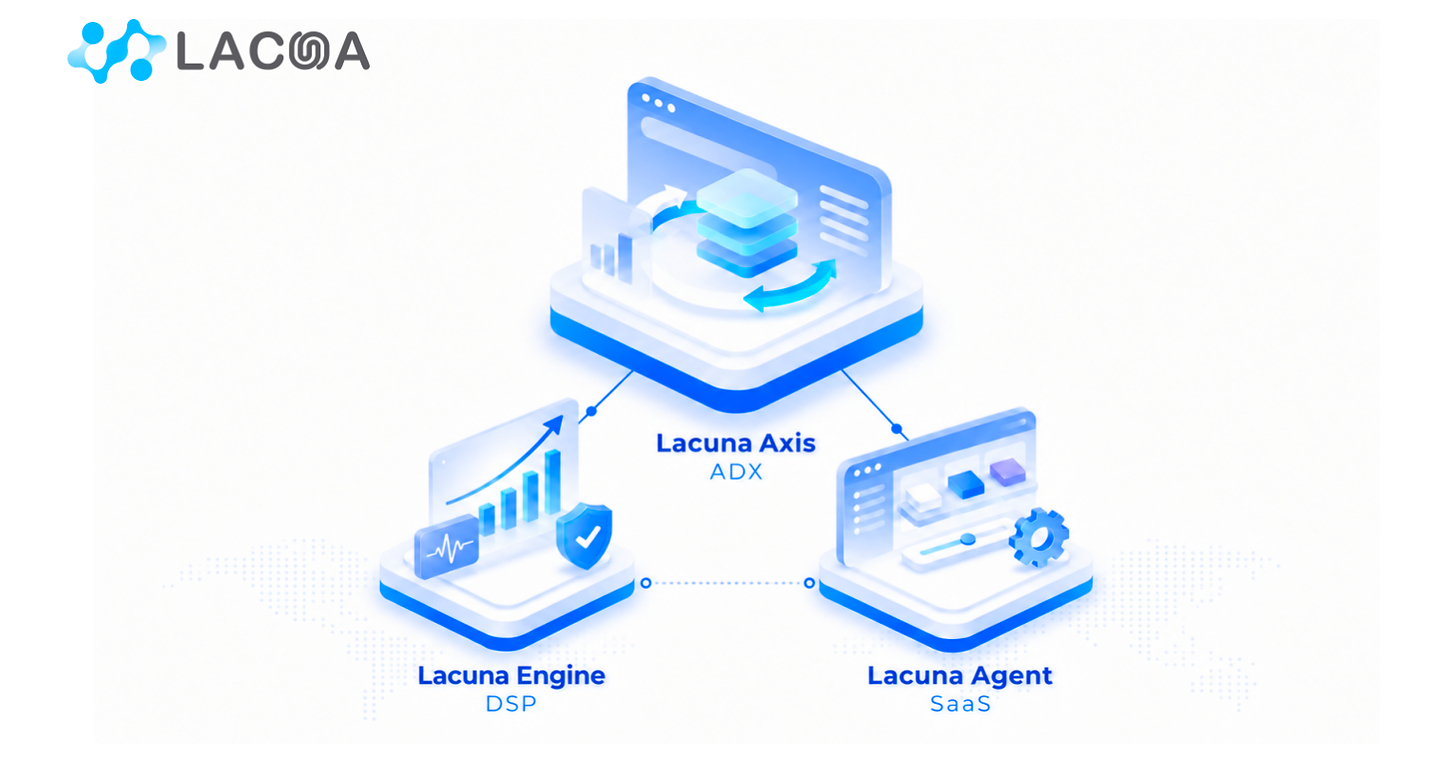
Lacuna says its Ads ecosystem processes more than 200 billion ad requests daily, combining its Axis exchange, Engine demand-side platform and Agent self-service SaaS platform. The company cites more than 2.4 billion installs across its utility and gaming app portfolio, over 200 demand sources—including more than 100 premium DSPs—and AI-driven routing and optimization. Lacuna says Agent, launched in 2026, lets external platform teams build and operate ad exchanges without the full cost and complexity of an in-house stack; the announcement provides no quantified customer or financial results.
Analysis
The release is a positioning exercise, not evidence of monetization: request volume and cumulative app installs do not establish net revenue, take rate, active reach, retention, or incremental campaign performance. The key economic question is whether Lacuna can convert its exchange, DSP and SaaS bundle into durable customer spend without subsidizing connectivity or competing against its own customers. Lacuna Agent could broaden distribution and lower customer build costs, but may also shift activity away from Lacuna’s directly monetized exchange or DSP; unit economics by product and customer retention will determine whether this is expansion or channel conflict.
If the SaaS model gains traction, independent ad-tech infrastructure providers and smaller platforms that cannot justify an in-house stack could face pricing pressure. Conversely, buyers and publishers may benefit from another source of demand and routing, while established platforms such as The Trade Desk, Google, Magnite and PubMatic face only a marginal competitive signal absent evidence of spend diversion or superior outcomes. Third-party IVT verification and IAB registration are useful controls, not proof of better performance or regulatory clearance across jurisdictions.
Near term, expect limited public-market read-through: Lacuna has no supplied ticker or disclosed financials, and the claims are company-sourced. Over 1–3 months, customer wins, paid SaaS adoption, renewal rates and independently measured lift would make the launch investable. Over 6–18 months, privacy/consent changes, platform policies and ad-quality enforcement could raise compliance costs or constrain addressable inventory. The contrarian risk is treating a broad product suite and large request count as a moat; connectivity can be replicated, while measurement, trusted identity and profitable retention are harder to prove.
AllMind Terminal
AI-powered research, real-time alerts, and portfolio analytics for institutional investors.
Request TrialMarket Sentiment
Overall Sentiment
mildly positive
Sentiment Score
0.25
Key Decisions for Investors
- No direct position from this release: Lacuna is not mapped to a public ticker, and there is no disclosed revenue, customer, pricing or unit-economics evidence to underwrite a listed-company impact.
- Set an alert for verifiable Agent customer deployments, paid conversion, renewal/retention, and product-level gross profit; distinguish external SaaS revenue from traffic routed through Lacuna’s own exchange and DSP.
- For listed ad-tech exposure, avoid trading peers solely on this announcement. Reassess The Trade Desk, Google, Magnite and PubMatic only if evidence shows measurable budget diversion, publisher adoption, or pricing pressure.
- Falsify the positive platform thesis if customer adoption remains limited to pilots, quality-adjusted campaign outcomes fail to improve, or compliance/traffic-quality issues trigger lost supply or buyer demand.
More News
- Magnificent 7 loses $1 trillion. The most eye-popping stats from Thursday's tech stock plunge
- Tech stocks are suffering their biggest selloff since Covid, as investors see premature end to AI datacenter boom
- Wall Street’s best post-midterm rally in 44 years lasted just one day—then $3 trillion vanished as chip stocks plunged over AI fears
- How Wall Street's postelection rally got obliterated — and what's next
- Elon Musk's Tesla and SpaceX lose over $420 billion in combined market cap after midterms
- AI stocks plunge after election, driving down US markets