
Tech sell-off drives US markets down by nearly $1tn after subpar earnings reports
Source: theguardian.com
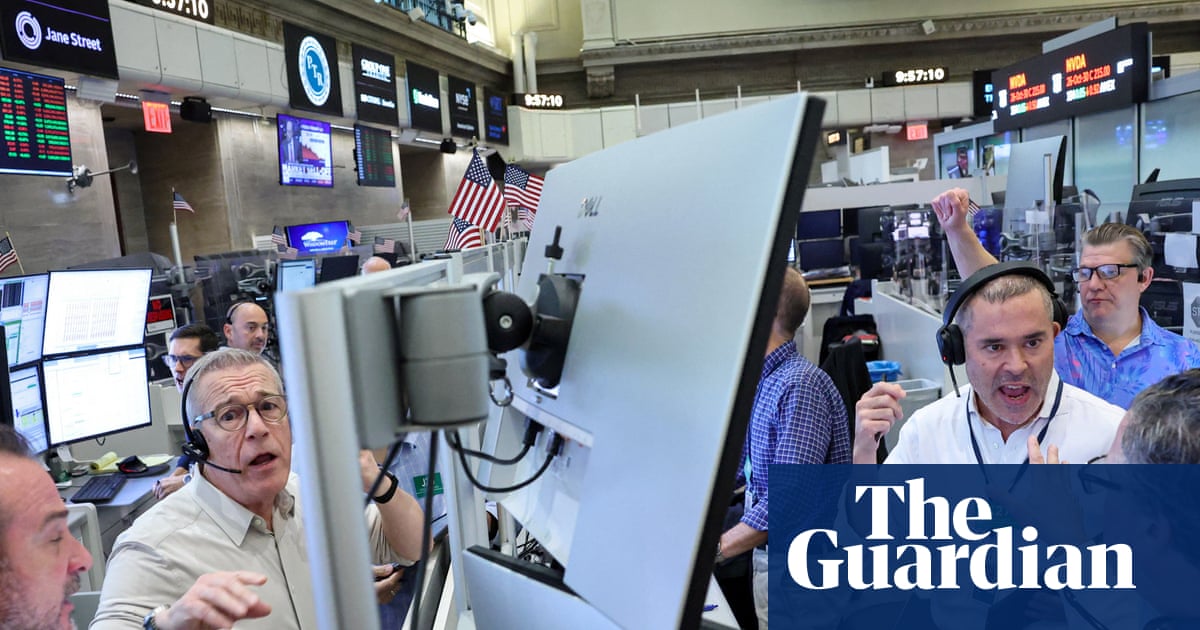
The Nasdaq has lost nearly $1tn in a week and about $2tn in a month, while the Nasdaq 100 is down more than 5.8% in October amid a broad tech sell-off. Investors are questioning whether elevated AI infrastructure spending will generate adequate returns; Intel fell nearly 30% after issuing a weak profit forecast, Amazon dropped 1.8% after weaker-than-expected summer profit, and Nvidia declined 3.1%. The S&P 500 fell more than 1% Friday, while high interest rates are also raising concerns about data-center expansion.
Analysis
The market is repricing the timing and financing of AI returns, not necessarily abandoning AI demand. The second-order risk is a capex-to-cash-flow mismatch: continued infrastructure spending can support chip and data-center suppliers while depressing near-term free cash flow at buyers. If returns take longer to show up, the multiple risk shifts from hardware leaders to hyperscalers as investors demand evidence that spending produces monetizable workloads and productivity. Higher rates would amplify this pressure by raising the hurdle rate for data-center projects; a decline in yields could quickly reverse the trade.
Near term (days to weeks), index-level de-risking and concentrated positioning can keep high-beta technology names under pressure even where company fundamentals differ. Over 1–3 months, the key catalysts are management updates on capex, cash flow, and AI monetization, plus rates and data-center build plans. Over 6–18 months, sustained buildout could benefit power, cooling, and data-center infrastructure suppliers, but project delays would transmit weakness beyond semiconductors. Intel’s weak forward profit outlook despite a better reported quarter is a reminder that headline earnings do not eliminate execution risk.
Contrarian: a broad tech drawdown may overstate damage to long-run AI demand, but the evidence here does not establish that spending will earn adequate returns. Avoid treating every AI-linked stock as one trade; distinguish capital buyers from suppliers and require cash-flow proof. Falsify the cautious view with improving AI-related revenue or productivity disclosures alongside stabilizing free cash flow, or a material easing in financing conditions.
AllMind Terminal
AI-powered research, real-time alerts, and portfolio analytics for institutional investors.
Request TrialMarket Sentiment
Overall Sentiment
strongly negative
Sentiment Score
-0.65
Ticker Sentiment
Key Decisions for Investors
- Use a rebound to initiate a defined-risk relative-value hedge: short SOXX against SPY, sized to reduce portfolio semiconductor beta rather than make a directional call on all technology. Reassess after the next round of capex and cash-flow disclosures; cover if yields fall materially and AI-related monetization or supplier demand improves.
- Keep AMZN, GOOG, and META on a capex-to-free-cash-flow watchlist rather than buying the dip mechanically. Require evidence in upcoming reporting that incremental AI investment is translating into revenue, productivity, or a credible payback path; further capex increases without such evidence would weaken the case.
- For NVDA exposure, avoid adding on weakness until data-center order visibility and customer spending plans stabilize. A renewed buildout and improving financing conditions would invalidate the wait; project deferrals or continued deterioration in cash conversion would support further downside protection.
- Treat INTC separately from the AI-infrastructure thesis: the forward-profit outlook is the relevant near-term risk signal. Revisit only if subsequent guidance and operating results show execution improvement; a weak outlook persisting through the next reporting cycle would falsify a recovery case.
More News
- Intel plunged 28.6% for its worst drop since 1974 — and the AI sell-off gave the S&P 500 its worst day since June
- Nasdaq futures sink 2.3% as Amazon, Intel and Alphabet send AI jitters through stocks
- Reddit stock plunges 30% after weak outlook, heads for worst day ever
- Why is iShares Semiconductor ETF plunging today?
- Tech gets crushed, defensive stocks shine. How we're making sense of it all
- October ends with a thud for Intel, Reddit, AI stalwarts