
SBUX's Digital Menu Rollout Nears 90%: Can It Lift Afternoon Sales?
Source: zacks.com
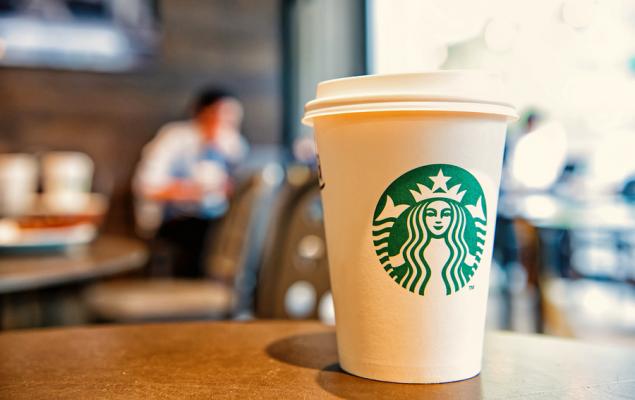
Starbucks expects digital menu boards to reach roughly 80%-90% of stores by September, supporting its effort to improve weaker afternoon traffic through daypart-specific merchandising. U.S. Q3 FY2026 comparable sales rose 7.9%, driven by a 4.2% increase in transactions and 3.6% ticket growth, while Refreshers delivered double-digit U.S. revenue growth and food attach reached a third-quarter record. The strategy faces rising afternoon beverage competition from McDonald's and Dutch Bros, though consensus expects Starbucks FY2026 EPS to rise 21.6% year over year.
Analysis
The relevant question is not whether digital boards lift sales, but whether they create incremental high-margin occasions without degrading labor productivity. A modest afternoon traffic gain can be disproportionately accretive because fixed store labor and occupancy are already covered by the morning peak; however, any need to add labor or remakes at the mobile/drive-thru handoff would absorb much of the benefit. The rollout is therefore a throughput test, not a technology catalyst, and should be evaluated against transaction growth, labor hours per transaction, and U.S. store-level margin over the next two earnings reports.
SBUX already embeds a demanding recovery valuation relative to restaurant peers, leaving limited tolerance for evidence that ticket-led growth is substituting for traffic or that promotional/menu personalization raises complexity. BROS is the cleaner structural beneficiary of afternoon energy-beverage demand: its drive-thru format, lower food mix and loyalty-led customer data provide more capacity to monetize incremental occasions with less in-store congestion. MCD can use beverage attachment to protect value perception, but its scale makes the category strategically defensive rather than likely to move consolidated earnings.
Consensus may over-credit menu-board personalization while underestimating category competition and consumer fatigue from proliferating refreshers, energy drinks and cold coffee. The near-term read-through is neutral-to-positive for SBUX, but a re-rating requires sustained incremental traffic and margin conversion, not another quarter of price/mix. A reversal would be signaled by afternoon transaction growth failing to outpace morning growth, rising labor deleverage, or renewed discounting by MCD/BROS over the next 1-3 months; structurally, 6-18 month success depends on repeat frequency rather than launch trial.
AllMind Terminal
AI-powered research, real-time alerts, and portfolio analytics for institutional investors.
Request TrialMarket Sentiment
Overall Sentiment
mildly positive
Sentiment Score
0.38
Ticker Sentiment
Key Decisions for Investors
- Maintain SBUX as a watch, not a new outright long, into the next two quarterly prints. Initiate only if U.S. traffic remains positive while store margins expand; a miss on either metric would make the premium multiple vulnerable to 10-15% compression.
- Favor a 6-12 month pair trade: long BROS / short SBUX in equal dollar exposure. BROS offers more direct operating leverage to beverage-frequency growth, while SBUX carries execution and valuation risk; exit if BROS same-store sales decelerate materially or SBUX demonstrates sustained afternoon traffic outperformance with margin expansion.
- Use MCD as the defensive alternative rather than a direct afternoon-growth trade. Its beverage initiative can support check and traffic resilience, but consolidated upside is unlikely to justify a tactical overweight absent evidence of incremental franchisee profitability.
- Set an earnings-monitor alert for SBUX: afternoon transactions, labor hours per transaction, U.S. company-operated margin, and promotional intensity. Do not underwrite sales claims from the rollout until these independently measurable indicators confirm incremental, profitable demand.
More News
- McDonald's will spend big on restaurant upgrades, training to drive growth
- Why McDonald's is following Walmart and Amazon into the advertising business
- McDonald's to spend $8.5B on revamping restaurants, tech and franchise support
- McDonald's CEO expects high inflation, flat traffic are not going away for restaurant industry
- McDonald's to spend $8.5B on revamping restaurants and staff training to boost sales
- McDonald's shares drop after CEO reveals lackluster growth forecast as inflation accelerates
From AllMind Research
- Anthropic IPO Preview: Valuation, Timing, and What to Watch
- Shein After the IPO: Venue, Valuation, and What Must Be Proved
- What AI Research Tools Should a Small Hedge Fund Buy First?
- AlphaSense vs Hebbia vs AllMind: Choose by Workflow
- AllMind Discusses Ontario's AI Economy with Minister Stephen Crawford and Supply Ontario CEO James Wallace