
Tesla's Automotive Revenue Fell 3%, and Energy Generation and Storage Tumbled 16%. Should Investors Still View Tesla as a Car Company?
Source: fool.com
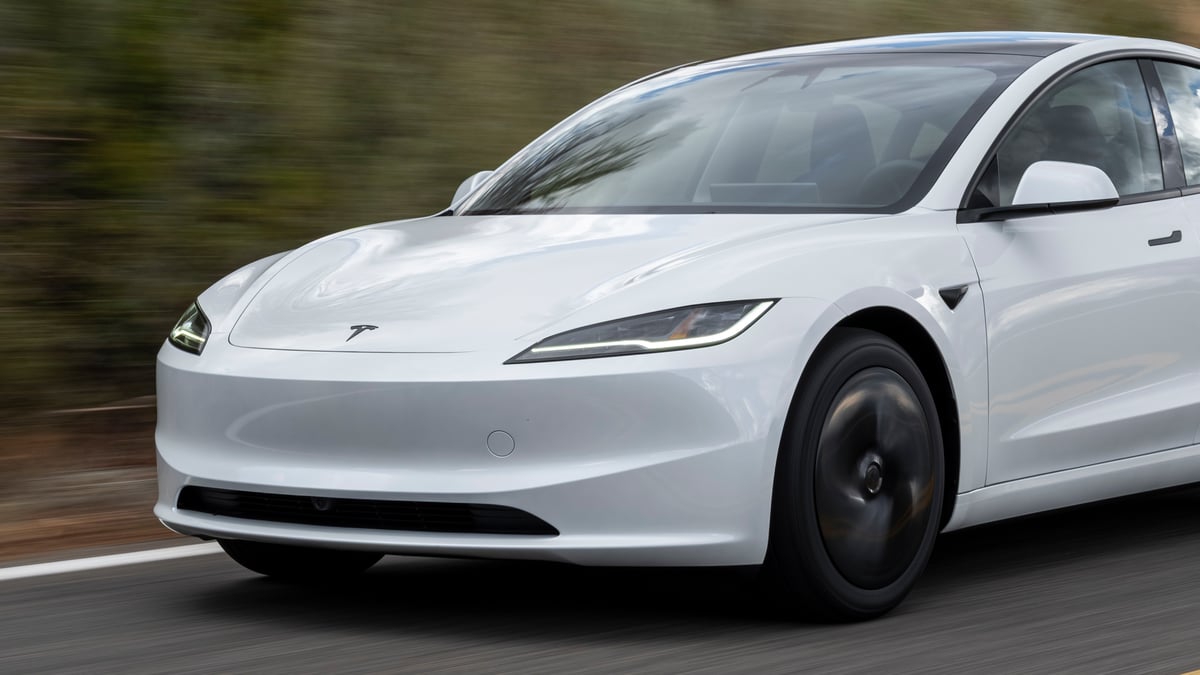
Tesla's Q2 revenue fell 0.2% to $28 billion, with automotive revenue down 3% to $20.6 billion and energy generation and storage down 16% to $2.88 billion; services grew 33% to $4.6 billion. Vehicle sales have been essentially flat for three years, while the stock trades at about 200 times earnings on expectations for autonomy, AI and Optimus; management targets Optimus production of 20,000 units a week and initial customer deliveries around the end of 2027. The article argues those future businesses are not yet proven at scale and that Tesla's valuation implies annual profit of at least $50 billion, concluding that the stock is best avoided.
Analysis
TSLA’s key exposure is no longer just vehicle demand; it is whether long-dated autonomy and robotics options can convert into recurring, high-margin cash flow before the auto business requires renewed investment to defend share. That creates a timing mismatch: current earnings can weaken while the valuation depends on milestones years away. Any delay in unsupervised FSD authorization, paid customer adoption, or reliable Optimus production would extend that gap and raise the risk of multiple compression. Conversely, regulatory clearance plus measurable utilization and monetization—not demos or management targets—could sustain the premium.
The second-order risk is resource allocation. If engineering and capital shift toward AI and robotics without near-term commercial proof, slower vehicle refreshes or weaker auto economics could leave room for competitors to win customers. GM and Ford are not clean beneficiaries: their EV pullbacks reduce direct exposure to Tesla’s execution, but also limit their ability to capture EV demand if it reaccelerates. The article’s valuation inference should be treated as a scenario, not an independently verified earnings forecast.
Near term, sentiment may remain narrative-driven; over 1–3 months, track automotive gross-profit direction, operating cash flow, and evidence of paid FSD adoption. Over 6–18 months, regulatory permissions and repeatable product economics matter more than production aspirations. The contrarian risk to a bearish position is that a single credible autonomy milestone can reprice distant cash flows quickly. A bearish thesis is falsified by sustained auto growth and improving profitability alongside independently verifiable FSD commercialization or scaled Optimus deliveries.
AllMind Terminal
AI-powered research, real-time alerts, and portfolio analytics for institutional investors.
Request TrialMarket Sentiment
Overall Sentiment
moderately negative
Sentiment Score
-0.35
Ticker Sentiment
Key Decisions for Investors
- Avoid adding outright TSLA exposure solely on robotics or autonomy targets; require evidence of paid adoption, regulatory progress, and unit economics before underwriting those businesses as material earnings contributors.
- For a bearish expression, consider a defined-risk TSLA put spread rather than an uncapped short, conditional on option pricing and implied volatility being reasonable. Reassess after the next earnings report; the thesis weakens if auto profitability and cash generation improve together with verifiable commercialization milestones.
- Do not treat F or GM as automatic hedges or beneficiaries. Their EV strategies and business mixes differ, so any TSLA-versus-legacy-auto pair needs exposure sizing based on relative valuation, earnings sensitivity, and market beta—not a simple equal-dollar assumption.
- Set alerts for unsupervised FSD regulatory approvals and paid-use metrics, automotive gross-profit trends, and evidence of repeatable Optimus deliveries. If milestones remain aspirational while core auto economics deteriorate, the risk of valuation compression rises; if commercialization becomes measurable, reduce bearish exposure.
More News
- Next week brings major risks for the stock market, just as the AI trade keeps faltering
- With earnings in rearview mirror, SpaceX-Tesla merger chatter takes center stage
- Investing.com’s stocks of the week
- On the ground at Nvidia GTC Berlin: Jensen Huang, robot ducks and neocloud distress
- GM stock analysis: cheap valuation meets falling estimates after earnings drop
- Sam Altman's OpenAI eyes $30B fundraising round ahead of looming IPO: report