
À l'occasion du salon IDEE 2026, Huawei Digital Power présente des solutions adaptées à divers scénarios, intégrant la formation de réseau et l'IA
Source: PR Newswire
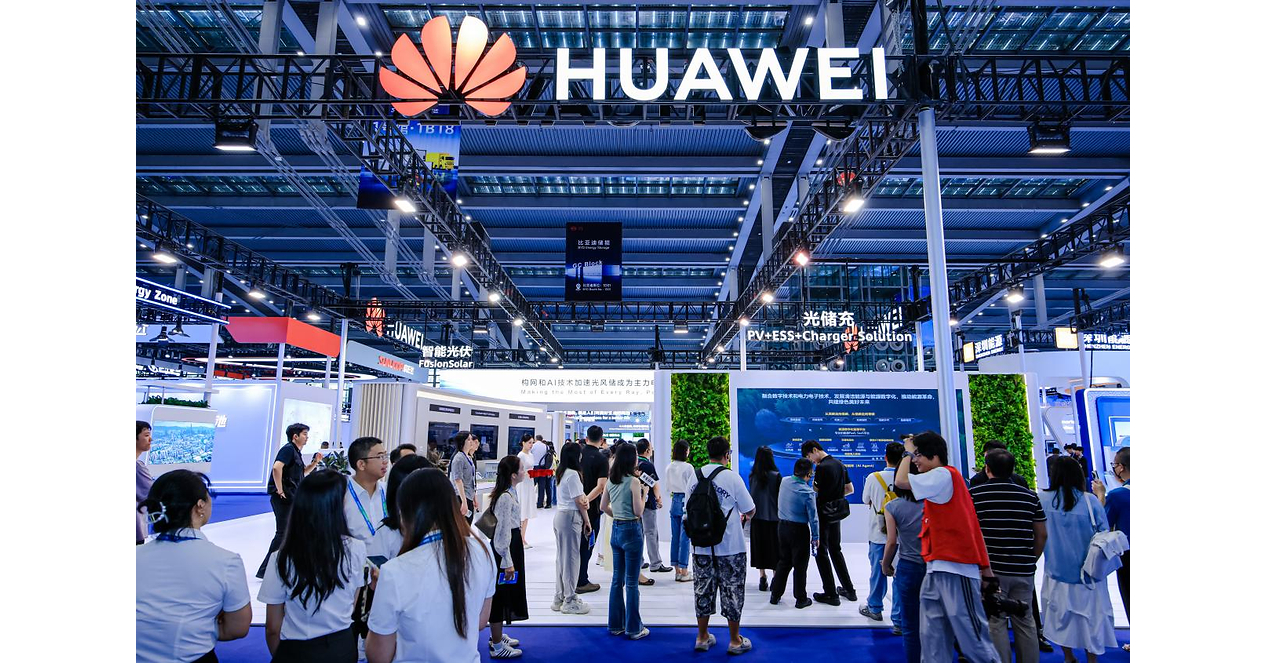
Huawei Digital Power a dévoilé à IDEE 2026 une gamme de solutions combinant formation de réseau et IA pour le photovoltaïque, le stockage d'énergie, les micro-réseaux, la recharge de véhicules électriques et les centres de données IA. Parmi les principaux chiffres, son système de stockage commercial et industriel de 241 kWh revendique un rendement aller-retour de 91,8 % et une profondeur de décharge de 100 %, tandis que FusionCharge pourrait accroître le chiffre d'affaires des stations de recharge de plus de 15 %. La société met également en avant une architecture de stockage de 12,5 MW/50 MWh et une commutation réseau/hors réseau en 40 ms pour ses micro-réseaux.
Analysis
This is not independently investable news: Huawei is private, the claims are vendor-supplied, and no order backlog, third-party performance data, pricing, or customer wins are disclosed. The relevant read-through is competitive rather than demand-creating: grid-forming capability is becoming a procurement requirement in weak-grid renewable markets, which shifts value from commoditized modules toward inverter, power-electronics, control software, and battery systems with bankable grid-code credentials.
Near term (days to weeks), the announcement is unlikely to move listed clean-energy equities. Over 1-3 months, tender language requiring synthetic inertia, black-start capability, and integrated controls could pressure pure-play inverter vendors with narrower storage/control stacks, while favoring scaled suppliers such as Sungrow Power Supply (300274 CH) and Siemens Energy (ENR GR); U.S. exposure is more indirect through Fluence (FLNC) and Tesla (TSLA). The 6-18 month issue is whether AI-data-center interconnection turns storage from an arbitrage asset into reliability infrastructure, improving utilization and contracted-revenue potential for grid-scale storage providers.
Contrarian view: investors may over-credit technology announcements for storage demand. Grid-forming projects remain constrained by interconnection rules, utility procurement cycles, financing costs, and local-content restrictions; superior technical specifications do not ensure deployment. The thesis is falsified if major tenders continue selecting lower-cost conventional inverters, if storage project IRRs fail to improve despite ancillary-service revenues, or if pricing pressure prevents suppliers from converting higher functionality into gross-margin expansion.
AllMind Terminal
AI-powered research, real-time alerts, and portfolio analytics for institutional investors.
Request TrialMarket Sentiment
Overall Sentiment
mildly positive
Sentiment Score
0.32
Key Decisions for Investors
- No immediate directional trade on the release; establish a 1-3 month tender watchlist for grid-forming storage awards in the Middle East, Australia, Europe, and emerging markets. Upgrade the signal only after disclosed MW/MWh awards, realized pricing, and backlog conversion are available.
- Prefer a selective long 300274 CH versus short Enphase (ENPH) only if grid-forming storage tender activity accelerates: Sungrow has broader utility-scale storage/inverter exposure, while ENPH remains more dependent on residential distributed-generation economics. Size modestly; exit if Sungrow’s storage gross margin contracts or ENPH’s U.S. residential shipments reaccelerate materially.
- Watch FLNC for an entry after backlog-quality and margin disclosure rather than buying on the theme. A sustained improvement in contracted recurring software/service revenue and project gross margin would support a 6-18 month re-rating; continued project delays, working-capital build, or negative EBITDA would invalidate the setup.
- For AI-power exposure, retain TSLA only as a secondary beneficiary through Megapack demand rather than a direct data-center trade. The catalyst is utility or hyperscaler storage contracting over the next 2-4 quarters; the principal risk is that stationary-storage volume growth is offset by battery-price deflation and lower segment margin.
More News
- All Iranian airlines to be 'shut down' from Wednesday, Bessent tells CNBC
- Taiwan benchmark Taiex rises to record intraday high as tech stocks advance
- AMD joins the $1 trillion club as chip rally surges - our AI Strategy saw it early
- Jamie Dimon says hyperscaler AI spending could hit $1 trillion next year
- Factbox-Key issues for this week’s Trump-Xi summit in Washington
- Here's who we know is going to the Trump-Xi dinner so far