
Texas Homebuyers Had Less Competition and More Choices This Year, According to a Survey of Realtors
Source: PR Newswire
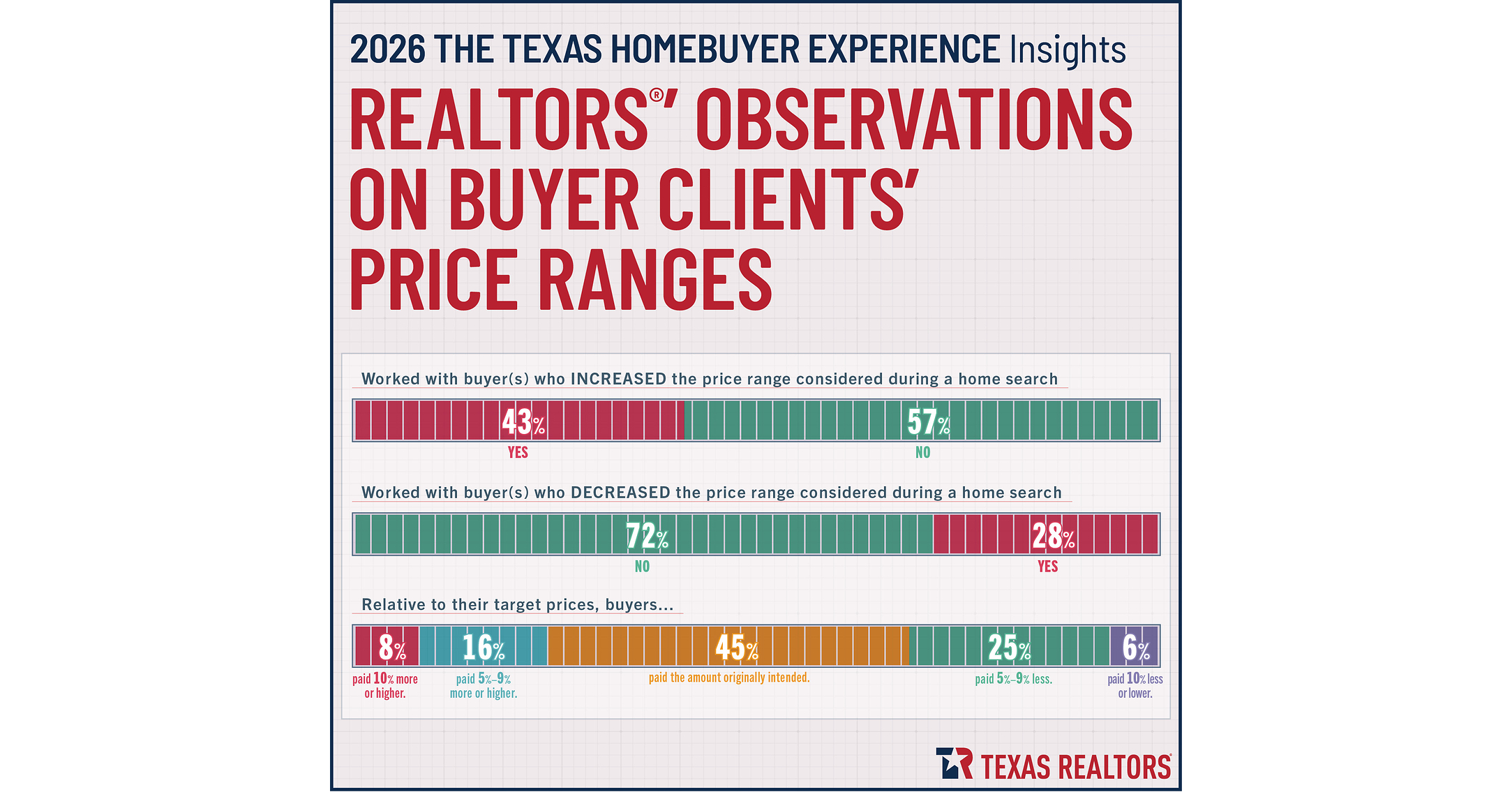
Texas Realtors' 2026 report found less competition among homebuyers: 69% of surveyed agents said clients faced no competing offers, up from 57% last year, and nearly one-third said their most recent buyer purchased after one offer. While 71% reported buyers had plenty or a reasonable amount of time to search, affordability remained a challenge, with agents citing property taxes, insurance and mortgage interest costs; only 6% of agents whose clients paused a search cited too few available homes. The survey covers client experiences from January through August 2026.
Analysis
The investable signal is that affordability—not a shortage of listings—is increasingly setting the Texas housing market’s clearing price. That limits the upside from simply having more homes available: buyers can take longer or walk away, shifting bargaining power toward purchasers and increasing the risk that sellers and builders must concede through price cuts or financing incentives. Lower urgency also means slower conversion from search to closing, a potential headwind for transaction-linked businesses even if buyer interest remains intact.
For homebuilders such as D.R. Horton, Lennar, and PulteGroup, the second-order risk is margin quality: mortgage-rate buydowns and other concessions may defend order volumes while weakening per-home economics. Scale could help them manage that trade-off better than smaller builders, but the survey does not establish that any builder’s orders or margins have deteriorated. Existing-home sellers and transaction-dependent services are also exposed if longer searches translate into delayed or abandoned purchases. Multifamily demand could benefit at the margin if ownership costs keep households renting, but that is a hypothesis to verify, not a conclusion from this report.
Near term, the survey is too perception-based to justify a directional trade on its own. Over 1–3 months, watch Texas builder orders, cancellations, incentives, resale inventory and mortgage applications. Over 6–18 months, persistent insurance, property-tax and financing costs could constrain ownership demand even if listing supply improves. The contrarian point: less bidding pressure is not necessarily a housing-demand recovery; it may reflect buyers’ ability to wait because carrying costs make the purchase uneconomic. Falsify that view with improving purchase applications and builder orders alongside stable incentives and margins.
AllMind Terminal
AI-powered research, real-time alerts, and portfolio analytics for institutional investors.
Request TrialMarket Sentiment
Overall Sentiment
mixed
Sentiment Score
0.10
Key Decisions for Investors
- No immediate position from this survey alone: it reports agent perceptions for January–August and provides no transaction, pricing, builder-margin or valuation data.
- Put D.R. Horton, Lennar and PulteGroup on an incentive-and-margin watchlist. If upcoming results show rising concessions or cancellations without order growth, consider a cautious short or underweight in homebuilders; reassess if orders strengthen while incentives and margins remain stable.
- Track Texas mortgage applications, resale closings, inventory, builder cancellations and insurance premiums over the next 1–3 months. Weak applications and closings despite more listings would support the affordability-constrained-demand thesis.
- Avoid treating a shift toward renting as confirmed. Look for Texas multifamily occupancy and effective-rent data before expressing a relative long in apartment operators against homebuilders.
More News
- Skydance will combine HBO Max and Paramount+ into a single streaming service
- A new analyst call on Home Depot reflects our feeling on what to do with the stock
- High diesel prices may put 'another squeeze' on the consumer, economist says
- Barbie maker Mattel faces investor pressure to consider a sale amid stagnating growth
- Paramount-WBD merger, Musk's return to trillionaire, AI researchers' warning and more in Morning Squawk
- Corona beer maker Constellation Brands tops second-quarter estimates on resilient demand
From AllMind Research
- Anthropic IPO Preview: Valuation, Timing, and What to Watch
- Shein After the IPO: Venue, Valuation, and What Must Be Proved
- What AI Research Tools Should a Small Hedge Fund Buy First?
- How to Evaluate Consensus Estimates Platforms With AI
- Weekly Update: Adding Live MBO Level 3 Data - Liquidity Heatmap, OFI Charts, and More