
Walser: Fed's 2% Inflation Goal "Will Never Happen" Due to AI "Capital Wars"
Source: youtube.com
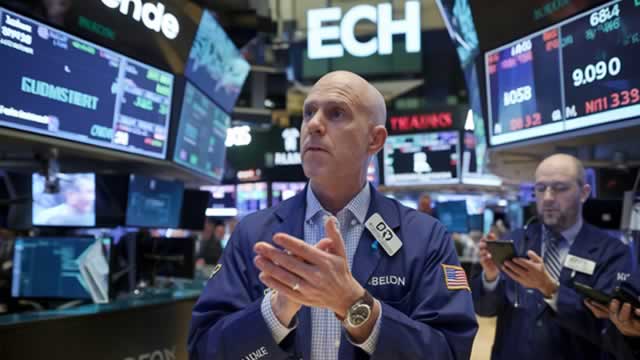
The Federal Reserve raised interest rates by 25bps, with Rebecca Walser arguing the decision was expected but that the FOMC's 2% inflation target is unlikely to be achieved. She contends that ballooning AI hyperscaler capital expenditures could sustain inflationary pressures and may require the Fed to adopt a new policy benchmark.
Analysis
The investable issue is not whether AI capital spending prevents a particular inflation target, but whether it shifts the composition of inflation from goods toward power, construction labor, grid equipment and high-end compute. A restrictive policy response to that capex cycle would disproportionately pressure long-duration software and unprofitable AI-adjacent equities, while regulated utilities and electrical-equipment suppliers with contracted demand retain better earnings visibility. The key transmission channel is a higher real-rate discount factor: a sustained 50 bp upward repricing in the terminal real-rate assumption can justify meaningful multiple compression even if nominal AI revenue forecasts remain intact.
Near term, the market is likely to treat a hawkish policy impulse as a broad de-risking event; that is not necessarily the best expression. Over 1-3 months, the more durable relative-value trade is to own bottleneck beneficiaries—ETN, PWR and GEV—against rate-sensitive AI software baskets, because hyperscaler capex is more immediately converted into orders for power-distribution and grid capacity than into incremental application-layer revenue. Over 6-18 months, the contrarian risk is that elevated capex itself becomes disinflationary through productivity gains and excess compute capacity; if power-cost inflation moderates, the policy premium and the infrastructure scarcity premium could unwind together.
The thesis is falsified by a renewed decline in real yields, evidence that hyperscaler capex budgets are being curtailed, or sequential easing in utility interconnection queues and electrical-equipment lead times. The most important missing data are capex guidance from MSFT, AMZN, GOOGL and META, utility load-growth forecasts, and inflation breadth excluding shelter; without confirmation from these series, this is a relative-value watch rather than a high-conviction macro directional call.
AllMind Terminal
AI-powered research, real-time alerts, and portfolio analytics for institutional investors.
Request TrialMarket Sentiment
Overall Sentiment
mildly negative
Sentiment Score
-0.15
Key Decisions for Investors
- Establish a 3-6 month pair: long ETN and PWR / short IGV. Size to neutralize broad equity beta; the expected payoff is continued order-backlog and pricing resilience in electrification versus multiple sensitivity in long-duration software. Exit if 10-year real yields fall more than 40 bp from entry or ETN/PWR order growth decelerates materially.
- Use an equal-weight long GEV / short ARKK position over the next 1-3 months rather than shorting hyperscalers directly. This expresses grid-capex scarcity against the most rate- and liquidity-sensitive growth cohort; target a 10-15% relative move, with a stop if policy expectations reprice toward easing or GEV backlog conversion disappoints.
- Do not add broad Nasdaq shorts solely on the policy headline. Instead, set an alert around the next MSFT, AMZN, GOOGL and META capex guidance: upward revisions alongside rising real yields would support the infrastructure-over-software pair, while coordinated capex restraint would invalidate it.
- For portfolios needing explicit duration protection, buy 3-month QQQ put spreads financed selectively by selling upside calls only after confirming elevated implied volatility. Treat this as an event hedge, not a structural short; a rapid growth scare could pull yields lower and support QQQ despite a hawkish policy backdrop.
More News
- Bank of Japan raises interest rates to 31-year high, flags concerns over inflation
- Yen Drops Against Dollar After BOJ Raises Rates as Expected
- Australia’s central bank chief warns inflation risks materialising
- This AI-picked stock jumps 18% on Amazon’s $8 billion power deal
- Japan’s interest rate hiked to 31-year high at 1.25% as inflation rises
- Bank of Japan hikes rates to 31-yr high amid growing inflationary risks
From AllMind Research
- Anthropic IPO Preview: Valuation, Timing, and What to Watch
- Shein After the IPO: Venue, Valuation, and What Must Be Proved
- What AI Research Tools Should a Small Hedge Fund Buy First?
- What Is an AI Research Agent?
- Bitcoin's 52% Crash Proves It's a Tech Stock: Here's What That Means for Portfolio Construction