
Pylontech zahajuje sériovou výrobu LFP článků o kapacitě 588 Ah a 601 Ah pro ESS
Source: PR Newswire
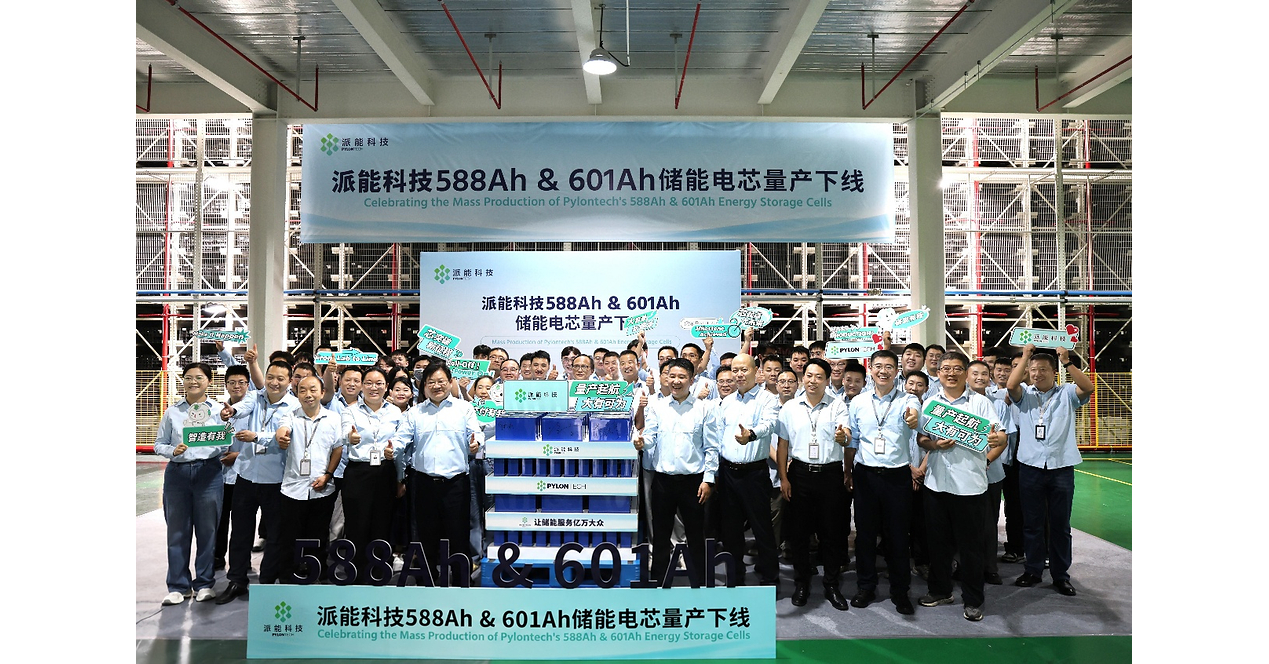
Pylontech began mass production on September 21 of 588 Ah and 601 Ah prismatic LFP battery cells for utility-scale energy-storage systems, with more than 100 MWh already produced. Its 601 Ah cell delivers 425.8 Wh/l energy density, over 12,000 cycles and 96.5% energy efficiency, supporting more compact systems and improved lifecycle economics. The cells will be integrated into Pylontech's next-generation 6.25 MWh and 8 MWh PyOcean ESS products as the company expands utility-scale deployments globally.
Analysis
This is primarily a vertical-integration and cost-positioning signal, not yet a demand inflection. A larger-format in-house cell can reduce pack-level bill of materials and assembly labor, but the economic value accrues only if Pylontech converts it into bankable utility-scale project wins; early production volume is immaterial versus the multi-GWh scale of CATL, BYD and EVE Energy. The more important competitive implication is pressure on independent ESS integrators that source commodity cells, particularly where project developers increasingly demand cell-to-system warranties and traceability.
Over the next 1-3 months, the relevant catalyst is disclosed project backlog, third-party certification and evidence that the new platform wins outside China without a material pricing concession. Larger cells lower interconnect count but raise qualification stakes: a field-quality issue can affect more stored energy per failed unit, while grid-scale customers may require extended validation of thermal-propagation behavior, degradation and availability guarantees. The press-release claims should therefore not be capitalized into earnings estimates until shipment volumes, realized system ASPs and gross-margin progression are independently reported.
Consensus may overstate the advantage of cell size alone. Utility storage is increasingly constrained by financing, interconnection and EPC execution rather than cell energy density; falling LFP prices can pass most hardware savings through to customers. The structural winner remains the supplier able to combine low-cost cells, global service capability and a warranty balance sheet—favoring CATL and BYD more than smaller Chinese integrators unless Pylontech demonstrates repeat overseas deployments and receivable discipline over the next 6-18 months.
AllMind Terminal
AI-powered research, real-time alerts, and portfolio analytics for institutional investors.
Request TrialMarket Sentiment
Overall Sentiment
moderately positive
Sentiment Score
0.62
Key Decisions for Investors
- No standalone trade in Pylontech on this release: wait for quarterly disclosure of utility-scale ESS revenue, gross margin, backlog conversion and overseas receivables. Treat a sustained margin improvement alongside multi-GWh order disclosures as the confirmation trigger.
- Maintain a 3-6 month quality bias toward CATL (300750:SZ) and BYD (1211:HK) versus smaller China ESS hardware suppliers: scale, cell self-sufficiency and warranty capacity should capture consolidation if utility buyers reduce approved-vendor lists. Falsify if their ESS shipment growth materially trails industry demand or LFP pricing declines faster than system-cost reductions.
- Use Fluence (FLNC) only as a watch item rather than a short: cheaper Chinese LFP hardware can compress integrator gross margins, but FLNC can offset this through software, service and non-China procurement. Reassess after its next bookings and gross-margin update; a bookings slowdown plus weaker margin guidance would create a cleaner downside setup.
- Monitor Chinese LFP cell-price benchmarks and European/US trade restrictions over the next 6-12 months. Continued deflation is negative for uncontracted cell makers but positive for storage deployment; tighter origin rules would impair China-export-dependent ESS vendors and favor localized supply chains.
More News
- Wall Street’s Nasdaq hits all-time high as AI frenzy gathers pace
- Data-Center Bet Makes ESDS One of India’s Best New Listings
- Asia stocks ride tech wave higher, oil stays subdued
- South Korean solar stocks jump as curbs on Chinese sector expected to remain in place
- Trump Says US Team Met With Iranians at UNGA
- South Korea’s Lee, Trump welcome progress in US strategic investment projects