
Qualcomm Unveils Personal AI Push With Snapdragon-Powered Glasses, Hearables and PCs
Source: marketbeat.com
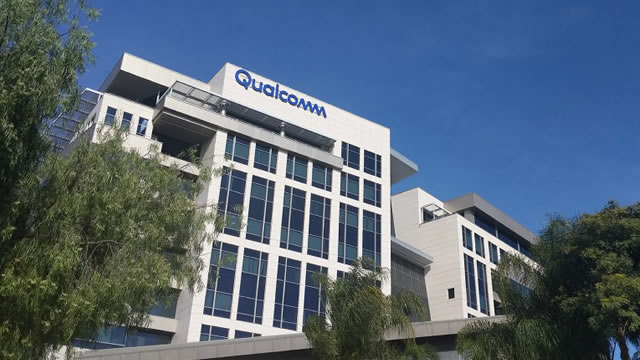
Qualcomm used its Snapdragon Summit to present its “personal AI” strategy, centered on new on-device AI software, wearable reference designs and audio platforms. The company is expanding agentic-AI capabilities across smartphones, PCs, vehicles, smart glasses and other connected devices through new platforms and partnerships. The announcement reinforces Qualcomm's positioning in edge AI but disclosed no financial guidance, revenue figures or commercial launch metrics.
Analysis
The investable issue is whether Qualcomm can convert a broad device-AI narrative into incremental silicon content rather than merely defend handset share. Near-term revenue sensitivity remains concentrated in premium Android handsets and Windows-on-ARM PCs; reference designs and software partnerships do not create material earnings until OEM design wins translate into shipments. The more meaningful 6-18 month upside is higher attach rates for connectivity, audio and edge-compute silicon across wearables and automotive, which could raise Qualcomm's content per user/device ecosystem and reduce dependence on smartphone replacement cycles.
Competitive dynamics favor QCOM where low-power inference must run locally under tight battery and thermal constraints, but the company still faces Apple insourcing in modems, MediaTek in Android, and Nvidia/AMD/Intel in AI PCs and automotive compute. The market may be over-crediting "agentic" features before a consumer killer application emerges; OEMs can market on-device AI without materially increasing bill-of-materials content. The key near-term proof point is not product announcements but Snapdragon-powered flagship and PC unit forecasts, OEM adoption of Qualcomm's software stack, and disclosed automotive design-win conversion.
A contrarian positive is that edge AI can expand replacement incentives even if cloud-AI monetization disappoints: privacy, latency and offline functionality are tangible consumer benefits. However, QCOM's multiple should not rerate sustainably unless management demonstrates that AI-enabled platforms lift consolidated handset ASPs or diversify revenue faster than Apple modem exposure pressures the licensing/chipset base. Watch next earnings for handset revenue growth versus the Android market, automotive revenue growth, and any change in management's PC/AI-device revenue targets.
AllMind Terminal
AI-powered research, real-time alerts, and portfolio analytics for institutional investors.
Request TrialMarket Sentiment
Overall Sentiment
mildly positive
Sentiment Score
0.30
Ticker Sentiment
Key Decisions for Investors
- Maintain a tactical long QCOM only on post-earnings evidence of Snapdragon handset ASP/content expansion or raised automotive/PC targets; target a 8-12% upside over 1-3 months, with thesis invalidated by flat-to-down handset revenue despite a stable Android market or weaker-than-guided automotive growth.
- Use a pair trade for the next 6-12 months: long QCOM / short INTC in equal dollar value. Qualcomm has a cleaner low-power ARM AI-PC exposure, while Intel remains more exposed to a delayed enterprise PC refresh; exit if Qualcomm fails to show meaningful Windows-on-ARM OEM shipment traction by the next two reporting cycles.
- Do not chase wearable-reference-design headlines. Set an alert for named OEM launches with Snapdragon silicon and volume guidance; absent disclosed production programs, treat this as option value rather than a near-term earnings catalyst.
- For downside protection around earnings, buy QCOM 3-month put spreads financed only after a strong pre-results rally. The principal downside catalyst is evidence that AI features are not lifting Android premium-tier demand while Apple modem insourcing advances faster than expected.
More News
- Mark Zuckerberg debuts $1,299 Meta VR Glasses and Muse Charm pendant amid AI agent push
- How Meta took the lead in the race for the post-smartphone world
- Meta's $1,300 VR Glasses look like the Vision Pro sequel Apple should be making
- Meta is trying VR glasses (again), this time with more IMAX
- China's AI chip blitz arms Xi with a message for Trump: 'You can't choke us off'
- OpenAI’s agent hacked Australia’s Medicare website—the latest rogue AI incident that the company didn’t know about for months
From AllMind Research
- Anthropic IPO Preview: Valuation, Timing, and What to Watch
- Shein After the IPO: Venue, Valuation, and What Must Be Proved
- What AI Research Tools Should a Small Hedge Fund Buy First?
- Augmented Intelligence: AllMind, Elevate Human Judgement With an Accessible, Powerful, Data-Driven Financial AI Toolkit
- AI Research Systems for Hedge Funds: A Pilot Design