
Drive to Great | BAIC FOTON Africa Partners Conference Successfully Held, Accelerating Localization Strategy
Source: PR Newswire
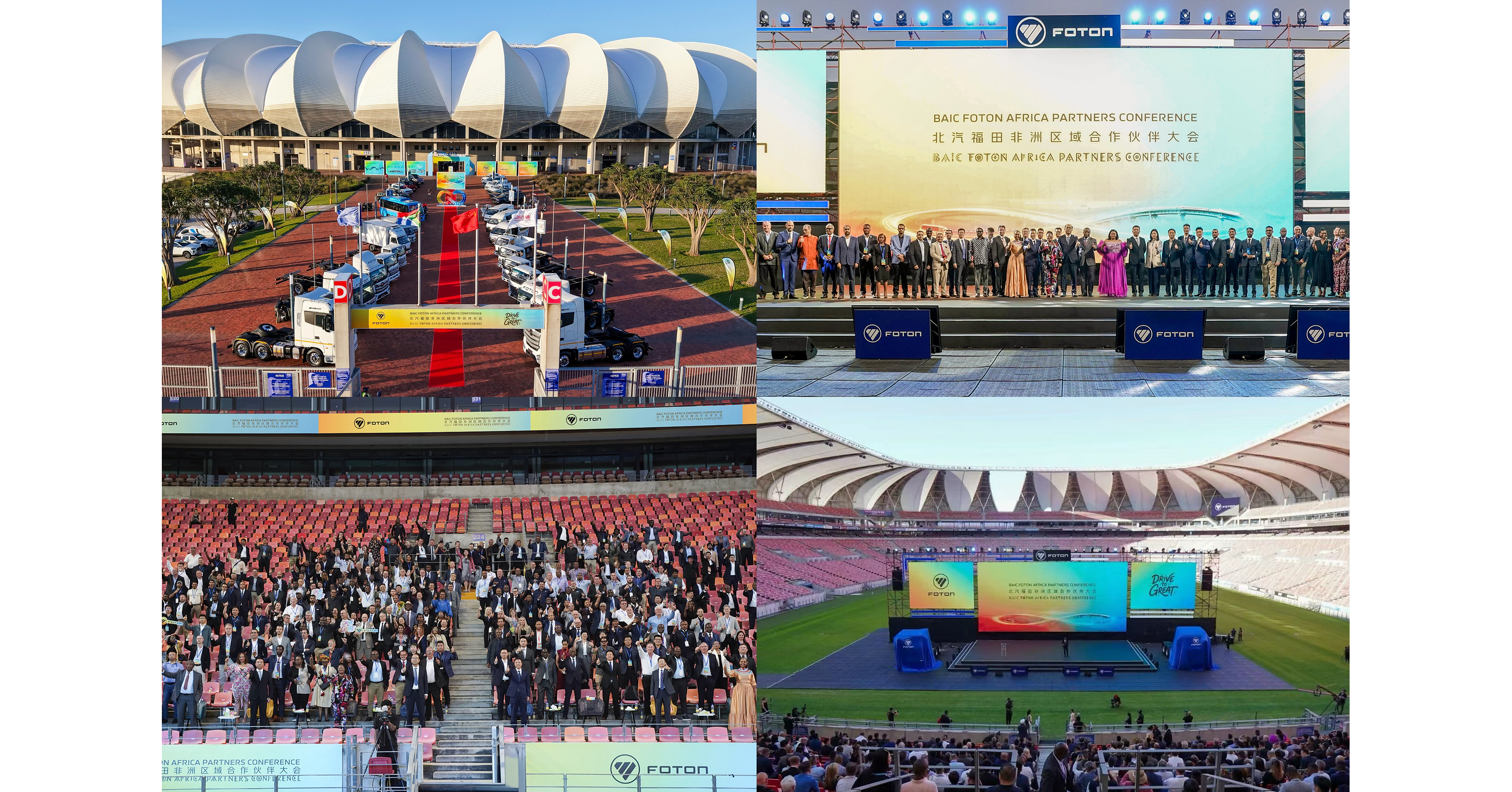
BAIC FOTON reported export sales above 168,500 units for January–September 2026, up 43.6% year over year, and announced African deliveries of 1,000 heavy trucks in Ghana and 800 in Zambia. It also signed new-energy vehicle projects for 200 units in Mozambique and 100 each in Ethiopia and Kenya, launched three models for Africa, and signed six localized-manufacturing cooperation agreements. The announcements support the company’s localization and regional expansion strategy, though the article reports no financial results or share-price reaction.
Analysis
The strategic value is less the announced volume than the attempt to control the routes to market: local assembly, parts availability, service coverage, and vehicle financing can lower adoption friction and support repeat sales. If these partnerships deliver, they could make BAIC FOTON more competitive against established commercial-vehicle suppliers such as Daimler Truck, Volvo Group, Tata Motors, and Ashok Leyland—particularly where uptime and purchase financing matter more than brand. But signed cooperation and launch events are not evidence of profitable production: utilization, local-content economics, warranty costs, payment terms, and distributor sell-through remain unverified.
Near term (days to 1–3 months), the announcement is a weak standalone earnings signal. The delivered trucks are more tangible than the new-energy project signings, but contract value, customer payment status, and delivery timing are absent. The EV component should be treated as an option on future demand, not a material shift in the regional powertrain mix. Mining and other repeatable routes may be better initial BEV use cases than general freight; fuel and natural-gas models may remain necessary where charging and grid capacity are constrained.
Over 6–18 months, localization could improve landed-cost resilience and parts support, but also adds execution, working-capital, and partner-capacity risk. The contrarian point: market narratives may overweight headline orders and “green” projects while underweighting financing availability, service quality, and factory utilization. No direct security is supplied in the identity data, so this is a monitoring signal rather than a company-specific trade call.
AllMind Terminal
AI-powered research, real-time alerts, and portfolio analytics for institutional investors.
Request TrialMarket Sentiment
Overall Sentiment
moderately positive
Sentiment Score
0.45
Key Decisions for Investors
- Do not trade the announcement alone. Treat the named truck deliveries as a demand indicator, not proof of incremental earnings; seek contract value, delivery schedules, customer payment terms, and confirmation of retail sell-through.
- Set a 1–3 month diligence trigger: monitor evidence of production or utilization at the six newly signed local manufacturing partnerships, parts-center operating readiness, and vehicle-financing availability through WesBank. These determine whether localization converts into sales and service revenue or merely adds execution cost.
- For a 6–18 month competitive watch, compare regional commercial-vehicle share and service coverage for BAIC FOTON against Daimler Truck, Volvo Group, Tata Motors, and Ashok Leyland. Escalate the thesis only if repeat orders and local capacity ramp are independently evidenced.
- Falsifiers: delayed deliveries, weak partner/distributor sell-through, financing constraints, or poor service/parts availability would undermine the expansion case. Do not assign material value to the new-energy projects until deployment, charging or operating economics, and repeat demand are verified.
More News
- Stocks started the week with promise but ended in despair. Our take on the big reversal
- Intel stock plunges 29%. Analysts urge caution on buying the dip
- Iran warns of unfettered retaliation if attacked as mediators try for peace
- How Ambani’s Jio became India’s second-largest company
- China sees the yuan vs. dollar rivalry like Pepsi vs. Coke, expert says — ‘never the market leader, but serviceable in a pinch’
- AWS grows 39% and Amazon will spend even more on AI in 2027