
Tokyo Electron: Strong Moat And High Growth From Semiconductor Equipment
Source: seekingalpha.com
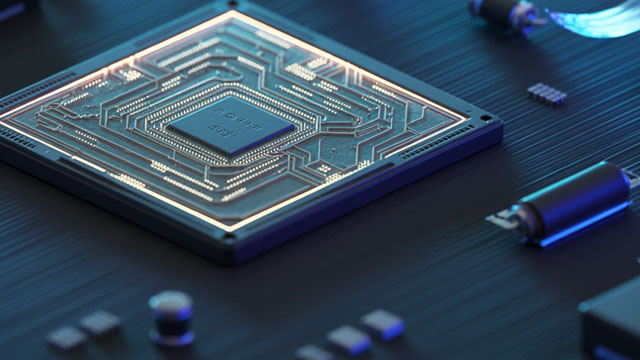
Tokyo Electron is reallocating investment away from declining China sales toward advanced-node semiconductor equipment categories, including etching, wafer bonding and EUV-related tools. Its leading positions, including a near-monopoly in coaters/developers, support a blended fair-value estimate of about $220 per share, implying 29% upside and a Buy rating. The recommended strategy is a gradual position build with partial hedging, reflecting China-related demand risk.
Analysis
Tokyo Electron’s investment case is less about aggregate wafer-fab-equipment growth than mix: leading-edge logic and memory customers are increasing process complexity per wafer, raising the value of deposition, etch, lithography-track, cleaning and bonding steps even if unit wafer starts remain uneven. This should make TEL’s earnings recovery more sensitive to TSMC, Samsung and SK hynix capex than to the broader China-led mature-node equipment cycle. The key second-order beneficiary is ASML: stronger EUV layer intensity requires complementary track and patterning process tools, while KLA’s process-control content also rises with tighter yield requirements.
The principal near-term risk is that China restrictions create a utilization and service-revenue air pocket before advanced-node orders convert into revenue. China is also not simply a lost revenue line: lower Chinese tool supply can tighten mature-node capacity and improve pricing for non-Chinese analog, auto and industrial chip producers, partially offsetting global equipment cyclicality. Over 6-18 months, TEL’s relative multiple can expand if advanced packaging and high-bandwidth-memory capacity drive wafer bonding demand; this requires sustained HBM procurement from NVIDIA, AMD and hyperscalers rather than merely AI-related headline spending.
The published fair-value upside should not be treated as independently validated without confirming the assumed WFE cycle, China revenue run-rate, yen sensitivity and margin trajectory. Consensus may be underweighting TEL’s ability to redirect engineering and field-service capacity toward leading-edge customers, but may also be overpricing a smooth recovery: Samsung/Intel execution delays or a memory-capex pause would disproportionately hurt incremental estimates. Falsify a constructive view if TSMC/Samsung/Sk hynix reduce 2026 capex, TEL guides to further China-related declines without offsetting advanced-node bookings, or ASML’s EUV order commentary weakens.
AllMind Terminal
AI-powered research, real-time alerts, and portfolio analytics for institutional investors.
Request TrialMarket Sentiment
Overall Sentiment
moderately positive
Sentiment Score
0.48
Key Decisions for Investors
- Build a 6-12 month long in Tokyo Electron (8035 JP; TOELY ADR where liquidity permits) on weakness rather than chase: target a 10-15% position-entry drawdown or post-results volatility, with upside tied to upward FY2026 order/margin revisions. Risk-control: reassess if management signals that advanced-node demand is not offsetting China exposure over two reporting periods.
- Express the process-complexity thesis as a pair trade: long 8035 JP / short a diversified mature-node equipment proxy such as AMAT or LRCX only after comparing China revenue exposure and valuation. The intended return driver is relative estimate resilience, not a broad semiconductor-equipment beta call; exit if leading-edge foundry capex is cut.
- Add ASML as the cleaner corroborating long rather than treating TEL as a standalone China-policy trade. A positive EUV bookings/order-backlog update over the next 1-3 months would support the thesis; weak EUV commentary should trigger a reduction in TEL exposure.
- Maintain a semiconductor-cycle hedge through a modest SOXX put spread or short SOXX overlay around major TSMC, Samsung and memory-company capex updates. This protects against a sector-wide WFE de-rating while retaining exposure to TEL’s potential share and mix gains.
More News
- Here’s the ‘core economic flaw’ in the AI bull case as stock and bond trades unravel, according to a top economist
- Biotech stocks are surging. How investors can play the new drug innovation boom
- Braskem creditors, shareholders near deal on $11bn debt restructuring
- Instacart reportedly discussed selling itself with DoorDash and Uber
- Nvidia's role as AI financier faces first big test as neoclouds take market hit
- Trump set to announce plan by Audi to build a U.S. factory in Georgia, source says