
Renewable Energy & Battery Stocks to Buy Amid Global Warming Woes
Source: zacks.com
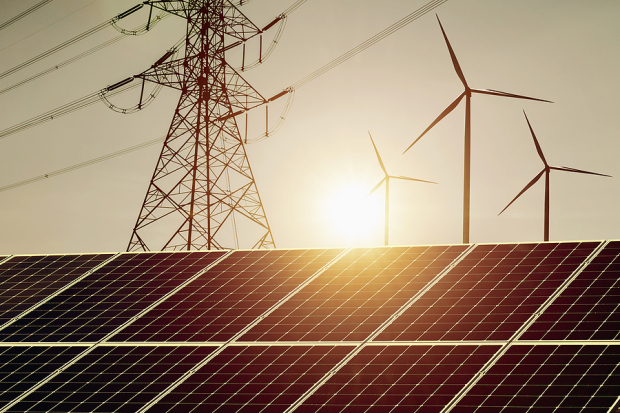
Global renewable-power capacity reached 5,149 GW in 2025, up 15.5% year over year, as AI data-center demand, EV adoption, heat-driven cooling load and lower solar/wind costs accelerate clean-energy deployment. Data-center electricity consumption is projected to nearly double by 2030, while annual global battery-storage investment is expected to exceed $100 billion this year. Zacks highlights Bloom Energy, with 2026 sales estimated to rise 104.3% and an Oracle fuel-cell agreement for up to 2.8 GW; Vestas, supported by 163 MW of recent German and Italian turbine orders; and Generac, whose 2026 sales are projected to grow 17.4% amid backup-power demand from hyperscale data centers.
Analysis
The investable implication is not broad renewable beta but scarcity value in power that can be delivered behind the meter or through constrained interconnections. BE and GNRC monetize time-to-power for data centers, while utility-scale wind remains exposed to permitting, transmission queues, rate sensitivity and commodity-driven project repricing. The second-order beneficiaries are electrical-equipment and construction bottlenecks—ETN, PWR and VRT—where data-center load growth converts into higher-value switchgear, transmission and power-conditioning demand regardless of the ultimate generation source.
BE has the highest near-term earnings sensitivity but also the weakest quality of claimed "clean" exposure: fuel-cell economics depend on natural-gas input costs, customer financing, service margins and conversion of announced capacity into revenue. A large single-customer deployment can create both backlog upside and concentration/working-capital risk over the next 1-3 quarters. GNRC's data-center opportunity is strategically attractive, but its equity still carries meaningful residential-backup-power and housing-cycle exposure; a softer consumer channel could mask commercial growth in reported results.
Consensus is likely overstating the degree to which intermittent generation alone solves AI power demand. In the 6-18 month horizon, grid reliability favors dispatchable generation, gas turbines, nuclear and storage-plus-grid infrastructure more than wind OEMs; this supports CEG, VST, ETN and PWR as cleaner expressions of the power-shortage thesis. The thesis is falsified by hyperscaler capex cuts, falling power-forward prices, materially faster interconnection approvals, or evidence that announced data-center power contracts are being deferred rather than converted to load.
AllMind Terminal
AI-powered research, real-time alerts, and portfolio analytics for institutional investors.
Request TrialMarket Sentiment
Overall Sentiment
moderately positive
Sentiment Score
0.62
Ticker Sentiment
Key Decisions for Investors
- Do not chase a broad clean-energy ETF on this item; the news is promotional and lacks incremental project economics. Use the next earnings cycle to verify backlog conversion, gross margin and cash-flow impact before adding directional exposure.
- Initiate a 3-6 month pair: long ETN or PWR / short VWS (or VWDRY ADR), sized beta-neutral. The trade captures grid-capex scarcity versus wind-project execution and rate sensitivity; exit if Vestas service-margin guidance rises materially or transmission-policy reform accelerates project starts.
- Maintain a tactical long BE only on confirmation that booked data-center capacity converts to revenue and that gross margin expands sequentially; use a 15-20% position-level stop because customer concentration, natural-gas economics and working-capital needs can overwhelm headline sales growth. Upside is substantial if deployment cadence validates a premium time-to-power multiple.
- Prefer GNRC over residential-generator peers only if commercial/industrial order growth offsets consumer softness over the next two quarters. Pair a modest GNRC long with a short XHB or another housing-sensitive proxy to isolate the data-center backup-power thesis; reduce if residential channel inventory rises or commercial-generator backlog fails to accelerate.
- For a 6-18 month structural allocation, favor CEG/VST and ETN/PWR over pure renewable OEMs: firm power and grid buildout benefit even if the incremental data-center electron is sourced from gas, nuclear or storage rather than wind.
More News
- From Wall Street to Silicon Valley, Anthropic IPO poised to have massive 'trickle-down effect'
- Anthropic’s IPO filing shows explosive growth, risks and staggering costs
- Anthropic’s risk factors include the end of humanity, a feud with the Pentagon, and CEO Dario Amodei’s reputation
- Elon Musk warns more than 200 AI cloud companies face ‘guppy-level death’ as the AI boom runs into a debt crisis
- J&J's potential 'game-changer' drug — plus, what Microsoft's mass buyouts mean
- Asian stocks surge as Anthropic IPO lifts sentiment ahead of earnings, central banks