
Jim Cramer says these tech giants can weather market turbulence
Source: CNBC
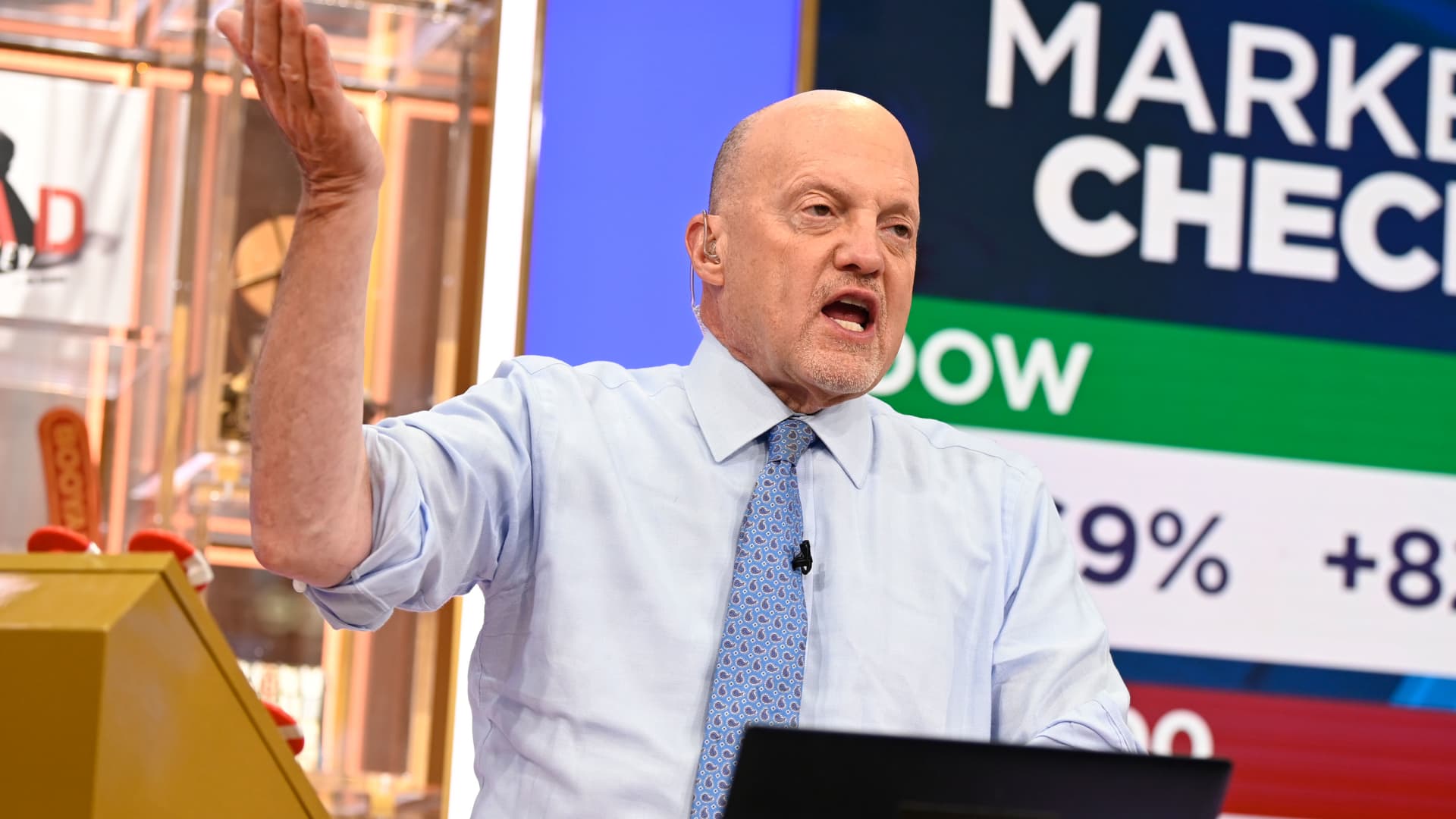
Microsoft shares rose 4% in extended trading after earnings and revenue topped expectations; revenue grew 19%, Azure grew 48% versus 42% in the prior quarter, and $45.2 billion in capital expenditures and finance leases came in below forecasts. Alphabet shares fell 7% after missing earnings and revenue expectations, as Search underperformed and free cash flow was negative $9.1 billion, despite nearly 25% revenue growth and more than doubled Google Cloud sales. Jim Cramer described the technology giants as resilient but still exposed to market forces, including higher oil prices and elevated inflation that could keep further rate hikes in play.
Analysis
The actionable signal is widening dispersion within mega-cap tech, not a blanket “too big to fail” thesis. MSFT’s cloud acceleration alongside capex below expectations suggests investors are rewarding evidence that AI investment can scale without an immediate deterioration in spending discipline. The next test is the earnings-call outlook: sustained growth and capex control would support relative outperformance; any upward investment reset without clearer monetization would challenge it.
GOOG’s miss is more structurally consequential if Search weakness reflects substitution by AI interfaces rather than ordinary ad-cycle noise. Cloud growth is not yet enough to dismiss that risk, particularly with negative free cash flow: the market may apply a lower multiple if AI investment both pressures cash generation and threatens the economics of the core business. Verify Search growth, paid-click/pricing trends, and cash-flow trajectory before treating one quarter as proof of lasting share loss.
Over days, the reported after-hours divergence can extend, but guidance and positioning may dominate. Over 1–3 months, ad demand, AI product usage and monetization, and capex-to-revenue conversion are the key catalysts. Over 6–18 months, the winner is the platform that captures incremental AI spend without eroding its existing profit pool. Higher oil and rates are a common valuation headwind for long-duration growth assets; mega-cap scale does not immunize them. Cramer’s “nation state” framing is not an investment thesis, and the reported earnings reactions are more informative than his endorsement.
AllMind Terminal
AI-powered research, real-time alerts, and portfolio analytics for institutional investors.
Request TrialMarket Sentiment
Overall Sentiment
mixed
Sentiment Score
0.00
Ticker Sentiment
Key Decisions for Investors
- Consider a measured MSFT-over-GOOG relative-value position rather than a broad mega-cap long: MSFT long / GOOG short, preferably after the conference-call outlook and initial price discovery. The thesis is relative execution, not certainty that either company’s absolute shares rise.
- Define the pair’s invalidation around fundamentals: reassess if MSFT’s cloud outlook weakens or spending guidance rises without evidence of monetization, or if GOOG shows Search stabilization and improving free cash flow. Do not infer a structural Search decline from one miss alone.
- Keep net exposure restrained until the rate and energy backdrop clarifies. A further oil/inflation-driven rise in yields could compress both legs’ multiples and overwhelm company-specific differentiation.
- For GOOG, monitor Search revenue and pricing, AI-driven query/product engagement, and free cash flow in the next results; for MSFT, monitor cloud growth, capex and finance-lease commitments, and AI revenue conversion. These are the data needed to upgrade the thesis.
More News
- What investors need to know about Alphabet's stock-busting earnings report
- Our next steps for Alphabet stock after earnings disappoint at nearly every turn
- SK Hynix says the memory-chip shortage will last until 2030—and more than half its production is booked for the next two years
- Asian shares fall as Alphabet earnings miss drags Wall St futures lower
- Burnham’s government unveils its first UK budget: What to expect
- Microsoft’s strong quarter backs up its stock rebound. Here's our new price target