
BYD: Short-Term Challenges, But Long-Term Buy
Source: seekingalpha.com
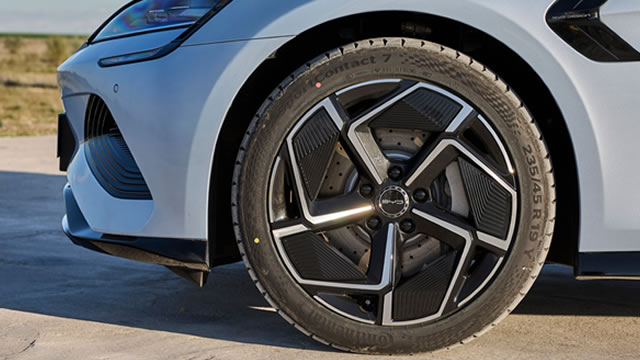
BYD's 2025 revenue exceeded 2024, while gross profit remained near $20B; the article also cites recent revenue stagnation and margin deterioration. It describes BYD as having a strong balance sheet, with positive cash and low debt, and trading at a low EBITDA multiple versus peers despite a higher P/E ratio.
Analysis
The apparent valuation discount may be compensation for earnings-cycle risk, not a mispricing: if competitive pricing continues to erode unit economics, a low EBITDA multiple can rise mechanically as EBITDA falls. Stable gross profit alongside softer revenue would also be worth testing for mix, cost, and accounting effects before treating it as evidence of a durable margin floor. The key competitive mechanism is whether BYD can defend pricing through scale and vertical integration while China’s EV market remains highly competitive; persistent discounting could pressure other domestic manufacturers as well, while making the sector’s headline volume growth less valuable to investors.
Near term, the next earnings update and evidence on realized pricing, gross margin, and cash conversion matter more than the stated multiple. Over 1–3 months, tariff decisions and export-market pricing could change the expected value of overseas growth. Over 6–18 months, localization requirements and continued price competition could either reinforce BYD’s cost advantage or require investment that weakens cash returns. The contrarian risk is assuming that balance-sheet strength alone protects equity value: it can absorb a downturn, but cannot guarantee attractive incremental returns. Before acting, verify the currency and reporting scope, EBITDA definition, cash and debt figures, geographic mix, and whether the revenue and profit comparisons are like-for-like.
AllMind Terminal
AI-powered research, real-time alerts, and portfolio analytics for institutional investors.
Request TrialMarket Sentiment
Overall Sentiment
mixed
Sentiment Score
0.10
Key Decisions for Investors
- No high-conviction directional trade from this information alone: the article provides no comparable valuation inputs, current price, or segment-level margin data. Treat the low-multiple argument as a watch item, not a catalyst.
- For the next 1–3 months, track BYD’s realized vehicle pricing, gross margin, operating cash flow, and inventory alongside competitor discounting. Sustained margin stabilization without deteriorating cash conversion would support the durability thesis; further margin decline would weaken it.
- Conditional relative-value idea: consider BYD versus a less vertically integrated EV competitor only after confirming comparable valuation, product mix, and regional exposure. A widening margin gap in BYD’s favor would support the position; persistent price cuts or weaker cash conversion would falsify it.
- Reassess on material export-market tariff changes or evidence of localization-related investment needs. These could alter the 6–18 month growth and returns profile even if domestic volumes remain resilient.
More News
- Stocks started the week with promise but ended in despair. Our take on the big reversal
- Intel stock plunges 29%. Analysts urge caution on buying the dip
- How Ambani’s Jio became India’s second-largest company
- AWS grows 39% and Amazon will spend even more on AI in 2027
- The $13 billion startup racing to close America’s hypersonic gap
- Fears over $828 billion AI capex spending spree help erase $1 trillion in market value