
Yum China Stock Slides 22% in 6 Months: Should Investors Buy the Dip?
Source: zacks.com
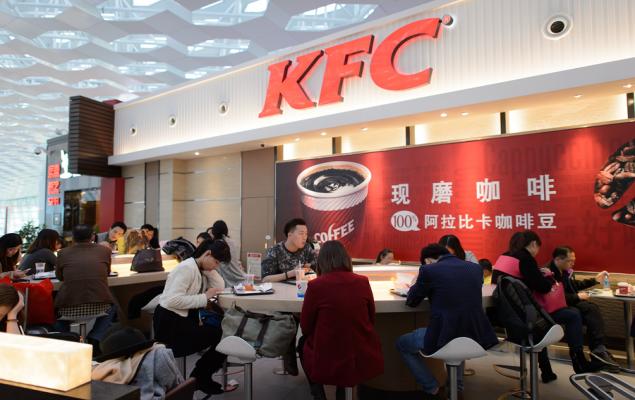
Yum China shares have fallen 21.6% over six months amid softer consumer demand, higher delivery costs and lower average ticket sizes, but the company still targets double-digit EPS growth in 2026. Its planned acquisition of Pizza Hut's Mainland China brand would eliminate a 3% license fee, adding an estimated 2.8 percentage points to Pizza Hut restaurant operating margin and roughly 60bps to company-wide margin. Yum China opened about 1,200 net new stores in H1 2026 and expects Pizza Hut annual net openings to exceed 800 in 2027-28, while 2026 and 2027 EPS estimates remain unchanged at $2.95 and $3.43, respectively.
Analysis
The key underwriting issue is not unit growth but whether incremental units retain adequate cash-on-cash returns as expansion shifts toward lower-tier cities and franchisees. A larger franchised mix can improve YUMC's capital intensity and smooth reported margins, but it also transfers local demand and labor-cost risk to franchisees; weaker franchisee economics would emerge later through slower development commitments, closures, or higher incentives. The relevant 1-3 month catalyst is evidence that transaction growth converts into average-ticket stabilization rather than merely higher low-value delivery mix.
The proposed brand transaction is strategically more important for YUM than for the headline margin benefit at YUMC. YUMC gains operating flexibility, but YUM loses a recurring, high-margin royalty stream and becomes more exposed to the credit quality and execution of the consideration it receives. This creates a potentially cleaner relative-value expression: YUMC can rerate on reduced structural leakage while YUM's multiple could face modest pressure if investors treat the transaction as monetizing a durable annuity to fund less accretive capital allocation.
Consensus appears too willing to capitalize claimed margin relief before seeing financing terms, closing conditions, and reinvestment requirements. A 60bp consolidated margin benefit can be absorbed quickly by delivery commissions, promotional intensity, or accelerated development spending; therefore, the stock needs a sustained restaurant-margin inflection, not simply transaction close, to outperform. Over 6-18 months, the more durable upside is a successful shift toward beverage, value, and health-oriented formats that raises daypart utilization without cannibalizing core KFC sales.
Near-term downside remains asymmetric around China consumption data and competitive discounting from domestic quick-service chains. The thesis is falsified if same-store sales turn negative for two consecutive quarters, restaurant margin fails to expand after the transaction closes, or franchise-led openings decelerate materially; those outcomes would expose that EPS growth depends on store count rather than improving unit economics.
AllMind Terminal
AI-powered research, real-time alerts, and portfolio analytics for institutional investors.
Request TrialMarket Sentiment
Overall Sentiment
mildly positive
Sentiment Score
0.28
Ticker Sentiment
Key Decisions for Investors
- Initiate a modest 6-12 month long YUMC / short YUM pair after transaction financing and closing conditions are disclosed. Target 15-20% relative upside if YUMC demonstrates margin delivery; exit if the deal is delayed, leverage/cost of funding is materially above expectations, or YUMC's restaurant margin does not improve within two reported quarters.
- Do not chase a standalone YUMC dip-buy ahead of the next earnings release. Add only if same-store sales remain positive and restaurant-margin guidance is maintained; a 2-3 percentage-point same-store-sales miss or renewed guidance cut would indicate demand/promotion pressure is overwhelming the structural thesis.
- Use YUMC puts or reduce gross exposure into China macro releases and quarterly results over the next 1-3 months, when tougher comparisons and delivery-cost pressure are most likely to force estimate revisions. The missing data is delivery mix and commission-rate trend by brand; without it, the reported earnings-growth trajectory is not independently underwritable.
- Avoid using MCD, DRI, or QSR as direct shorts against YUMC. Their earnings drivers are principally North American/global franchise economics rather than Chinese discretionary demand; YUM is the cleaner hedge to isolate the ownership-transfer and royalty-leakage mechanism.
More News
- This AI-picked stock jumps 18% on Amazon’s $8 billion power deal
- Crusoe raises $3.9B to build massive data centers and small modular “AI factories”
- Jensen Huang says Nvidia will sell twice as many chips next year
- Generac shares surge on big Amazon deal. Wall Street thinks the generator stock has more to go
- Warsh spooks investors, OpenAI's 'concerning' incidents, Boeing's production problems and more in Morning Squawk
- What an Oscar-winning movie can teach us about investing through the AI slowdown debate