
War and LNG Shift Breaks Economics of European Gas Storage
Source: Bloomberg
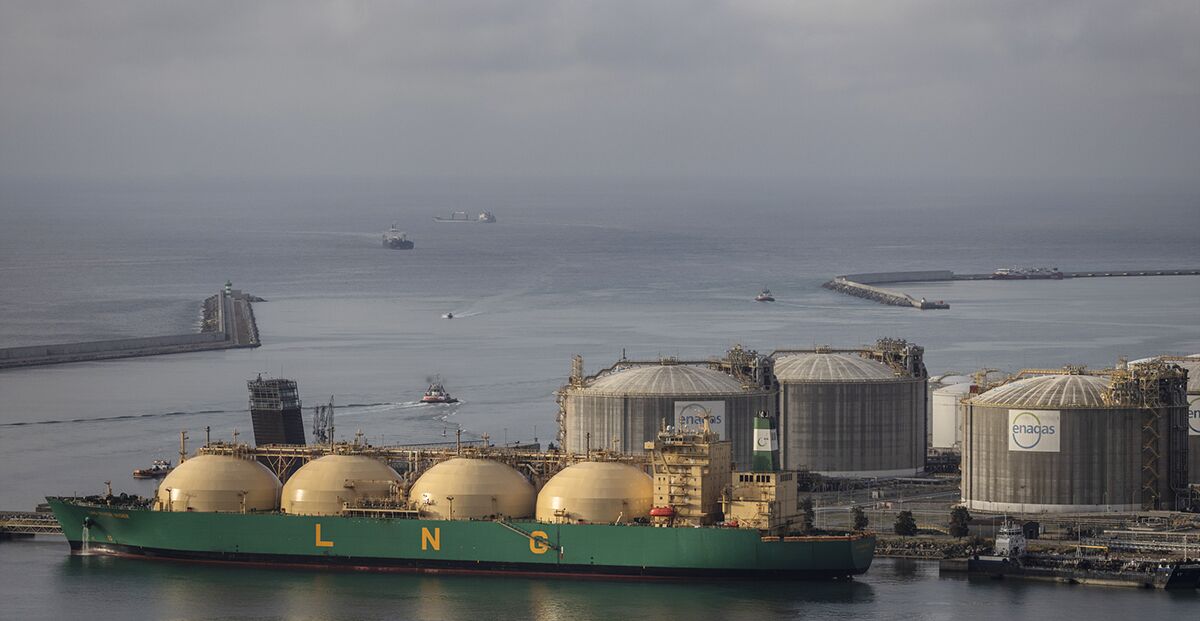
Europe’s traditional gas-storage trade—buying cheaper summer gas and selling it during higher-priced winter demand—has failed for a second consecutive year. The disruption reflects the war-driven overhaul of Europe’s gas supply system and its greater reliance on LNG, undermining storage economics and potentially reducing incentives to build winter gas inventories.
Analysis
The investable implication is a transfer of value from seasonal inventory holders to firms owning flexible molecules, import capacity, and upstream optionality. A persistently narrow or inverted TTF winter-summer curve reduces merchant storage returns and can impair the economics of incremental cavern development, while increasing the premium for short-cycle supply that can be redirected between Europe and Asia. EQNR is the cleanest listed European beneficiary of episodic continental price spikes; ENI and SHEL provide more diversified, lower-beta exposure to LNG portfolio optionality.
For European utilities, the risk is less outright gas-price exposure than hedge-book and working-capital volatility. ENGIE, E.ON, RWE, and ENEL can face margin pressure if retail or industrial contracts are priced off lagged tariffs while physical replacement costs jump; however, regulated networks and hedging make a blanket utility short unattractive. The more vulnerable assets are merchant storage and uncontracted LNG procurement books, neither of which is cleanly isolated in most public equities.
Over the next 1-3 months, the key signal is the TTF front-winter versus next-summer spread alongside the JKM-TTF differential. A widening winter premium would restore storage economics and reverse the relative-value case; a sustained flat curve should encourage lower inventory carry and raise sensitivity to any supply outage or cold-weather event. Over 6-18 months, policy-mandated storage targets may preserve physical demand for capacity even where commercial returns are poor, creating a potential fiscal-support floor that the market may underappreciate.
Contrarianly, weak storage arbitrage is not necessarily bearish European gas prices: it reduces the private-sector incentive to carry buffer inventory, making the system more dependent on prompt LNG arrivals. That can suppress average prices while increasing tail volatility, favoring selective upside convexity rather than a directional long in broad European energy equities.
AllMind Terminal
AI-powered research, real-time alerts, and portfolio analytics for institutional investors.
Request TrialMarket Sentiment
Overall Sentiment
mildly negative
Sentiment Score
-0.35
Key Decisions for Investors
- Establish a conditional pair: long EQNR / short E.ON on a 3-6 month horizon if the TTF front-winter/next-summer spread remains below historical storage-carry breakeven. EQNR retains upside to supply shocks; E.ON has greater retail-margin and hedge-book sensitivity. Exit if the seasonal spread materially widens or E.ON raises earnings guidance on supply/hedging gains.
- Buy modest TTF winter upside exposure only after confirming low regional inventories or a widening JKM premium; use defined-risk calls or call spreads rather than outright futures. The thesis is convexity from reduced commercial buffer stocks, not a forecast of persistently higher average prices; cap premium at a level consistent with a 2-3 month weather-driven catalyst window.
- Maintain neutral-to-underweight exposure to merchant European gas-storage development until forward curves support both fuel carry and financing costs. Do not extrapolate infrastructure-volume growth into storage-margin growth; monitor regulated capacity-payment announcements as the principal falsification risk.
- For diversified LNG exposure, prefer SHEL or ENI over pure LNG shipping names during a flat European seasonal curve. Portfolio optionality can monetize regional dislocations, whereas shipping equities require a separate freight-rate and fleet-supply thesis; reassess if JKM trades persistently below TTF, reducing Atlantic Basin diversion economics.
More News
- Australia raises benchmark rates to 15-year high as it fights sticky inflation
- Statement by the Monetary Policy Board: Monetary Policy Decision
- Iran’s Araghchi meets Qatari mediators as US calls for nuclear talks
- Oil extends gains as Middle East supply concerns persist
- Copper Edges Higher as Chile Mine Dispute Raises Supply Concerns
- Stocks wobble as bonds slump to monthly loss
From AllMind Research
- Anthropic IPO Preview: Valuation, Timing, and What to Watch
- Shein After the IPO: Venue, Valuation, and What Must Be Proved
- What AI Research Tools Should a Small Hedge Fund Buy First?
- Weekly Update: Live Event Center, In-App Documents, and Faster Transcripts
- How to Automate Equity Research Workflows: A Control-First Guide