
Harness Acquires Augment Code, Advancing the Autonomous SDLC from Idea to Production
Source: PR Newswire
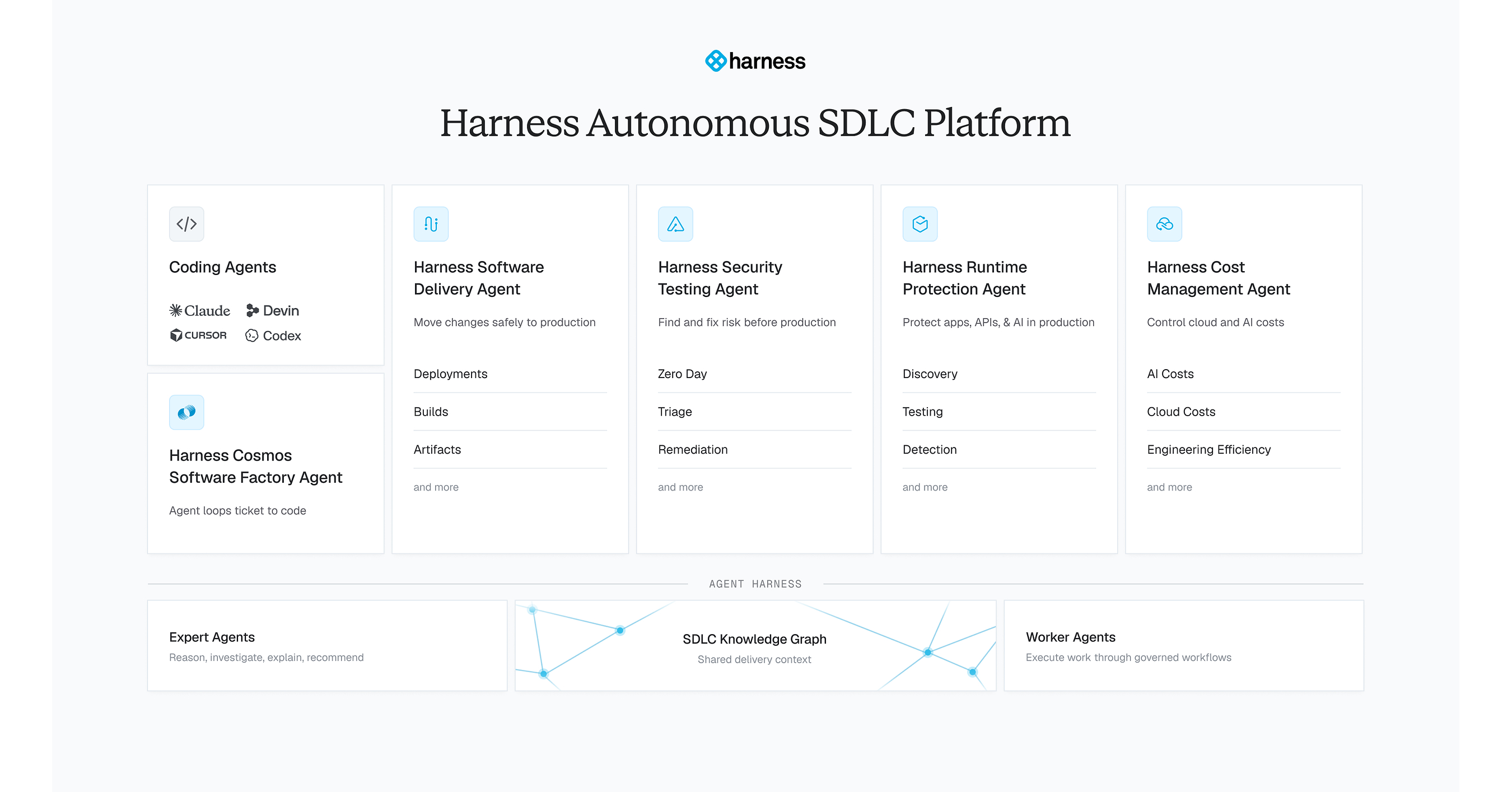
Harness acquired select Augment Code assets, including Cosmos, the Auggie CLI products, and the Code Context Engine; the team behind them will join Harness. Cosmos is now available as the Harness Cosmos Software Factory Agent, designed to take engineering work from idea to merge-ready code and connect it with Harness agents for delivery, security, runtime protection, and cost management. The announcement disclosed no transaction value or financial terms.
Analysis
The strategic prize is not code generation alone; it is owning the feedback loop between a change and its production outcome. If Harness can reliably feed deployment, security, and incident data back into coding agents, it may differentiate on enterprise governance and workflow integration rather than model quality—an area where standalone coding tools can be easier to substitute. That is a product thesis, not yet evidence of durable pricing power or customer lock-in.
The competitive read-through for Atlassian (TEAM) is mixed. Jira can remain the system of record feeding agent workflows, but if agents increasingly resolve tickets without sustained human coordination, the value of some collaboration activity could weaken. The announcement does not establish displacement, seat impact, or customer adoption; treat TEAM as an alert, not a short. GitHub/Microsoft and GitLab face similar pressure to connect coding agents to governed delivery and production feedback, but no listed-company revenue impact is established here.
Near term, the announcement is unlikely to change public-company estimates: Harness is private, deal economics are undisclosed, and the named Harness customers are not evidence of incremental spend. Over 1–3 months, verify asset-transfer scope, product integration, paying-customer conversion, and whether customers use the full loop rather than isolated coding agents. Over 6–18 months, the key test is whether autonomy reduces delivery friction enough to support platform expansion without unacceptable security incidents or inference costs. Press-release productivity claims are not independently demonstrated in this announcement.
Contrarian risk: the integrated suite could increase vendor breadth without improving agent reliability; enterprises may keep coding and deployment tools modular to limit lock-in and blast radius. No immediate public-equity trade is justified on this information alone.
AllMind Terminal
AI-powered research, real-time alerts, and portfolio analytics for institutional investors.
Request TrialMarket Sentiment
Overall Sentiment
mildly positive
Sentiment Score
0.35
Ticker Sentiment
Key Decisions for Investors
- No event-driven position: there is no listed acquirer, disclosed transaction value, or quantified earnings exposure for the mapped companies.
- Put TEAM on a watchlist, not a short. Reassess only if customer evidence shows agent-driven ticket-to-code workflows reducing Jira engagement or weakening commercial metrics; a durable rise in adoption or monetization would falsify the displacement concern.
- Track Harness integration and customer proof points over the next 1–3 months: paid deployments, usage across coding and downstream agents, security outcomes, and inference cost per completed change. Treat availability and productivity claims as unverified until supported by independent evidence.
- For a 6–18 month thesis, favor vendors that demonstrate governed end-to-end automation and measurable enterprise outcomes over standalone code-generation exposure; avoid assuming Harness has achieved that advantage before integration and retention data emerge.
More News
- What's behind the recovery rally in tech stocks — plus, Elon Musk's very good week
- Earnings season kicks into high gear as big banks report next week. Here's what's ahead
- AI-related companies to drive most third-quarter US earnings gains
- OpenAI’s $70B AI Boom, Goldman Leads Wall Street Trading Surge
- Milos Maricic: listen for the AI number on next week’s bank calls
- Goldman Sachs reiterates Buy on Dell stock amid AI supply constraints
From AllMind Research
- Anthropic IPO Preview: Valuation, Timing, and What to Watch
- Shein After the IPO: Venue, Valuation, and What Must Be Proved
- What AI Research Tools Should a Small Hedge Fund Buy First?
- AI Tools for Family Offices: A Stack by Decision Type
- Reading Conviction in the Tape: What Level 3 Order Book Data Really Tells Discretionary PMs