
Carestream Healthcare International Enhances DRX‑LC Detector to Level Up Long‑Length Imaging Performance
Source: PR Newswire
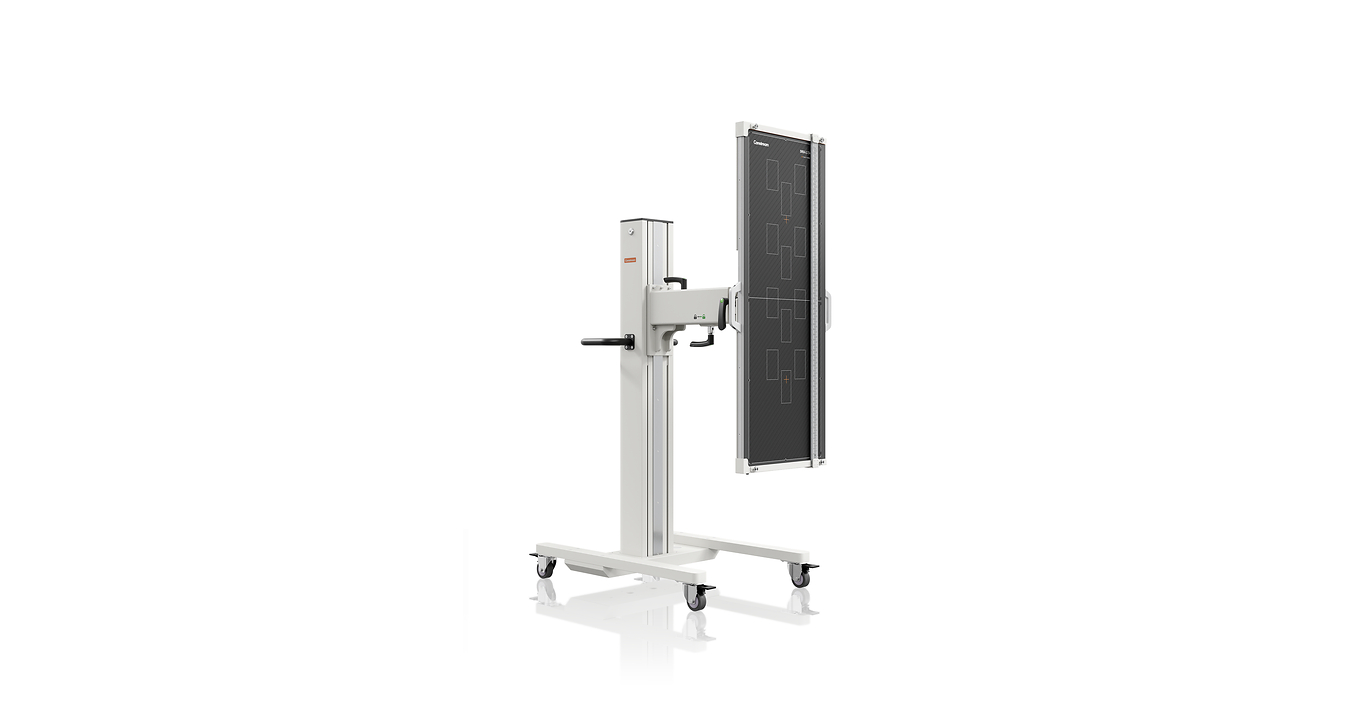
Carestream Healthcare International announced an updated DRX‑LC Detector aimed at simplifying long-length imaging with single-shot long-length imaging, reducing multiple exposures and stitching. The new version adds Detector Exposure Control (DEC) for more consistent exposure and Smart Noise Cancellation (SNC) using AI to improve image clarity while targeting lower dose and fewer retakes. It is positioned as compatible across DR rooms, mobile systems, and retrofit solutions, supporting workflow streamlining and improved patient comfort.
Analysis
This is more a workflow upgrade than a true product-cycle reset. The economic value sits in reducing exam time and retakes, which matters most for retrofit-heavy accounts where purchase decisions are driven by throughput ROI rather than image-quality specs. That makes the nearest public beneficiary less the hospital OEMs and more detector/component suppliers with installed-base upgrade leverage, especially VREX; if the feature set is real, it can pull forward refreshes in outpatient ortho, spine, and mobile imaging.
Near term, I would not underwrite meaningful revenue upside from a single feature announcement. AI/noise-cancellation claims are easy to market and hard to verify until they show up in order momentum, ASP stabilization, or attached software/service revenue over the next 1-3 quarters. The key falsifier is simple: if channel checks or company commentary do not show faster retrofit conversion, then this is just parity marketing and the competitive impact is negligible.
The contrarian angle is that better workflow can actually extend the life of legacy DR rooms by making them ‘good enough’ for more procedures. That is bearish for full-system replacement cycles over 6-18 months, while still supportive of higher-margin detector refreshes and service attach. In that world, GEHC and other broad-line imaging OEMs may not lose share immediately, but their capital-equipment mix could be pressured as buyers choose incremental upgrades over full-room replacements.
AllMind Terminal
AI-powered research, real-time alerts, and portfolio analytics for institutional investors.
Request TrialMarket Sentiment
Overall Sentiment
mildly positive
Sentiment Score
0.20
Ticker Sentiment
Key Decisions for Investors
- No immediate trade in MEDD; treat this as a watch item until there is evidence of order acceleration or share gains in the next 1-2 quarters.
- Tactically buy VREX on pullbacks for a 1-3 month trade if channel checks confirm retrofit demand; stop out if detector backlog/order commentary does not improve.
- Relative-value idea: long VREX / short GEHC over 3-6 months, betting workflow-driven detector upgrades outrun full-system replacement demand; cover if GEHC radiology growth reaccelerates.
- Do not chase AI-imaging multiple expansion until there is proof of monetization; if VREX rallies >10% on no new commercial data, fade the move.
- Set an alert for hospital capex commentary and replacement-cycle data over the next earnings season; a slowdown in capex would negate the retrofit thesis quickly.
More News
- Indonesian stocks plunge to six-year low as MSCI downgrade fears mount
- Putin reportedly suggests summit with Trump and Xi to decide fate of Ukraine
- China's CXMT sees shares drop over 6% as investors look past chipmaker's profit turnaround
- Asian stocks skid, Wall Street and bonds aided by oil slip
- Australia’s Cleanaway agrees to $6.5 bln EQT buyout bid; shares surge
- India’s Finance Minister blames easy exits and excess liquidity for equity market's underperformance