
Waymo Expands Paid Robotaxi Service to Las Vegas, Its 15th City
Source: Bloomberg
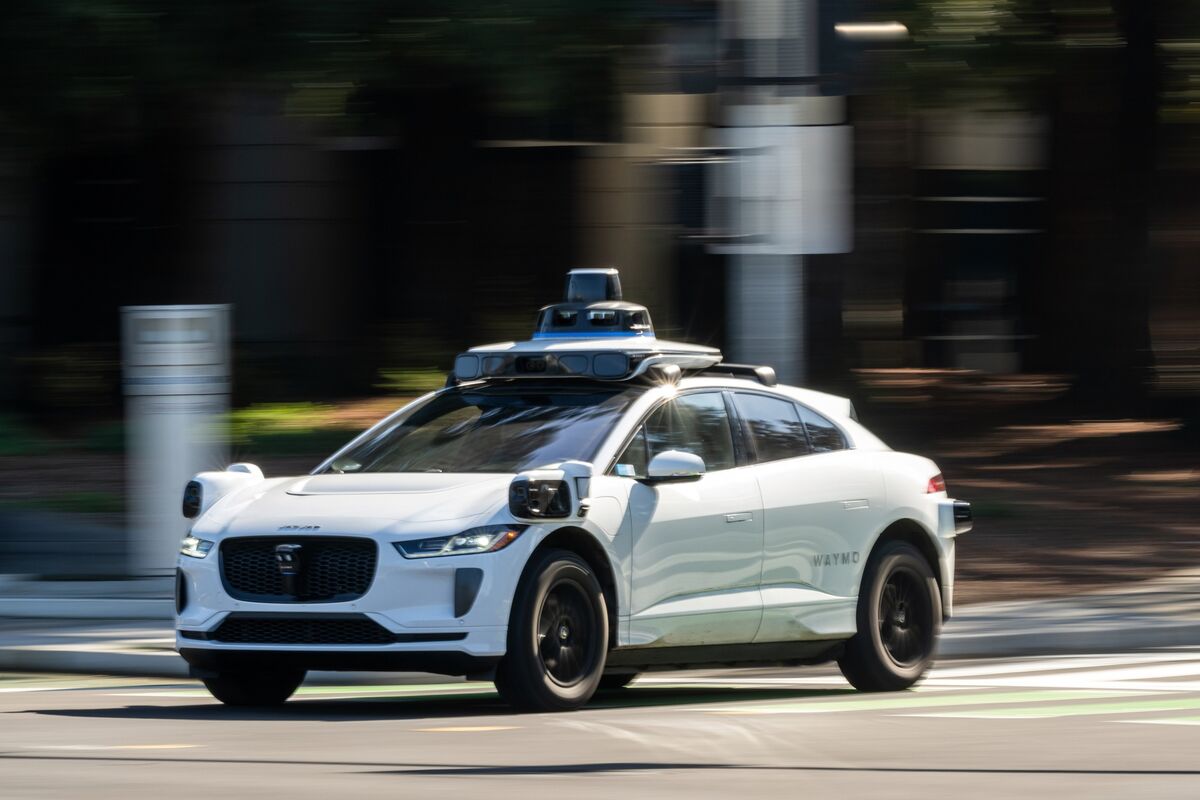
Alphabet's Waymo will begin offering paid, hailable robotaxi rides in Las Vegas on Monday, its 15th U.S. city with commercial service. Rider access will be phased in on a rolling basis, with pickups initially handled by Waymo's Ojai minivans. The expansion marks incremental commercialization progress for Waymo's autonomous-driving platform.
Analysis
Las Vegas is commercially useful less for near-term ride revenue than for validating autonomous operations in a high-density, tourism-driven market with unusually variable pickup/drop-off patterns. If utilization holds through convention peaks and late-night demand, Waymo gains a stronger data set for fleet dispatch, remote assistance and vehicle cleaning/turnaround economics—areas that determine whether robotaxis can ultimately earn transport-like returns rather than software-like gross margins. The initial constrained rollout implies no material Alphabet earnings impact over the next 1-3 quarters.
The more relevant equity read-through is competitive and strategic. A credible expansion cadence raises the cost of waiting for Tesla (TSLA), whose valuation embeds meaningful optionality from unsupervised autonomy; real paid-service deployment by Waymo makes regulatory approvals, fleet operations and safety performance—not merely FSD feature progress—the gating variables. Uber (UBER) is ambiguous: autonomous supply could reduce driver-cost exposure over 6-18 months, but a scaled Waymo-owned network in tourist corridors also creates a disintermediation risk if riders can book directly.
Consensus may over-credit the city count. Expansion is not evidence of unit economics until Waymo discloses rides per vehicle per day, paid deadhead miles, intervention rates and contribution margin after depreciation, insurance and depot costs. The key near-term catalyst is whether Waymo partners with UBER or hotel/casino operators for distribution; such agreements would improve utilization and establish a repeatable market-entry model. A safety incident, Nevada operating restriction, or evidence that utilization remains below roughly 8-10 paid trips per vehicle per day would weaken the strategic case.
AllMind Terminal
AI-powered research, real-time alerts, and portfolio analytics for institutional investors.
Request TrialMarket Sentiment
Overall Sentiment
mildly positive
Sentiment Score
0.32
Ticker Sentiment
Key Decisions for Investors
- No standalone GOOG trade on this launch: financial materiality is too small versus Search, Cloud and AI-capex drivers. Treat any sharp robotaxi-led outperformance as an opportunity to avoid chasing unless operating metrics or a material distribution partnership are disclosed within 1-3 months.
- Maintain a 6-18 month relative-value watch: long GOOG / short TSLA only if Waymo announces sustained Las Vegas utilization or a UBER/hospitality partnership while TSLA autonomy monetization timing slips. Thesis target is compression of the autonomy-optionality gap; falsify if Tesla receives broad unsupervised commercial approvals or demonstrates comparable paid fleet utilization.
- Monitor UBER for partnership terms rather than assuming a benefit. A Waymo integration with minimum ride volume, favorable take rate, or exclusive airport/hotel access would be constructive; direct Waymo consumer adoption without platform distribution is a medium-term competitive risk and argues against adding UBER on autonomous-vehicle optimism alone.
More News
- Wall Street’s AI doomsday trade is here: chipmakers sink while hyperscalers gain
- ‘Silent Cold War’: Why calls to slow AI have sparked new US–China frontier
- Waymo opens robotaxi service in Las Vegas
- With iOS 27, I’m actually using Siri again
- OpenAI’s Sam Altman says Paul Graham’s Y Combinator taught him how to govern, not rule: ‘We won’t get every decision right’
- Google wants Spirit Airlines’ data. Micro1 wants to pay more.