
Le fabricant de démarreurs de secours CARKU se développe en Europe grâce à la technologie Na+ de nouvelle génération
Source: PR Newswire
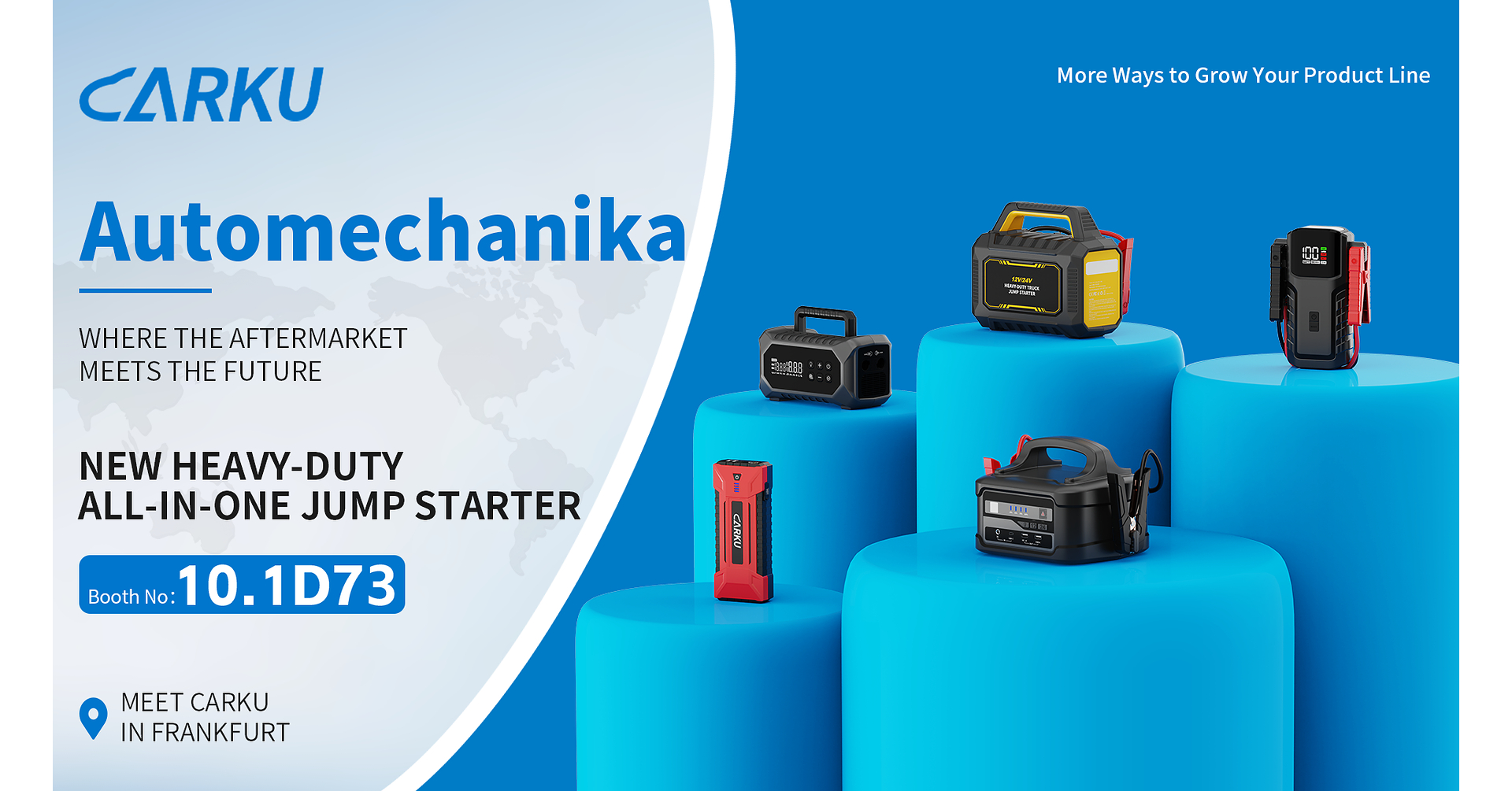
CARKU va étendre sa présence en Europe et dévoiler à Automechanika Francfort 2026 (8-12 septembre) un démarreur de secours sodium-ion 12/24V, conçu pour fonctionner par températures négatives. L’entreprise relie cette montée en puissance à une directive UE ECGT applicable à partir du 27 septembre 2026, et s’appuie sur deux usines totalisant plus de 110 000 m² pour des lignes SMT automatisées et une capacité de production flexible. Avec plus de 1 000 collaborateurs et une couverture clients sur six continents, CARKU positionne sa technologie Na+ comme une alternative de batterie de nouvelle génération après le succès du lithium.
Analysis
This reads less like a breakthrough for public markets and more like a validation of a niche form factor where compliance and channel access matter more than chemistry. Sodium-ion in jump starters is economically attractive because the product is low-value, temperature-sensitive, and heavily specification-driven; that makes it a margin and sourcing story, not a demand shock for lithium or auto batteries. The first-order winner is the supplier with EU distribution and certification credibility; the first-order loser is the long tail of small private-label importers that rely on weak substantiation and thin QA controls.
The more important lever is the regulatory backdrop. A stricter EU consumer-claims regime tends to favor scaled OEM/ODM players with auditable documentation and punish marketing-heavy brands whose environmental positioning is hard to verify. For listed comps, any read-through is mostly to auto-aftermarket distributors and private-label channel owners such as GPC, LKQ, and ORLY: if this category gains shelf space, they can capture incremental attach sales, but the impact is too small to matter unless the product expands beyond jump starters into portable power stations and fleet kits over 6-18 months.
Contrarian view: the market may be overrating sodium-ion as a disruptive battery thesis here. In this use case, the relevant edge is supply-chain flexibility and cold-weather performance, so the addressable upside is limited by unit economics and low ASPs. The thesis is falsified if EU distributors or retailers start repeating orders quickly and the product line broadens into adjacent SKUs before year-end; otherwise this remains a watch item, not a tradeable catalyst.
AllMind Terminal
AI-powered research, real-time alerts, and portfolio analytics for institutional investors.
Request TrialMarket Sentiment
Overall Sentiment
neutral
Sentiment Score
0.10
Key Decisions for Investors
- No immediate equity trade: treat this as a non-catalyst for lithium/materials names; do not short ALB/SLI/PLL on this headline alone.
- Watch GPC/LKQ/ORLY for 2H26 channel commentary on private-label battery accessories; if they cite margin pressure from compliant low-cost imports, consider a tactical short only after confirmation.
- Conditional long on GPC or LKQ over 3-6 months if distributor checks show sodium-ion accessories gaining shelf space; upside is modest but defensible if private-label mix improves.
- Set an alert for EU retail/distributor SKU proliferation by Q4 2026; if penetration stays confined to a single OEM/ODM launch, stand down and fade any hype bid.
More News
- Why is T-Mobile stock tumbling today?
- Why is Verizon stock sliding today?
- SpaceX wants to become a 'major mobile carrier' with low-band spectrum acquisition
- Trump says US will not strike Iran before midterm elections
- OpenAI projected to bring in $20bn less in revenue than expected
- Soitec climbs 7% as BofA turns bullish on silicon photonics demand