
HiTHIUM lance une solution intégrée de stockage d'énergie au sodium-ion de nouvelle génération afin d'accélérer l'industrialisation de cette technologie
Source: PR Newswire
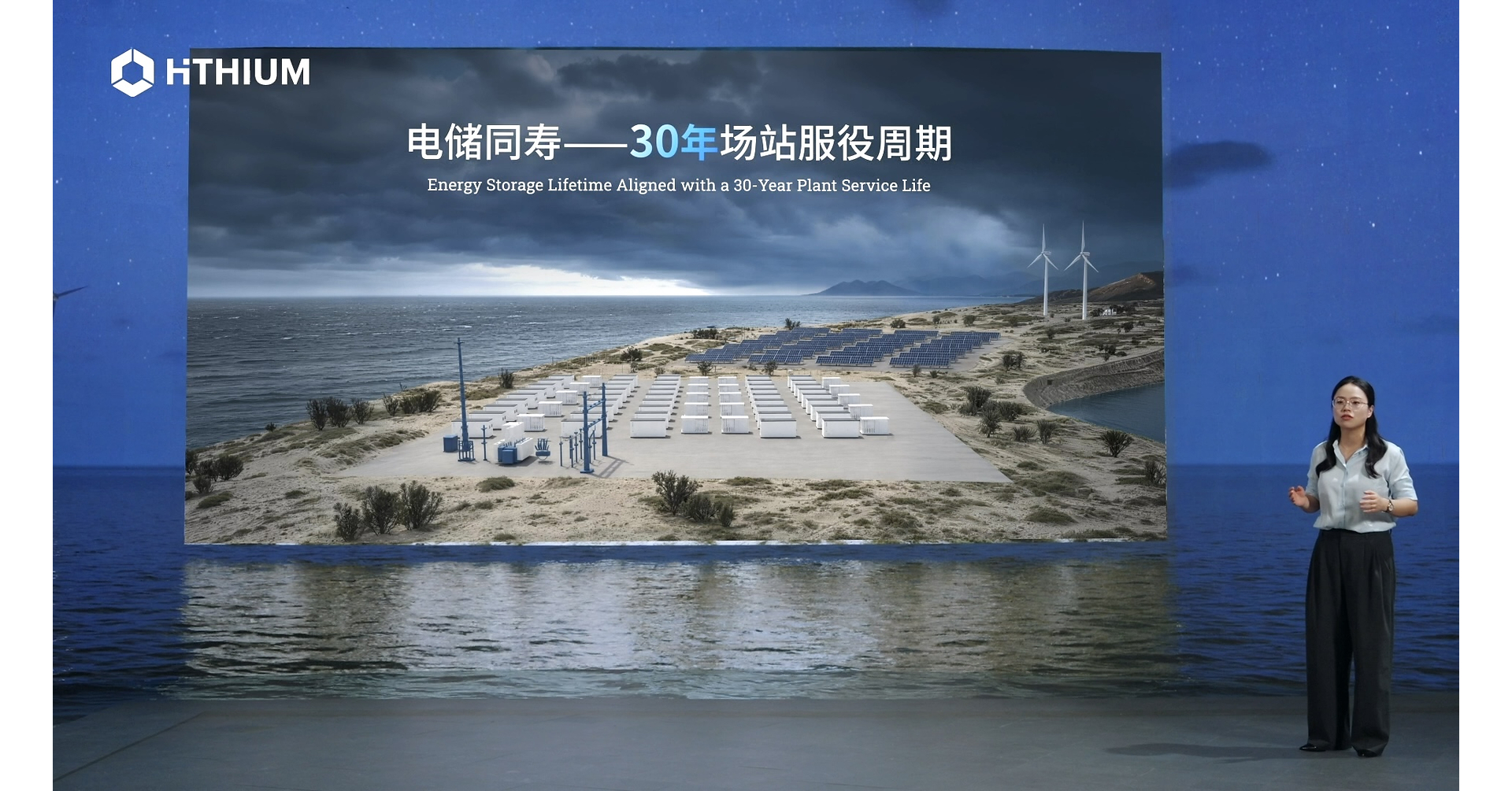
HiTHIUM unveiled its ∞Power N4.0 MWh sodium-ion energy-storage system, built around a 785Ah cell with a stated 20,000-cycle life and 30-year system design life, with mass production and deliveries targeted for 2027. The system supports 2-8 hour storage durations, delivers more than 88% 24-hour efficiency, cuts station footprint by 30%, and raises PCS rated-power utilization by over 20% versus HiTHIUM's prior sodium-ion system. AI-based thermal management and hybrid air-liquid cooling are claimed to reduce auxiliary operating energy use by 30% and standby consumption by 50%, while the company targets lifecycle storage costs of RMB0.1/kWh.
Analysis
This is not yet a lithium-demand shock: the relevant hurdle is delivered LCOS after degradation, financing and warranty reserves, rather than a claimed cell or system specification. Sodium-ion’s lower energy density confines the first credible displacement risk to stationary 2-8 hour projects, where footprint is less important and lithium price volatility matters most; EV demand remains largely insulated. The immediate listed-market implication is therefore limited, particularly as HiTHIUM is private and the stated commercialization window leaves ample time for incumbent LFP pricing to reset.
If qualification data validates cycle life and round-trip efficiency in third-party projects during 2027, the competitive pressure falls disproportionately on grid-storage suppliers with high LFP exposure and fixed-price backlog, including FLNC and TSLA’s Megapack business, rather than diversified battery makers. Developers could gain bargaining leverage, compressing equipment ASPs while improving project IRRs; this would be modestly constructive for utility-scale renewable developers and EPCs only if cheaper storage translates into higher awarded volumes rather than vendor margin capture. ALB and SQM face a long-duration optionality risk from stationary-storage chemistry substitution, but a material earnings effect requires sodium-ion deployment at multi-GWh annual scale, not pilot announcements.
The contrarian read is that sodium-ion may expand total storage demand more than it replaces lithium: cheaper, resource-secure systems can unlock marginal grid and commercial projects that are currently uneconomic. The key falsifier is not a laboratory metric but independently disclosed warranty terms, field degradation, bankability acceptance and a delivered $/kWh advantage versus Chinese LFP systems. Absent those data points, the release is a technology watch item rather than a directional catalyst for NXTT or listed battery-material equities.
AllMind Terminal
AI-powered research, real-time alerts, and portfolio analytics for institutional investors.
Request TrialMarket Sentiment
Overall Sentiment
strongly positive
Sentiment Score
0.58
Key Decisions for Investors
- No position in NXTT on this item: the supplied ticker has no indicated sensitivity, and HiTHIUM’s private status prevents direct monetization. Reassess only if NXTT discloses a sodium-ion supply, integration, or project-development linkage.
- Set a 2027 diligence alert on FLNC and TSLA: review storage backlog gross-margin guidance and disclosed battery procurement costs after HiTHIUM begins deliveries. Consider a short FLNC / long utility-scale renewable developer pair only if Chinese sodium-ion systems demonstrate a verified delivered-cost discount of at least 20% versus LFP and FLNC does not pass through lower equipment costs.
- Maintain lithium-material exposure discipline rather than initiate a structural short in ALB or SQM. A bearish sodium-ion thesis requires evidence of sustained multi-GWh stationary deployments, lithium-free procurement commitments from major integrators, and downward revisions to 2028-29 lithium demand forecasts; without these, lithium-price and EV-volume variables dominate.
- For 6-18 month thematic exposure, favor diversified grid-buildout beneficiaries over chemistry-specific bets. A broad long ICLN or selected transmission/EPC exposure is only actionable if lower storage LCOS produces incremental utility procurement awards; monitor interconnection queues and contracted storage capacity rather than vendor announcements.
More News
- Oil extends losses as Saudi Arabia reportedly offers ship-to-ship crude transfers after pipeline hit
- Japan’s corporate leaders sound alarm over weak yen — even dollar-earners are voicing concerns
- 'Hostile act': Trump threatens EU with tariffs over Canada associate-membership proposal
- US military claims Strait of Hormuz remains open amid ongoing blockade
- Oil prices extend losses as fears of Middle East supply disruptions ease
- Congress passes sweeping US sanctions bill targeting Russia